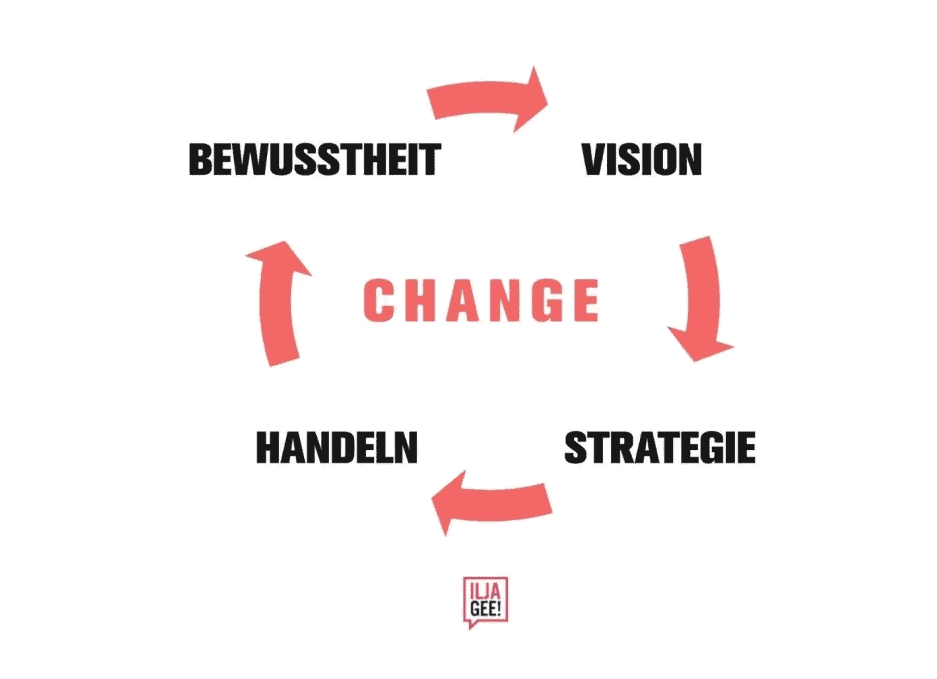
Komfortzone verlassen – Warum du dir manchmal die Finger verbrennen musst

Komfortzone verlassen. Leichter gesagt als getan, oder? Und je länger ich darüber nachdenke und je mehr Menschen ich in meinen Keynotes und Coaching-Programmen begleite, desto klarer wird mir, dass das Problem selten das fehlende Wissen ist. Das Problem ist die Lücke zwischen Wissen und Handeln. Doch dazu gleich mehr.


Als meine Tochter Elisabeth klein war, habe ich gebetsmühlenartig auf sie eingeredet, dass sie extrem vorsichtig sein müsse, wenn unser Kamin brannte. Die Glastür sah zwar harmlos aus, durch die starke Hitze hatte ich aber große Angst, dass sie sich verbrennen könnte. Da sie ein sehr vernünftiges Kind war, beruhigte mich ihr „Keine Sorge, Papa, ich passe auf“ sofort. Bis ich eines Abends in meinem Büro saß und einen gleichsam lauten wie herzzerreißenden Schrei vernahm. Mit schmerzverzerrtem Gesicht und einer verbrannten Hand kam mir Elisabeth heulend entgegen, denn entgegen aller Beteuerungen hatte sie natürlich doch den heißen Kamin berührt. Nachdem wir ihre Hand gekühlt hatten, fragte ich neugierig nach: „Aber du hattest doch hoch und heilig versprochen, aufzupassen?“ Worauf sie mir schluchzend antwortete: „Aber ich musste doch überprüfen, ob der Kamin wirklich so heiß ist, wie du gesagt hast.“

Was für ein wunderbar schlaues Kind, auch wenn sie mit Aktionen wie diesen für meine ersten grauen Haare gesorgt hat. Love you, meine Flitzpiepe.

Natürlich habe ich dir diese Geschichte aus einem bestimmten Grund erzählt. Denn Elisabeth hat in diesem Moment etwas intuitiv begriffen, wofür die meisten Erwachsenen ein Leben brauchen. Nämlich das hier:

Veränderung kann man nicht denken. Man muss sie machen.


Komfortzone verlassen: Das große Dilemma

Wenn ich in meinen Keynotes frage, wer von den Anwesenden seine Comfort zone regelmäßig verlässt, dann gehen fast alle Hände hoch, und wenn ich dann nachfrage, was sich in den letzten zwölf Monaten wirklich Grundlegendes in ihrem Leben verändert hat, dann wird es auf einmal sehr, sehr still im Raum. Habe ich recht?

Dabei ist das Konzept eigentlich keine Geheimwissenschaft. Du weißt, dass wahres Leben und außergewöhnliche Erfolge immer außerhalb der Komfortzone passieren, und du weißt, dass Wachstum ein menschliches Grundbedürfnis ist, das die Grundlage für ein von Sense, Zufriedenheit und Erfüllung geprägtes Leben bildet. Und trotzdem fällt es den meisten so schwer, ihre Komfortzone tatsächlich zu verlassen. Stattdessen richten sie sich im Laufe der Zeit ihren eigenen goldenen Käfig ein und statten diesen mit immer mehr gemütlichen Accessoires aus, bis die Sicherheit des Bekannten so verlockend ist, dass der Gedanke an Shift sich anfühlt wie der erste Schritt ins Eiswasser.


Man sitzt dann da und träumt von einem aufregenden Leben, von Visionen aus der Kindheit und in einem besonders mutigen Moment auch davon, einmal wirklich etwas zu wagen. Doch da die Unsicherheit zu groß ist, wird dieser Gedanke meist schnell wieder verdrängt und die eigene Komfortzone noch bequemer eingerichtet. Kommt dir das bekannt vor, oder?

Und nur, damit wir uns richtig verstehen: Das liegt nicht an mangelndem Willen und schon gar nicht daran, dass du die falsche Person für große Dinge wärst. Vielmehr liegt es an unbewussten Programmierungen, also tief verankerten Mindviren wie „Das ist zu riskant“, „Ich bin noch nicht bereit“ oder „Wer weiß, ob das überhaupt klappt“, die still und leise im Hintergrund laufen und dich immer dann zurückhalten, wenn du kurz davor bist, etwas wirklich Neues auszuprobieren.

Doch so wie Elisabeth an jenem Abend begriffen hat, dass sie die Wahrheit über den Kamin nur durch direkte Erfahrung entdecken konnte, so wirst auch du die Kraft der Freedom niemals entfesseln, wenn du sie nur aus der sicheren Distanz deiner Komfortzone heraus bewunderst.


The 4-zone model of change

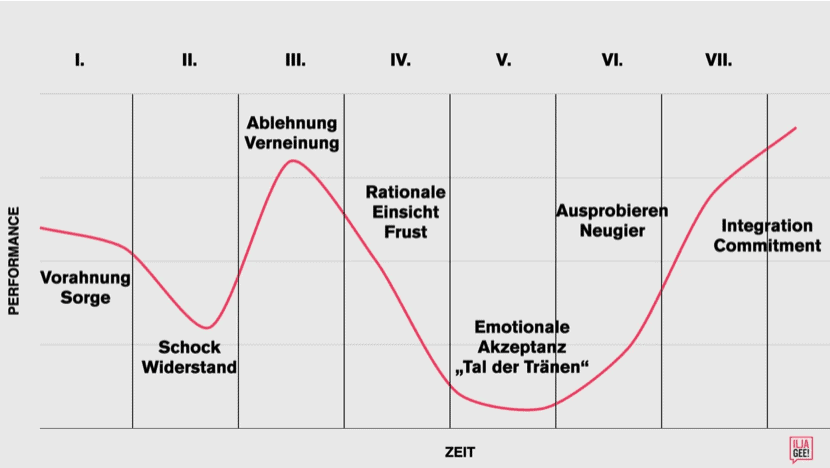
Sobald du es wagst, deine Komfortzone zu verlassen, bewegst du dich durch einen Prozess, der dich durch vier verschiedene Bereiche führt und dich am Ende mit persönlichem Wachstum reich beschenkt, und je besser du verstehst, was in jeder dieser Zonen passiert, desto eher wirst du in der Lage sein, die kritischen Momente zu erkennen und vor allem: nicht umzukehren.

Komfortzone Verlassen - Das 4 Zonen Modell

Die Komfortzone kennst du: hier ist alles bekannt, gewohnt und vor allem sehr bequem, du tust das, was du immer tust, vermeidest jegliche Risiken und hast zu jeder Zeit alles im Griff, während Routinen und Standardabläufe deinen Alltag prägen und die meisten Verhaltensweisen auf Autopilot laufen. Das große Problem dabei ist allerdings, dass in der Komfortzone kein Wachstum stattfindet, weil du ausschließlich auf bewährte Methoden zurückgreifst und das Außergewöhnliche damit buchstäblich außerhalb deiner Reichweite bleibt.

Jenseits davon lauert die Angstzone auf dich, und das ist der Ort, an dem die meisten Menschen reflexartig umkehren, weil das Unbekannte dein inneres Alarmsystem aktiviert und dich mit aller Macht zur Rückkehr bewegt. Zweifel setzen ein, Ausreden tauchen auf, eine hartnäckige innere Stimme erinnert dich permanent daran, wie unsicher das alles doch ist, und das Bedürfnis nach vermeintlicher Sicherheit wird so laut, dass es alles andere übertönt. Deine wichtigste Aufgabe ist es daher, den Versuchungen dieses Widerstands zu widerstehen und stattdessen bewusst den Weg der kleinen Schritte zu gehen, die Unsicherheit zu umarmen und in persönliches Wachstum zu transformieren.

Sobald die ersten Erfolgserlebnisse einsetzen, befindest du dich in der Lernzone, wo zwar noch vieles neu und ungewohnt ist, aber deine Neugier mittlerweile die Angst zu überwiegen beginnt, sodass du dir sukzessive neues Wissen, neue Fähigkeiten und neue Überzeugungen aneignest, während dein Selbstvertrauen fast schon automatisch wächst. Und dann, irgendwann, erreichst du die Wachstumszone, den Ort, wo Veränderung dann am meisten Spaß macht, wenn sie mit Purpose, tiefer Erfüllung und echtem Herzblut einhergeht, und wo du dir Dinge zutraust, von denen du früher noch nicht einmal zu träumen gewagt hättest.

Aber noch etwas Wichtiges geschieht, sobald du einen Großteil deiner Zeit in der Wachstumszone verbringst: Fast wie von selbst verschieben sich die Grenzen aller vier Zonen, sodass das, was vor einiger Zeit noch vollkommen undenkbar erschien, mittlerweile zur gelebten Realität geworden ist, und viele Situationen, die dich früher noch mit zitternden Knien erfüllt hätten, sind für dich mittlerweile zu einer perfekten Gelegenheit geworden, als Mensch zu wachsen. Und je mehr du wächst, desto größer wird das Ausmaß an Freiheit, Sinn und Zufriedenheit in sämtlichen Lebensbereichen.

Deine Lebensqualität hängt von dem Ausmaß an Wachstum ab, mit dem du dauerhaft komfortabel leben kannst. Vergiss das nie. 

Denn das ist die Grundlage dafür, dass du deine Komfortzone nicht nur einmalig verlässt, sondern es zu einer echten Lebenshaltung machst


Das letzte eine Prozent

Doch damit kommen wir zur eigentlich entscheidenden Frage, nämlich der, was all die Change Leader dieser Welt von der großen Masse unterscheidet, die trotz aller guten Vorsätze immer wieder in die Bequemlichkeit des Status quo zurückfällt.

Neben einer klaren Vision und dem Willen zur Shift nutzen sie eine geheime Zutat, die selbst die schwersten Dinge von außen spielerisch leicht aussehen lässt und am Ende immer den Unterschied macht, zwischen gut und sehr gut, zwischen sehr gut und herausragend und in ihrer vollen Ausprägung zwischen herausragend und absoluter Weltspitze. Es ist der Grund, warum Michael Jordan der wahrscheinlich größte Basketballer aller Zeiten war, warum Brandon Sanderson mehr epische Bücher in einem einzigen Jahr schreibt als manche Autoren in ihrem ganzen Leben, und warum die Rolling Stones auch im jugendlichen Alter von über 80 Jahren noch voller Herzblut die Bühnen dieser Welt rocken. Diese geheime Zutat lautet:

Das letzte eine Prozent.

Du kannst die volle Kraft deines Potenzials nämlich nur dann entfesseln, wenn du bereit bist, Rückschläge in Kauf zu nehmen, Hindernisse zu überwinden und den Preis der Veränderung zu zahlen. Denn immer dann, wenn du kurz vor dem Aufgeben bist, tritt diese nette innere Stimme in den Vordergrund und säuselt dir ins Ohr: „Ach komm schon, lass es lieber bleiben. Siehst du nicht, wie schwer die Bedingungen sind? Auf eine Ausnahme kommt es doch wirklich nicht an. Morgen ist auch noch ein Tag.“

Und weil das so verdammt logisch klingt, machst du tatsächlich eine Ausnahme. Und öffnest damit die Büchse der Pandora, denn aus einer Ausnahme werden schnell zwei, aus zwei werden drei, bis der Schlendrian komplett Einzug gehalten hat und du dich fragst, wie du vom Ort, an dem du sein wolltest, so weit entfernt gekommen bist. Lass es mich daher so deutlich formulieren, wie ich kann: Wer seine Komfortzone verlassen will, muss aufhören, auf den richtigen Zeitpunkt zu warten, und anfangen, konsequent zu handeln. Auch wenn es niemand sieht. Auch wenn es nicht sofort klappt. Auch wenn du die einzige Person bist, die noch an die Sache glaubt.


Die 1-66-18-Anti-Prokrastinations-Formel

„Okay Ilja, das alles leuchtet mir ein. Aber wie übersetze ich das jetzt konkret in meinen Alltag?“ Gut, dass du fragst. Denn genau dafür möchte ich dir eine Formel mitgeben, die so simpel ist, dass du dich möglicherweise ein bisschen ärgerst, warum du nicht früher auf sie gestoßen bist. Ich nenne sie die 1-66-18-Anti-Prokrastinations-Formel, und die Zahlen stehen dabei für:

Eine Sache. Für 66 Tage. 18 Minuten am Tag.

Eine einzige Sache deshalb, weil du dadurch nicht nur ein eventuelles Verzetteln verhinderst, sondern gleichzeitig sämtliche Ressourcen wie Zeit, Energie und Fokus auf genau dieses eine Vorhaben bündelst, anstatt dich mit zu vielen gleichzeitigen Baustellen zu erschöpfen und am Ende nirgendwo zu einem echten Ergebnis zu kommen.

66 Tage deshalb, weil es im Durchschnitt genau so lange dauert, um eine neue Gewohnheit wirklich zu verankern, also nicht ein paar Tage durchhalten, sondern echte, nachhaltige Veränderung in Gang zu setzen.

Und 18 Minuten täglich deshalb, weil der Wissenschaftler Anders Ericsson in seinen Studien zur Expertise-Forschung herausgefunden hat, dass 100 Stunden im Jahr, also ungefähr 18 Minuten pro Tag, ausreichen, um in einem beliebigen Thema einen gigantischen Vorsprung vor 95 Prozent der Menschen in deinem Umfeld zu erreichen. Und wer nicht bereit ist, täglich 18 Minuten an der Umsetzung seiner Träume zu arbeiten, der hat es auch nicht besser verdient. Oder?


Außerhalb der Komfortzone geht die Post ab

Lass mich diesen Artikel mit einem Gedanken abschließen, der mich persönlich immer wieder antreibt, wenn die Bequemlichkeit des Status quo verlockender wirkt als der nächste mutige Schritt. Hast du dich schon einmal gefragt, was das Gegenteil von Erfolg ist? Wenn du jetzt spontan mit Scheitern geantwortet hast, dann möchte ich dich einladen, einmal die Perspektive zu wechseln, denn dies könnte falscher nicht sein.

Fehler zu machen, hinzufallen und noch einmal von vorne beginnen zu müssen, ist nicht nur ein wichtiger Teil, sondern sogar eine unabdingbare Voraussetzung für das Erreichen deiner Ziele und Träume, und wenn du gar keine Fehler machst, ist das immer ein großes Warnsignal, weil entweder dein Vorhaben nicht groß genug ist oder du dich noch immer in der Bequemlichkeit des Status quo befindest, ohne es zu bemerken.

Das Gegenteil von Erfolg ist das Mittelmaß, der Ausbau der Komfortzone und das Verharren in der selbstgebrauten Suppe der Beliebigkeit.

Außerhalb der Komfortzone geht die Post so richtig ab. An diesem für viele so unheimlichen Ort werden erfolgreiche Unternehmen gegründet, innovative Ideen entwickelt, sportliche Rekorde aufgestellt und gigantische Ziele erreicht, und all das nur, weil die handelnden Personen den Mut hatten, sich die Finger zu verbrennen und die vermeintliche Sicherheit des Status quo gegen die persönliche Freiheit einzutauschen.

Wer seine Komfortzone verlassen will, braucht kein perfektes Timing und keine idealen Bedingungen. Elisabeth hat das an einem Abend vor dem Kamin intuitiv kapiert. Wann ist dein Moment?


Komfortzone verlassen: Die wichtigsten Ideen dieses Artikels

  • Veränderung kann man nicht denken. Man muss sie machen.
  • Außerhalb der Komfortzone geht die Post so richtig ab.
  • Das 4-Zonen-Modell: Komfortzone, Angstzone, Lernzone, Wachstumszone. Die Grenzen verschieben sich mit jedem mutigen Schritt.
  • Das letzte eine Prozent ist die geheime Zutat aller Change Leader.
  • Die 1-66-18-Anti-Prokrastinations-Formel: Eine Sache, 66 Tage lang, 18 Minuten am Tag.
  • Das Gegenteil von Erfolg ist das Mittelmaß und das Verharren in der selbstgebrauten Suppe der Beliebigkeit.

Gewohnheiten aufbauen: Die drei Säulen erfolgreicher Veränderung

Wenn du langfristig neue Gewohnheiten aufbauen und Ziele wirklich erreichen willst, dann braucht es dafür weder eine komplizierte Methode, noch eine starke Willenskraft. Es braucht drei Dinge, und zwar genau diese drei: eine unumstößliche Decision, eine motivierende Richtung und konsistente Habits. Mehr ist es unter dem Strich nicht. Lass mich erklären, warum diese drei Elemente zusammen so unschlagbar mächtig sind, und warum das Fehlen auch nur eines einzigen davon jede Transformation früher oder später zum Scheitern bringt.

Die Inspiration für dieses Modell habe ich übrigens einem mittelalterlichen Kirchenbau zu verdanken, nämlich der Kathedrale von Salisbury. Als ich siebzehn Jahre alt war, verbrachte ich im Rahmen einer Schulstudienfahrt eine Woche bei einer Gastfamilie in der kleinen Stadt, und obwohl ich als Teenager in der Blüte meiner Rebellenzeit nach außen hin natürlich so tat, als ob mich die Beschäftigung mit Kultur und Geschichte extrem langweilte, lag es insbesondere an den vielen Insiderinformationen unseres Guides Nigel, dass meine Faszination für die gigantische Kirche zwar heimlich, aber stetig wuchs.

Dies führte so weit, dass ich nach meiner Rückkehr Ken Folletts Roman Die Säulen der Erde geradezu verschlang, in dem die Kathedrale von Salisbury als historisches Vorbild für eine fiktive Geschichte dient, die sich um den Bau der größten Kirche der Welt dreht, und der mir neben einer spannenden Handlung eine Menge Aha-Erlebnisse in Bezug auf Veränderung beschert hat.

Du kannst dir das Modell wie einen dreibeinigen Hocker vorstellen. Sind alle drei Beine gleich lang und stabil montiert, dann hält er selbst hohen Belastungen stand. Doch sobald nur eines der Beine etwas kürzer ist, fängt er an zu kippeln. Und fehlt ein Bein ganz, dann ist der komplette Hocker auf einmal unbenutzbar. Lass uns also die drei Säulen genauer anschauen.


Gewohnheiten aufbauen – Säule 1: Eine unumstößliche Entscheidung

Wie lange dauert eigentlich eine Shift? Wenn ich diese Frage in meinen Vorträgen und Seminaren stelle, dann erhalte ich häufig Antworten wie „mindestens drei Monate“, „ein bis zwei Jahre“ oder „das kann man nicht messen, auf jeden Fall lange“. Und auch wenn in allen drei Aussagen die richtige Erkenntnis steckt, dass Transformationsvorhaben immer ein Marathon und niemals ein Sprint sind, so sind sie doch alle falsch. Laut neurowissenschaftlichen Studien lautet die korrekte Antwort nämlich 2,7 Sekunden, denn dies ist die Zeitspanne, die dein Gehirn benötigt, um eine Zeiteinheit als Augenblick verarbeiten zu können. Und genauso lange dauert es, um eine echte Entscheidung für eine Veränderung zu treffen.

Und damit meine ich nicht die weitverbreiteten Wischi-Waschi-Ankündigungen wie „man müsste“, „man sollte“, „man könnte“ oder „unter Umständen wäre nach den Ferien eventuell mal die Gelegenheit günstig, darüber nachzudenken, ob es nicht sinnvoll sein könnte, wenn man theoretisch abwägen würde, ob man eine Veränderung angehen sollte“. Nein, eine unumstößliche Entscheidung beinhaltet immer ein Versprechen dir selbst gegenüber, dass du dein Vorhaben auf jeden Fall durchziehst, egal welche Hürden auf dem Weg auf dich warten mögen. Dahinter steht eine so einfache wie wichtige Tatsache: Wenn du etwas wirklich willst, dann wirst du es auch schaffen, weil du bereit bist, den Preis zu zahlen, Fehler zu machen und weiterzugehen, wenn der Wind dir so richtig heftig von vorn ins Gesicht bläst.


Gewohnheiten aufbauen – Säule 2: Eine motivierende Richtung

Die zweite Säule fällt oftmals unter die Kategorie Angst vor dem Offensichtlichen, denn unglaublich viele Changes scheitern, weil man zwar ganz genau weiß, was man alles nicht mehr möchte, aber von der Wunschzukunft keine konkrete Vorstellung hat. Und so wurschtelt man vor sich hin und wundert sich irgendwann, dass man sich zwar verändert hat, aber dann irgendwo angekommen ist, wo man überhaupt nicht hinwollte.

Mittlerweile habe ich herausgefunden, woran das in der Regel liegt: Viel zu viele Menschen verkomplizieren das Thema Goals so sehr, dass sie sich dadurch selbst riesige Wackersteine in den Weg legen, indem sie bis in alle Ewigkeit an irgendwelchen Ziele-Formeln herumfeilen, damit aber nie fertig werden, weil irgendeine Formulierung noch nicht ganz rund ist. Sie verwerfen eine bestimmte Zieldefinition, fangen manchmal sogar komplett von vorn an, und das alles nur, um nicht mit der Umsetzung beginnen zu müssen.

Falls du auch zu dieser Kategorie von Ziele-Perfektionisten gehören solltest, dann möchte ich dir die wohl beste, kürzeste und wirkungsvollste Coaching-Intervention vorstellen, die ich kenne. Sie besteht aus zwei Wörtern und stammt aus einem Sketch des Comedians Bob Newhart. Sie lautet: Stop it! Hör auf damit, lass es sein und mach es nicht komplizierter, als es sein muss. Wenn du unbedingt mit einer Ziele-Formel arbeiten willst, dann nutze gerne mein S.E.K.S.I.-Akronym, das dafür steht, dass wohlformulierte Ziele (S)pezifisch, (E)motional, (K)onkret, (S)elbstständig erreichbar und eine (I)nitiative auslösend sein sollten. Aber selbst wenn du noch nicht so weit bist und erst eine grobe Richtung hast, ist das auch vollkommen okay, denn es gilt folgender Grundsatz:

Arbeite mit dem, was du hast. Eine motivierende Richtung ist völlig ausreichend, weil dein Ziel und deine Vision auf dem Weg von ganz alleine klarer werden.

Vergiss nie, wozu Ziele da sind: Sie sollen dich motivieren, ins Machen zu kommen, und dich dorthin führen, wo du gerne hin möchtest. Mehr ist es nicht. Und sobald du loslegst, wird nicht nur deine Klarheit mit jedem Schritt zunehmen, sondern auch deine Motivation wird im Laufe der Zeit immer intensiver werden.


Gewohnheiten aufbauen – Säule 3: Konsistente Gewohnheiten aufbauen

Gewohnheiten sind wie Schienen. Es ist hart und dauert lange, um sie zu verlegen. Aber wenn sie erst einmal da sind, führen sie dich zuverlässig und sicher zu deinem Ziel. Ich liebe diese Analogie, denn sie beschreibt die mächtige Kraft dieser besonderen Kombination aus Konsistenz, Ausdauer und Durchhaltevermögen, die am Ende den Unterschied macht zwischen dem, der redet, und dem, der tatsächlich ankommt.

So viele Bücher glorifizieren die Wichtigkeit einer ausgeprägten Motivation, dabei sind es die nachhaltigen Gewohnheiten, die wirklich einen Unterschied machen. Denn wie häufig fühlst du dich so richtig danach, an einem Projekt zu arbeiten, zum Sport zu gehen oder eine Veränderung umzusetzen? Praktisch nie, oder? Aber dank entsprechender Gewohnheiten tust du es trotzdem. Und die Motivation entsteht beim Umsetzen von ganz alleine, wenn du dauerhaft dranbleibst. Denn bei jeder nur denkbaren Veränderung gilt:

Konsistenz schlägt Motivation. Immer.

Wie schaffst du es, das Buch zu schreiben, von dem du schon so lange träumst? Bestimmt nicht, indem du darauf wartest, dass dich endlich die Muse küsst. Du gehst nach Hause, setzt dich an deinen Computer und schreibst den ersten Satz. Aus dem wird ein Absatz, dann eine Seite und später das erste fertige Kapitel. Und wenn du dies über mehrere Monate jeden einzelnen Tag wiederholst, dann ist am Ende dein Buch fertig geschrieben. Wie schaffst du es, einen Marathon zu laufen, wenn du noch komplett unfit bist? Der Prozess ist der gleiche: Du ziehst dir deine Laufschuhe an, gehst raus und joggst für fünf Minuten, dann für zehn, fünfzehn und dreißig, irgendwann schaffst du es fünf Kilometer zu laufen, nach ein paar Monaten sogar zwanzig, und wenn du konsistent trainierst und kontinuierlich besser wirst, dann meisterst du irgendwann auch deinen ersten Marathon.

Nachhaltige Ergebnisse brauchen ganz einfach Zeit. Der Bau der Kathedrale von Salisbury hat ganze 38 Jahre gedauert, und die Fertigstellung des Kölner Doms sogar 600 Jahre. Aber auch hier begann man mit dem ersten Stein und hörte erst auf, als der letzte Arbeitsschritt getan war. Dank James Clear wissen wir heute, dass es im Schnitt 66 Tage dauert, um eine neue Gewohnheit zu etablieren. Aber wenn du so lange dranbleibst, passiert etwas Faszinierendes: Es wird auf einmal leichter, das neue Verhalten anzuwenden, ohne dass sich die alte Gewohnheit mit aller Macht in den Vordergrund drängen will, wodurch viele kleine Erfolgserlebnisse entstehen, deine Motivation steigt und du deinem großen Ziel jeden Tag ein Stückchen näher kommst.

Bei allen Veränderungen in deinem Leben stellt sich nicht die Frage, ob es schwer wird, sondern ob du bereit bist, durchzuhalten.


Der wichtigste Schritt ist immer der nächste

Welcher Schritt ist beim Verfolgen deiner Ziele und Träume der wichtigste? Ich könnte wetten, dass du dir darauf die gleiche Antwort gegeben hast wie die meisten: „Na, der erste Schritt natürlich.“ Doch ich behaupte, dass der erste Schritt zwar enorm wichtig ist, es aber noch einen viel wichtigeren gibt.

In Brandon Sanderson’s Fantasy-Roman Oathbringer kämpft die Hauptfigur Dalinar Kolin den Kampf seines Lebens. Ganz alleine steht er dem Bösen gegenüber, blutend und am Ende seiner Kräfte liegt er geschlagen am Boden und ist ganz kurz davor, endgültig aufzugeben. Doch als er in seinem Delirium in eine Art Zwischenwelt abdriftet, kommt ihm endlich die Antwort auf eine Frage, die ihn schon lange begleitet hatte: Was ist der wichtigste Schritt im Leben? Und die Antwort lautet: „Es ist nicht der erste. Es ist der nächste. Es ist immer der nächste Schritt, Dalinar.“ Worauf der Krieger all seine Kräfte bündelt, einen tiefen Atemzug nimmt und weiterkämpft.

Egal, wie weit du schon gekommen bist, ob du dich noch auf der Startlinie befindest oder bereits viele Kilometer auf dem Buckel hast: Der nächste Schritt ist immer der wichtigste, weil du auf diese Weise niemals aufgibst, sondern immer in Bewegung bleibst. Und genau das wünsche ich mir für deinen Weg.

Das große Geheimnis der Veränderung (und warum du die Antwort nicht hören willst)

Der Airbus 380 hat gerade seinen Landeanflug auf Bangkok begonnen, als ich mein Journal aufschlage und anfange zu schreiben. Draußen das sanfte Glühen der Stadt durch die Wolken. Drinnen die Frage, die mich seit Jahren verfolgt, und die mir nach so gut wie jedem Vortrag, in jedem Coaching-Gespräch und in jedem Seminar gestellt wird.

Sie lautet: Was ist das große Geheimnis der Veränderung?

Und ich bin sicher, dass du sie dir auch schon einmal gestellt hast. Vielleicht sogar heute Morgen, als du aufgewacht bist und dir gedacht hast: Irgendwie muss das doch einfacher gehen. Irgendwo muss es doch diesen einen entscheidenden Schlüssel geben, der alles verändert.

Ich habe gute und schlechte Nachrichten für dich. Die Guten: Ich habe die Antwort gefunden. Die Schlechten: Du wirst sie wahrscheinlich nicht hören wollen.


Was alle wissen wollen

Ich arbeite seit fast zwanzig Jahren mit Menschen, die ihr Leben verändern wollen. Führungskräfte, die ihre Teams transformieren möchten. Unternehmer, die neu starten. Menschen, die einfach wissen wollen, wie man vom Wollen ins Tun kommt. Und immer wieder begegne ich dabei demselben Muster.

Nehmen wir Markus. Markus kommt zu mir ins Coaching, weil er Keynote Speaker werden will. Er ist begeistert, voller Energie, und die erste Frage, die er mir stellt, klingt ungefähr so: „Ilja, was genau muss ich tun, um die Bühnen dieser Welt zu erobern und ein profitables Business als Redner aufzubauen?“

Ich mag Markus. Also bin ich ehrlich mit ihm.

„Von null auf hundert durchzustarten ist herausfordernd, aber möglich“, sage ich. „Du brauchst eine tragfähige Strategie, musst eine Personal Brand aufbauen und dafür sorgen, dass du am Markt sichtbar wirst. Du wirst viel Zeit, Energie und Geld in dein Marketing stecken müssen. Gleichzeitig musst du einen Vortrag entwickeln, der einen echten, spürbaren Nutzen für deine Zielgruppe hat. Wenn du täglich und ohne Ausnahme an diesen Bausteinen arbeitest, wirst du nach zwei bis drei Jahren einen gewissen Bekanntheitsgrad aufgebaut haben. Nach vier bis fünf Jahren wirst du profitabel sein. Und wenn du dann weiterhin mit Herzblut, Passion und Fleiß an deiner Strategie arbeitest, dann bist du ungefähr nach zehn Jahren nachhaltig erfolgreich und finanziell unabhängig.“

Zehn Jahre. Markus schaut mich an, als hätte ich ihm gerade erklärt, dass sein Lieblingsfußballverein abgestiegen ist.


Die Abkürzung, die keine ist

Was dann passiert, ist immer das Gleiche. Anstatt sich voller Motivation an die Arbeit zu machen, beginnen die Ausreden und die Alternativen. „Zehn Jahre? Das dauert mir zu lange. Guru XYZ sagt doch, dass der Markt so groß ist, dass es jeder in einem Jahr schaffen kann.“ Oder: „Ich habe von einer Methode gehört, mit der man sich das Mindset der Top-Speaker über Nacht ins Unterbewusstsein programmieren lassen kann.“ Und natürlich: „Nächsten Monat gibt es diesen Rocket-Day, wo die geheime 7-Step-Blueprint-Formel verraten wird.“

Ich sage das ohne Häme, denn ich kenne diesen Reflex. Wir alle kennen ihn. Die Sehnsucht nach der Abkürzung ist zutiefst menschlich. Das Problem ist nur, dass sie dich nicht ans Goal bringt, sondern von ihm weg.

Die Menschen, die von Guru zu Guru, von Seminar zu Seminar und von Massenevent zu Massenevent pilgern, lernen meistens auf die harte Tour, was passiert, wenn man dem Sirenengesang der falschen Hoffnungen verfällt: Das Konto leert sich. Die Energie schwindet. Und irgendwann sind die Hoffnungen genauso leer wie das Konto.

Es gibt keine Silver Bullet, die sämtliche Ziele mit einem einzigen Schuss erlegt. Und Rapper Kontra K hat das besser auf den Punkt gebracht als jeder Motivations-Guru: „Erfolg ist kein Glück, sondern nur das Ergebnis von Blut, Schweiß und Tränen.“


Die Angst vor dem Offensichtlichen

Lange habe ich mich gefragt, warum eigentlich. Warum geben Menschen lieber ihr letztes Erspartes für absurde Versprechen aus, anstatt die eine Sache zu tun, die sie wirklich voranbringen würde? Strategisch, konsequent und konsistent in die Umsetzung zu kommen?

Die Antwort fand ich nicht in einem Buch über Psychologie, sondern in einem Podcast-Interview mit Dan John, einer Fitnesslegende und dem Erfinder der 10.000-Kettlebell-Swing-Challenge. John beschreibt darin, wie viele seiner Schüler versuchen, sich vor dem eigentlichen Training zu drücken, ihre Hoffnung stattdessen auf Pillen, Wundermittel oder die neuesten Fitness-Gadgets setzen. Und er erklärt diese Sehnsucht nach schnellen Ergebnissen mit einem Begriff, der sich an jenem Tag in meinen Kopf eingebrannt hat:

Die Angst vor dem Offensichtlichen.

Das ist die Angst, die bekannten und millionenfach bewährten Grundlagen einfach umzusetzen. Es einfach zu machen. Immer wieder. Bis das Ziel erreicht ist. Das Offensichtliche ist für viele zu einfach, zu unspektakulär, zu unsexy, um daran zu glauben. Also lieber die verschollene Formel suchen, die komplizierte Methode, den geheimen Hack – der am Ende doch nicht funktioniert.

Und genau hier liegt das eigentliche Problem. Nicht im Mangel an Informationen. Nicht in fehlenden Tools oder falschen Strategien. Sondern in der Angst, das Einfache einfach sein zu lassen.


Was Charly Chaplin und eine Gitarre mit Veränderung zu tun haben

Ich sitze immer noch in meinem Flieger nach Bangkok und höre Paulo Nutinis „Iron Sky“, als mir das alles klar wird. Der schottische Sänger schickt mich mit seiner Stimme auf eine emotionale Achterbahnfahrt, bevor er am Ende ein Sample aus Charlie Chaplins „Der große Diktator“ einbaut, in dem Chaplin uns daran erinnert, dass wir keine Maschinen sind, sondern Menschen.

Gänsehaut pur. Und eine unmittelbare Erinnerung an unsere eigene Menschlichkeit.

Mensch zu sein bedeutet, eine einzigartige Mischung aus Stärken, Talenten und Fähigkeiten zu sein – und gleichzeitig auch aus Schwächen, Kanten und Schrulligkeiten. Das gehört zusammen. Und eine ganz besondere Zutat in diesem individuellen Cocktail ist der wohl größte und gleichzeitig weitverbreitetste Erfolgsverhinderer überhaupt: die Suche nach dem, was nicht existiert.

Denn das große Geheimnis der Veränderung ist ganz einfach: Es gibt kein Geheimnis.

Veränderung wird einfach, wenn du Veränderung einfach machst.


Die drei Wahrheiten, die du schon immer kanntest

Jetzt schreibe ich gerade diesen Satz in mein Journal, kurz bevor das Fahrwerk ausgefahren wird, und ich weiß, dass die Antwort auf die Frage nach dem Geheimnis der Veränderung keine neue ist. Sie ist nur unbequem. Denn wer die Wahrheit kennt, hat keine Entschuldigung mehr.

Also hier sind die drei Wahrheiten, auf die es beim Thema persönliche Veränderung immer wieder hinausläuft:

  1. Konsistenz ist wichtiger als kurzfristige Intensität. Ein Workout pro Woche für drei Jahre schlägt jeden 30-Tage-Challenge-Rausch. Eine Newsletter-Ausgabe alle zwei Wochen, konsequent geliefert, baut mehr Vertrauen auf als zehn Posts im Januar und Funkstille bis Oktober.
  2. Kontinuierliche Weiterentwicklung ist wichtiger als Perfektion. Wer auf den perfekten Moment wartet, wartet für immer. Wer jeden Tag ein Prozent besser wird, ist nach einem Jahr in einer anderen Liga.
  3. Das Fundament schlägt jeden Hack. Die Basics, das vermeintlich unspektakuläre Handwerk, die bekannten Grundlagen – sie sind und bleiben mächtiger als jede Fancy-Methode, jeder Marketing-Hype und jeder Guru-Tipp.

Um mehr geht es nicht. Wieder und immer wieder. Jeden einzelnen Tag.


Was Erfolg für dich bedeutet

Hast du dich eigentlich schon mal gefragt, was Erfolg für dich wirklich bedeutet? Nicht die gängigen Stereotypen aus dem Instagram-Feed, nicht das Bild, das andere von dir erwarten. Sondern das, was dich tief im Innersten erfüllt.

Geld, Luxus, Status – das sind alles Definitionen, die wir von außen übernehmen können, aber nicht müssen. Vielleicht bedeutet Erfolg für dich Freiheit. Vielleicht bedeutet er Gesundheit, Wirkung, Familie oder einfach das Gefühl, jeden Morgen aufzuwachen und zu wissen, dass du an etwas arbeitest, das dir wichtig ist.

Wie auch immer deine Antwort aussieht: Vergiss eines nie. Der Weg dorthin ist ein Marathon und kein Sprint. Und das ist keine schlechte Nachricht, sondern die beste, die du bekommen kannst. Denn wer das versteht, hört auf, nach dem nächsten Hack zu suchen, und fängt an, einfach zu laufen.


Was jetzt zählt

Das Geheimnis der Veränderung ist längst kein Geheimnis mehr – du hast die Antwort die ganze Zeit gewusst. Die Frage ist nur, ob du bereit bist, danach zu handeln.

Also: Was wäre dein nächster, einfacher, offensichtlicher Schritt in Richtung des Ziels, das du dir schon lange vorgenommen hast? Nicht der große, dramatische Durchbruch. Nur der nächste Schritt. Der einfache. Der offensichtliche.

Ich bin gespannt, welchen du wählst.

Die zehn goldenen Regeln der Veränderung

Weißt du, was das Merkwürdigste an Changes ist? Dass die meisten Menschen instinktiv wissen, was sie tun müssten, um ihr Leben, ihre Karriere oder ihre Beziehungen grundlegend zu verbessern, es aber trotzdem nicht tun. Sie kennen die Antworten. Sie haben die Bücher gelesen, die Podcasts gehört, die Seminare besucht. Und trotzdem stehen sie Monate später noch genau da, wo sie vorher schon standen. Nicht weil sie zu faul wären, nicht weil ihnen das Talent fehlt, und ganz bestimmt nicht weil die Welt es nicht zulassen würde. Sondern weil echte Veränderung nach ganz bestimmten Regeln funktioniert, die die meisten Menschen entweder nicht kennen oder bewusst ignorieren.

Das ist der Grund, warum ich dir heute meine zehn goldenen Regeln der Veränderung vorstellen möchte. Betrachte sie wie einen inneren Kompass, der dir in den Momenten den Weg weist, in denen der Nebel am dichtesten ist und die Orientierung am schwierigsten fällt. Nicht jede dieser Regeln wird sich auf den ersten Blick richtig anfühlen. Manche werden dich herausfordern, ein paar werden dich vielleicht sogar ein wenig ärgern. Aber genau das ist der Punkt, denn die Regeln der Veränderung haben nie behauptet, bequem zu sein.

Was sind die Regeln der Veränderung?

Bevor wir in die einzelnen Punkte eintauchen, lass mich kurz klarstellen, worum es bei diesen Regeln der Veränderung geht und worum eben nicht. Es handelt sich nicht um eine weitere To-do-Liste, nicht um ein lineares Programm, das du brav von Punkt eins bis zehn abhakst, und schon gar nicht um einen weiteren Beitrag zum Selbstoptimierungswahn, dem so viele Menschen heutzutage verfallen. Nein, die zehn Regeln der Veränderung sind vielmehr ein gedankliches Universum, in dem dein persönliches Wachstum seinen natürlichen Lauf nehmen kann. Sie entfalten ihre Wirkung vor allem dann, wenn du sie tief genug verinnerlicht hast, dass sie sich in schwierigen Momenten ganz von selbst melden.

Und schwierige Momente werden kommen, das ist so sicher wie das Amen in der Kirche.

Die zehn goldenen Regeln der Veränderung

1. Pflege die Wurzeln, nicht nur die Äste

Um nachhaltige Veränderungen zu erreichen, musst du wie ein Baum denken. Starke Wurzeln, also ein stabiles Fundament aus Werten, Überzeugungen und einem klaren Bild davon, wer du bist und wohin du willst, sind die Voraussetzung dafür, dass sich die Äste und Blätter deines Lebens flexibel anpassen können, wenn der Wind sich dreht. Und er wird sich drehen, das ist keine Frage des Ob, sondern nur des Wann. Die meisten Menschen versuchen jedoch, ihre Äste zu verändern, während die Wurzeln morsch sind. Sie optimieren ihr Verhalten, ihre Routinen, ihre Habits, aber wundern sich dann, warum nichts hält. Echte Veränderung beginnt innen. Immer.

Wer seine Wurzeln pflegt, muss sich um die Äste keine Sorgen machen.

2. Lerne, langweilig zu sein

Nein, ich meine damit natürlich nicht, dass du bei Abendessen fortan in trauriges Schweigen versinken sollst. Ich spreche von etwas ganz anderem. Wir alle lieben die großen emotionalen Durchbrüche, die dramatischen Wendepunkte, die eine Entscheidung, die alles verändert. Aber die Wahrheit über echte, dauerhafte Veränderung ist: Sie ist vom Wesen her extrem langweilig. Denn es geht immer und ausnahmslos um die konsistente Umsetzung der einfachen, vermeintlich unwichtigen Dinge, die am Ende des Tages einen riesigen Unterschied machen. Jeden Tag ein bisschen. Ohne Applaus, ohne Drama, ohne Geistesblitz. Konzentriere dich auf die langweiligen Aufgaben, werde wirklich gut darin, und dein Leben wird das genaue Gegenteil davon sein: Intensiv, aufregend und erfüllend.

3. Nimm die Treppe

Vor etwa zwanzig Jahren habe ich eine Entscheidung getroffen, die kleiner kaum hätte sein können: Ich fahre nie mehr Aufzug oder Rolltreppe, wenn es auch eine Treppe gibt. Eine lächerlich kleine Entscheidung, oder? Und trotzdem hat sie mein Leben verändert, weil aus der physischen Gewohnheit längst eine Lebenseinstellung geworden ist. Bist du schon einmal durch einen Flughafen gelaufen und hast beobachtet, wie Menschen auf das Rollband steigen und augenblicklich stehen bleiben? Welch tragische Metapher für das Leben so vieler. Veränderung ist aktiv. Sie passiert nicht mit dir, sie geschieht durch dich. Also nimm bei der nächsten Gelegenheit die Treppe. Im wörtlichen wie im übertragenen Sinne.

4. Lege dich fest

Weißt du, warum so viele Menschen Schwierigkeiten mit echten Veränderungen haben? Weil sie sich nicht festlegen wollen. Und ich sage bewusst wollen, nicht können, denn „Ich kann nicht“ wohnt bekanntlich immer in der „Ich will nicht Straße“. Um Ja zu einer Veränderung zu sagen, muss man gleichzeitig Nein zu allem anderen sagen, was bisher war. Man muss eine Alternative ausschließen, eine Tür schließen, eine Comfort zone wirklich verlassen. Und weil das wehtut, eiert man herum, verschiebt, relativiert und wartet auf den perfekten Moment, der selbstverständlich nie kommt. Trau dich, dich festzulegen. Nimm einen Standpunkt ein. Und genieße die Freiheit, die paradoxerweise erst dann entsteht, wenn du aufhörst, alle Optionen offen zu halten.

Die mutigste Entscheidung im Prozess der Veränderung ist oft die Entscheidung, sich überhaupt zu entscheiden.

5. Sei ein Leuchtturm, kein Spiegel

Die Welt ist voll von Menschen, die jede Veränderung reflexartig kommentieren, kritisieren und zerreden, bevor sie überhaupt eine Chance hatte, Wurzeln zu schlagen. Nörgler, Zyniker, Schwarzmaler und selbsternannte Realisten, die in Wirklichkeit einfach nur Angst vor dem Neuen haben. Du wirst ihnen begegnen, das ist unvermeidlich. Doch du hast die Wahl, ob du dein Umfeld wie ein Spiegel nur widerspiegelst, was schon da ist, oder ob du wie ein Leuchtturm ein eigenes Licht ausstrahlst, an dem sich andere orientieren können. Denk immer daran: Du siehst die Welt nicht, wie sie ist. Du siehst sie, wie du bist. Und damit bist du mächtiger, als du denkst.

6. Kümmere dich um dich selbst, zuerst

Veränderung kostet Energie. Mehr als die meisten ahnen, bevor sie mittendrin stecken. Und wer dauerhaft auf dem Trockenen fährt, der bricht irgendwo auf der Strecke zusammen, meist genau dann, wenn es besonders wichtig wäre, weiterzumachen. Self-Care ist in diesem Kontext kein Luxus und kein Wellness-Klischee, sondern eine strategische Grundvoraussetzung für jeden, der ernsthaft etwas in seinem Leben verändern will. Bau Pausen ein. Plane Auszeiten verbindlich. Beweg dich täglich an der frischen Luft. Schlaf genug. Und tu vor allem das, was dir gut tut, so oft und so regelmäßig, bis es zur Selbstverständlichkeit geworden ist. Denn Leben ist ein Verb, kein Substantiv. Also leb es auch so.

7. Nutze die Kraft des Unbequemen

Amazon wurde nicht von einem Buchhändler gegründet, Uber nicht von einem Taxifahrer und Netflix nicht von der Inhaberin einer Videothek. Das ist kein Zufall, sondern eine Regel der Veränderung, die sich in der Unternehmensgeschichte genauso beobachten lässt wie im persönlichen Leben: In der Komfortzone findet weder Innovation noch Wachstum statt. Erst wenn du dich bewusst unbequemen Situationen aussetzt, neue Reize zulässt und dich immer wieder selbst herausforderst, passiert etwas. Dafür musst du nicht jeden Morgen in eine Eistonne hüpfen oder den Kilimandscharo besteigen, auch wenn ich beides für außerordentlich wertvolle Erfahrungen halte. Es reicht vollkommen aus, in den vermeintlich kleinen Momenten des Alltags die bewusste Decision zu treffen, deine Bequemlichkeit zu verlassen. Weil nur dort die Post wirklich abgeht.

Wachstum findet immer genau dort statt, wo Komfort aufhört.

8. Sei radikal menschlich

In einer Zeit, die von Künstlicher Intelligenz, Automatisierung und einer Digitalisierung geprägt ist, die kaum noch greifbar ist, liegt eine der kraftvollsten Regeln der Veränderung ausgerechnet in der Rückbesinnung auf das, was uns als Menschen ausmacht. Empathie. Vertrauen. Transparenz. Die echte Bereitschaft, für andere da zu sein. Während viele in Zeiten der Unsicherheit zu Misstrauen und Distanz neigen, kannst du einen gewaltigen Unterschied machen, indem du die Menschen in den Mittelpunkt deines Wirkens stellst. Behandele jeden, dem du begegnest, nach seinem möglichen Potenzial und nicht nach seinem aktuellen Ist-Zustand. Das ist nicht immer leicht. Aber die Erfüllung, die sich daraus ergibt, macht jede Mühe wett.

9. Erhöhe deine Standards

Hand aufs Herz, wie hoch sind deine eigenen Ansprüche an dich selbst, wenn niemand zuschaut? Gibst du dich aus Bequemlichkeit mit Mittelmaß zufrieden, weil das auch alle anderen so machen? Dann triff hier und jetzt die Entscheidung, das zu ändern. Im Englischen gibt es einen Satz, der eine der wichtigsten Regeln der Veränderung perfekt zusammenfasst: „How you do anything, you do everything.“ Es geht nicht darum, wie gut du bist, wenn du auf der großen Bühne stehst. Es geht darum, wie du die normalen, alltäglichen Dinge erledigst, wenn kein Applaus zu erwarten ist. Deine Ergebnisse passen sich nämlich immer den Ansprüchen an, die du an dich selbst stellst. Wähle diese Ansprüche daher bewusst und weise. Denn deine Personality passt sich auf Dauer deinen Standards an, nicht umgekehrt.

10. Rette dein Gehirn

Vor einigen Jahren musste ich mir eine unbequeme Wahrheit eingestehen: Ich war smartphonesüchtig. Nicht ein bisschen, sondern richtig. Ich konnte keine zehn Minuten ruhig sitzen, ohne impulsiv nach meinem iPhone zu greifen. Und die Nutzerdaten erzählten eine Geschichte, die ich mir anfangs lieber nicht angeschaut hätte. Doch ich konnte live miterleben, wie mein Fokus abgelenkter, meine Gedanken zersplitterter und meine Fähigkeit zur tiefen, echten Veränderungsarbeit schwächer wurden. Was mich gerettet hat? Das Journaling. Das physische Festhalten meiner Gedanken, Ideen und Erkenntnisse in einem Notizbuch. Immer wenn ich früher gedankenlos zum Smartphone gegriffen hätte, greife ich heute zum Journal. Und ich kann dir kaum beschreiben, wie viel klarer, fokussierter und handlungsfähiger ich dadurch geworden bin. Dein Gehirn ist das wichtigste Werkzeug, das du für jede Form von Veränderung hast. Schütze es entsprechend.

One More Thing: Die Bonusregel der Veränderung

In den legendären Apple-Keynotes wurden die wichtigsten Dinge immer ganz am Ende angekündigt. Die wichtigste Regel der Veränderung kommt daher als Bonus zum Schluss:

Dein Leben, deine Regeln.

Du entscheidest selbst, welche dieser zehn Regeln der Veränderung wirklich zu dir passen, und du kannst jederzeit entscheiden, einzelne davon anzupassen oder komplett zu verwerfen. Ich bitte dich nur um eines: Probiere sie aus, bevor du urteilst. Denn Regeln kann man nur dann sinnvoll brechen, wenn man sie wirklich verstanden und erlebt hat.

Die Regeln der Veränderung sind keine Checkliste. Sie sind ein Einladung. Eine Einladung, dein Leben aktiver, bewusster und entschlossener zu gestalten, als du es vielleicht bisher getan hast. Und die einzige Frage, die am Ende wirklich zählt, ist diese: Welche dieser Regeln wirst du heute noch in die Tat umsetzen?

Why you make bad decisions

Today we want to look at a widespread phenomenon: Why you have bad Decisions even though you actually know better. The article is so relevant because this characteristic runs through all levels of society, regardless of intelligence, knowledge or the development of certain skills. And the perfect place to observe this dilemma is the ever-popular online action platform called eBay.

This psychological phenomenon influences your decisions

I can still remember how, in the early days of the virtual auction house, I visited the website almost every day and was very active as both a buyer and a seller. This was partly because you could still get really good bargains in the pre-powerseller era, but I have always been fascinated by eBay from a psychological point of view.

How often I watched in amazement as users outbid each other on more or less trivial items until they were sold at crazy prices. And I will probably never forget how I once witnessed a 50 DM IKEA voucher being auctioned off for 63.75 marks. This completely irrational behavior is based on a psychological phenomenon from behavioral research that is best illustrated by an experiment called Dollar auction can be visualized.

The psychological phenomenon of sunk costs

According to one anecdote Professor Adam Grant from Wharton Management University in Pennsylvania invited his students to auction off a 20-dollar bill. There were only three simple rules.

  1. Anyone could place a bid.
  2. The highest bidder received the 20-dollar bill.
  3. Everyone must pay their highest bid in any case, regardless of whether they won the auction or not.


While the students were initially quite hesitant to place their bids, a real bidding war developed from 17 $, which led to a fascinating situation from a bid of 21 $. At this point, the winner was one dollar in the red, the runner-up 20 $, the third 19 $ and so on. But if you now think that this caused the bidding to stop, then you were wrong, because at the end of the experiment the 20 dollar bill was auctioned off for several hundred dollars.

But why do the students so obviously have a wrong decision even though they actually knew better? Science explains this on the one hand with the theory of sunk costs, i.e. expenses that have been incurred and can no longer be reversed, but still have an emotional impact on future decisions.

Why you make bad decisions: loss aversion

Added to this is the Loss aversion, which states that losses are subjectively weighted more heavily than gains. In practice, the combination of these two phenomena means that disastrous decisions are often made and failed projects are only continued because so much time, energy and money has already been invested in them.

I always immediately think of my student friend Gero, who invested a not inconsiderable sum in a, and I quote, „sure-fire tech stock“ in the new economy during the completely overheated phase of the dotcom bubble. After it had fallen by 25 percent, he bought more shares to make up for his loss. When the share price fell by 50 percent, he borrowed more money to invest even more in the project. At some point, the completely overvalued share fell to zero and Gero had to book a total loss. If only he had listened to Manfred Krug and invested in Deutsche Telekom. But I digress.

The Concord project as an example of sunk costs

Another perfect example of sunk costs in a different context is the development of the Concorde supersonic aircraft, which took off on its first commercial flight from Paris to New York in 1976. Since the start of the project in 1969, the British and French governments had already invested 2.8 billion euros in its development. But although it had long been clear that Concorde would never be profitable, money was pumped into the failed project for another 27 years.

Or to put it colloquially: good money was thrown after bad. Because people were so afraid of abandoning a project that they had long known would never be realized. Successful would end.

This is precisely why so many fail Changes. Because you don't dare to draw a line under failed projects. Because you are afraid to emotionally let go of a wrong decision. And especially because you'd rather do everything you can to make up for your own failure instead of starting all over again.

Yes, falling down, getting up and straightening your crown would be the only correct strategy in the overwhelming majority of cases. But because so much time, energy and even money has already been invested in the pursuit of a Target Instead, one disastrous decision after another is made. And make the overall situation that much worse.

If you're riding a dead horse, get off

As I'm writing this, I can't help but think of an old Native American saying: „If you're riding a dead horse, get off.“ Sounds logical at first, doesn't it? But how do we humans react in everyday life? Driven by our loss aversion, we try everything just to prevent this uncomfortable step. Want a few examples?

  • We set up a task force to analyze the dead horse.
  • We hire a management consultancy to explain to us via PowerPoint what the horse would be capable of if it were still alive.
  • We proclaim „that we have always ridden the horse like this“.
  • We book a success guru to motivate the dead horse.
  • We change the rider.
  • We are looking for a new horse supplier.
  • We double the feed ration for the dead horse.
  • We hire a recognized expert who can supposedly ride dead horses.
  • We buy the very latest generation of whips.
  • We are changing the criteria that define a dead horse.
  • We approve a special budget for the resuscitation of dead horses.
  • We have the dead horse certified according to DIN ISO 9000.
  • We are forming a working group to develop alternative areas of application for dead horses.


Even if this list is to be taken with a pinch of salt, there is a great deal of truth behind it, isn't there? And this realization brings me to the crucial question: What is your personal horse and your Concorde project in everyday life?

Or to put it another way: Which goals, dreams and projects are you still pursuing only because you have already invested so many resources, even though you have long felt that it is time to let go? If you have identified such projects in your personal or professional life, then a radical shift in focus will help you. Away from all the material and immaterial costs of the past and towards the costs and potential opportunities of the future.

Accept that you are riding a dead horse, get off and change your means of transportation. Because a train, a sports car or a sailing boat may lead you to the desired success much more quickly and easily. Or as Hermann Hesse put it so wonderfully: „Some people think that holding on makes us strong. But sometimes it's letting go.“ Because as soon as you stop clinging desperately to failed projects, you suddenly have both hands free to start something completely new.

Why do changes fail? The crocodile in your head is to blame!

Why do changes fail so often?

I would never have thought that a children's book would give me the biggest eureka moment in terms of dealing with change. Sounds funny, but it actually is. As a little boy, I loved it when I was allowed to sit on my grandfather's lap and he would read to me from a wide variety of books with stoic calm. My absolute favorite was The giant crocodile by the British writer Roald Dahl.
 
The book tells the story of a hungry crocodile who has set himself the goal of eating a juicy little child from the village on the edge of the jungle for lunch. In order to achieve this, he comes up with lots of creative ideas and disguises himself as a palm tree, a seesaw, a bench or a figure from a merry-go-round. In every single chapter, the cunning crocodile almost achieves the goal of his dreams because his disguise makes him almost indistinguishable from the everyday objects. But of course, as befits a children's book, it is always discovered in time, until it is hurled into the sky by an elephant in the story's grand finale and burns up in the sun shortly afterwards.
 
Despite this quite violent ending, The Giant Crocodile was my absolute favorite book for many months and I just couldn't get enough of it. But everything in life has its time, and as I grew up, I took other books to my heart and eventually forgot the adventures of the cunning reptile completely. Until one day I became a father myself and started reading bedtime stories to my two daughters, which of course included the adventures of the giant crocodile, which soon became my children's absolute favorites. No matter how tired they were, whenever the crocodile disguised itself as a palm tree, seesaw, bench or merry-go-round figure, they would join in the excitement with the children in the story and whoop for joy when the elephant hurled it towards the sun at the end.
 

The crocodile in the head as the cause of unconscious self-sabotage

I still don't know whether it was the childlike joy of my daughters or simply coincidence, but when I closed the book one evening, I suddenly realized more clearly than ever what parallels there were between the story and my everyday working life as a Keynote Speaker and Change Coach do exist. The different camouflages of the crocodile from the children's story are the perfect metaphor for why the most diverse Changes are so difficult in life. Because we all have a crocodile in our heads that has set itself the goal of eating our idea of a happy, contented and successful life for lunch. 
 
Whenever you want to let go of something old, try something new or change something that already exists, it seductively whispers to you in a familiar voice that this would be a miserable idea. And it does so with a cunning that is second to none. Sitting deep in the unconscious mind, the crocodile disguises itself as worries, doubts and fears and ensures that...
 
  • You sabotage yourself and constantly have to fight against an inner resistance.
  • You let your goals and dreams languish in the famous drawer and distract yourself with unimportant activities instead.
  • You don't make any important decisions, but prefer to play it safe and leave everything as it is.
  • You keep putting off your plans until someday.
  • You tell yourself that you are not good enough, brave enough or motivated enough.
  • As a consequence, you prefer to lead an unhappy, dissatisfied and frustrated life instead of dealing with things, activities and tasks that have real meaning. 
 
And it gets even better, because the more important a goal, project or plan is to you, the more intensely and persistently the crocodile will try to prevent you from realizing it. Incidentally, the cause of this type of avoidance strategy is neither a lack of intelligence nor a lack of motivation or weak willpower. Rather, it is solely because your crocodile brain has taken control at the crucial moments and pushed your rational mind to one side.
 

Why do changes fail? The reptilian brain 

On the one hand, this term is of course a metaphor, but on the other hand it is also an existing part of your brain. You may already be familiar with it under the name Reptile brain, While the human brain is roughly the size of two clenched fists, lizards, snakes and even crocodiles only have a tiny brain whose sole task is to ensure their own survival. For this reason, it only knows three states, namely fear, hunger and the instinct to reproduce. The resulting behaviors are far removed from any conscious awareness, are exclusively instinct-driven and, especially in extreme situations, they follow the reflex to either flee or switch to attack mode. 
 
And now comes the crucial point. Because although we humans are the only species on this planet with a conscious mind and can make intelligent decisions based on rational consideration (at least in theory), we still have a reptilian brain today - despite all the evolutionary developments - which ensures that we regularly give in to our inherited instincts from prehistoric times and, as a result, tend to make highly emotional, irrational and sometimes even downright stupid decisions.
 
I therefore love the metaphor of the crocodile in the head as a simplistic explanation for the irrationality of human behavior. But please don't let this fool you, because the underlying processes are based on neuroscientific research and studies throughout. So let's take a closer look. Even though the brain is a highly complex organ, it can be simplified into the following areas which all have a specific task.
 
 
Why change fails. The crocodile in the head
 

The Triune Brain - The three areas of the brain

The oldest area in evolutionary history is the brain stem, which controls your breathing, heartbeat, digestion and all the other unconscious bodily functions you need to live. 
 
The second oldest area is the limbic system, whose most important component is the crocodile brain, which is the focus of our observations and has been given the name amygdala by scientists. This walnut-sized part of the brain is also triggered in us humans by the three primal instincts of fear, hunger and sex drive and leads to the notorious reflex of flight or attack, which can never be controlled intellectually. Two million years ago, this was a real blessing, because our unconsciously controlled instinct gave our ancestors precious seconds that saved them from being eaten by a sabre-toothed tiger.
 
For modern city dwellers, however, this escape-attack mechanism is an extreme hindrance, because today we have to contend with completely different dangers. To protect you from these, the crocodile in your head tells you in a purring voice to avoid any risks, to settle for suboptimal results or not to try new things at all. 
 
The third area is the cerebellum, which is responsible for coordination and motor control, followed by the fourth, the cerebrum (Neocortex). This is the youngest and most sophisticated part of the brain in evolutionary terms and is responsible for logical thinking, speech, conscious planning and the perception of various stimuli.
 
If we summarize these areas in a simplified way, you actually have two brains. On the one hand, there is the crocodile brain, which is controlled by emotions, drives and instincts. It exists solely to protect you from potential dangers by trying to prevent change with all its might so that the familiar and safe status quo can be maintained.
 
On the other side is the intellectual brain, which enables you to learn, analyze situations, evaluate rationally and communicate using language. And now comes the fascinating part. Because although this area makes up the majority of the brain mass, in everyday life it is regularly dominated by the crocodile brain, which is much more experienced in evolutionary terms, and gives it complete control. The consequences could not be more fatal, because in all situations in which the status quo is in potential danger, all rational aspects are ignored and you react exclusively emotionally, impulsively and are guided by instincts. This is completely independent of whether the resulting behaviors correspond to your consciously formulated goals.
 

The crocodile in the head prevents change

Because we humans are still shaped by our primal instincts in the year 2025, the crocodile brain is a true master at preventing potential changes in order to protect you from possible failure. And the more importance something has for you, the harder the crocodile in your head will try and do everything it can to prevent you from implementing it. Just so that nothing changes and everything stays as it is.
 
What may seem relatively harmless at first glance has serious long-term consequences. The crocodile in our heads is the reason why our careers stagnate, why we don't start the company we've been planning for a long time, why diets fail, why we have financial problems, why we remain in unhappy relationships, why we don't take that trip around the world, why we don't write the book that's been lying dormant inside us, why the gyms are empty again from mid-January, and why we don't achieve the success we dream of so much on a conscious level. 
 
We can emphasize to the outside world how much we really want all these things in our lives, but when it comes to making the necessary changes, an evolutionary instinct takes over and ensures that we find a plausible-sounding excuse, distract ourselves with trivial activities, occupy ourselves with unimportant things or sabotage ourselves in some other creative way. You know what situations and avoidance mechanisms I'm talking about, don't you?
 

Examples of unconscious self-sabotage

These examples weren't specific enough for you so far? Then let's look at the behavioral level. Have you ever resolved to prepare an important presentation, develop a concept for a potential client, acquire new customers, write a job application or take on a project in your company? But instead of happily getting down to work, have you spent your time endlessly surfing the internet, watching cooking tutorials on YouTube or scrolling through your TikTok For You page? The instigator for this behavior is the crocodile in your head that wants to protect you from embarrassing yourself, from failing or from failing.
 
Or can you remember a conflict situation from your everyday life in which you reacted with anger, rage and an emotional outburst that you were a little ashamed of immediately afterwards? Have you ever faced a problem that you ran away from, even though it would have been easy to find a solution? In these cases too, the crocodile in your head has tried in its own special way to protect you from negative dangers.
 
All these examples have one thing in common. Your crocodile brain dominates your rational mind when you find yourself in situations that were potentially dangerous in primitive times. This is always the case when the labels of your identity are under attack, your safety is threatened, your social status is under attack, or it is generally about money, power, sex or food. From the seductive-sounding ideas of the crocodile in your head, you then take refuge in the following typical behavior patterns.
 
  • Procrastination: You find it difficult to tackle goals, tasks or projects because you prefer to distract yourself with unimportant things.
  • No stamina: You always start things, but rarely finish them.
  • Negative inner dialog: You are your biggest critic.
  • Procrastination: You are regularly caught in the „if-then trap“ (once I have, can or am X, then I can also have, do or achieve Y).
  • Emotional instability: Worries, doubts and fears are part of your everyday life
  • Frittering away: You have difficulty setting priorities
  • Perfection mania: You often put off tasks because you think you have to be perfect. As a result, no result is ever good enough for you.
  • Lack of courage: You find it difficult to make decisions.
  • Orientation towards the past: You prefer to cling to the good old days instead of actively shaping the future
  • Instant Gratification: Satisfying immediate needs is more important to you than your long-term goals and dreams
  • Excuses: You are a master at rationalizing the behaviors triggered by the crocodile in your head after the fact

Two ways to turn the crocodile in your head into your ally

Whether we like it or not, we all know situations in which we are dominated by these behavioral patterns, don't we? But that's not so bad, because what's more important is how you deal with it. You always have the choice of letting the crocodile in your head paralyse you or letting it become your greatest ally. And you can do this by accepting it as your best friend and putting it on a leash.
 

1) Accept the crocodile as a friend

The crocodile in your head can either be your worst enemy or your best friend. And the choice is entirely yours. Only you decide whether you allow yourself to be paralyzed by your primal instincts or whether you use the power of the amygdala to achieve your goals and dreams. An excellent idea is to give your crocodile a name. Yes, really, you have no idea what effect this will have. Mine has been called “Biggie” for many years, which is a nod to both the giant crocodile from my childhood and the rap icon Notorious BIG. And we have a really good relationship because I've internalized that Biggie always comes into action when I'm in the process of breaking new ground, developing myself as a person and implementing necessary changes.
 
Once you have chosen your crocodile as your best friend, you can embrace these moments in your everyday life and enjoy the feeling that you are in the process of breaking through inner resistance. Create as many opportunities as possible where your crocodile brain tries to distract you, convince you that you could embarrass yourself or persuade you to procrastinate. These moments are a wonderful indicator that you are alive. In the truest sense of the word.
 

2) Put the crocodile on a leash

The next step is to put your crocodile on a leash so that it is not tempted to determine the direction of your life in the first place. And since the leash is of course just a metaphor, here are some concrete ideas on how this can look in your everyday life:
 
  • The power of small steps: Divide large projects into many small milestones and enjoy the successes when you have reached an intermediate goal. The resulting momentum will reliably put your crocodile brain to sleep.
  • Fail forward: Don't be afraid to make mistakes or fail. These moments offer the best opportunities to grow and learn as a person. And at the end of the day, there is only one way to really fail: not even try. Isn't that right?
  • Become an idea machine: Develop as many ideas as possible. Both good and bad. Both rational and crazy. The more absurd an idea sounds, the better. The more you go off the beaten track, the greater the chance that you will create something that has meaning.
  • Consistency: Define routines, fixed processes and powerful habits. Your crocodile brain hates the resulting consistency.
  • Commitment: Banish excuses from your everyday life. The more committed you are, the more successful you will be. Keep your promises, especially those you have made to yourself.
  • Serenity: Don't let setbacks throw you off track. Accept that they will happen. You didn't work on that all-important project and preferred to watch Netflix instead? You ate a large portion of fries with mayo during your diet? Or you were intimidated by the blank sheet of paper while writing your book and distracted yourself with a trivial activity? No problem at all. As long as it was just an exception and you start again from scratch the next day.

I very much hope that this article has given you some answers to the question „Why do changes fail so often?“. If you would like to delve even deeper into the psychology of change, I recommend my book „Freedom begins in the mind“ recommend.

We are change leaders - an incitement to change

We are change leaders. I often give this answer when I am asked what the essence of my Community makes up. But the next question often follows immediately: „But Ilja, what is a change leader anyway?“ I would like to answer this question comprehensively in this article. And because I would like to go one step further, it is more of a manifesto. My big goal is to use the hashtag #WeAreChangeLeader around the world, and the Change Leaders Community grow, and become a movement that makes a huge dent in the universe

The definition of change leader in German

The definition of the term is quite simple, as it is made up of two words: Change and Leader. In other words, change and doer. This results in the following definition:

„Change leaders are people who are open to new ideas, think innovatively and make bold decisions. Above all, however, they focus on implementation, experimentation and actively shaping the future.“

Of course, I am aware that many similar terms are currently circulating. A quick skim of various social media profile descriptions leads to the realization that buzzwords such as „change agent“, „change manager“ or „change enthusiast“ are currently being thrown around like doughnuts at the Cologne carnival parade.

What is a change leader?

So what makes us change leaders different? Why is there more to this term than just another hyped title? For me, it's the intention behind the hashtag #WeAreChangeLeader. The Attitude, which leads to a very special approach to change of all kinds. On a small and large scale. In everyday personal life and at work. And for self-initiated changes as well as external crises, problems and challenges.

This special inner attitude is best achieved with the UnChange Mindset (incidentally, I am currently writing a new book on this topic). And because the mindset is always based on the factors of identity, values and beliefs, this is where the DNA of our change leader movement comes from.

What is a change leader: the identity

  • We question the status quo
  • We design instead of manage
  • We encourage the people around us
  • We let actions speak louder than words
  • We live our values
  • We develop innovative ideas
  • We make courageous decisions
  • We are actively shaping the future
  • We know: No one wins alone
  • We take responsibility
  • We don't moan, we do
  • We lead with trust, transparency and empathy
  • We are surfer types for others
  • We promote diversity
  • We create a culture that others want to be a part of
  • We know that clarity, focus and persistence lead to exceptional results
  • We never stop learning
  • We have big dreams and a strong vision
  • We make a difference
  • We say AuJa to change
  • We are passionate, courageous and a little bit crazy

What is a change leader: values

  • Responsibility: No one wins alone! But we can only be successful together if everyone takes personal responsibility in their own place.
  • Gratitude: We go through life with an attitude of gratitude. We always give before we take.
  • Diversity: We respect everyone for who they are and treat each person individually.
  • Integrity: We walk our talk. We let actions speak louder than words and do what we have announced.
  • Support: The team is sacred to us and we make the people around us great and successful.
  • Family: Success has a clear order for us: family first, then comes business.
  • Significance: For us, our job is not just a job. Everything we do is based on a sense of purpose and we do our best to make the world a little bit better every single day.
  • Humor: We like to laugh a lot, especially at ourselves. Because for us, work has to be one thing above all else: fun!
  • Excellence: We have high expectations and standards. For our products, our service, but especially for ourselves.

What is a change leader: no-go values

  • Indifference
  • Arbitrariness
  • Cowardice
  • Egoism
  • Rumbling
  • Cynicism
  • Humorlessness
  • Pessimism
  • Violence
  • Hate
  • Dogmatism
  • Know-it-all attitude
  • Opportunism.
 
Our positive, but above all our no-go values are our beacon and are never negotiable. So if you have defined one of the no-go values as a decisive principle in your life, then: Sorry, we are DEFINITELY not for you!
 
[cp_popup display=“inline“ style_id=“27000″ step_id = „1“][/cp_popup]
 

What is a change leader: Beliefs

  • We believe, that companies change when people change.
  • We believe, that a culture of change beats even the most sophisticated strategy.
  • We believe, that we are responsible for our results. For the good and the bad.
  • We believe, that an opportunity lurks in every problem.
  • We believe, that motivation is based on meaning and values and not on external factors.
  • We believe, that there is a great fire blazing in every human being, just waiting to be lit.
  • We believe, that everything changes when we change.
  • We believe, that innovative thinking, hard work and commitment form the basis for success.
  • We believe individuality instead of egalitarianism.
  • We believe simple solutions and not complicated problems.
  • We believe clarity, decisiveness and integrity.
  • We believe to results and not to announcements.
  • We believe teamwork and not lone wolves.
  • We believe, that a single person with his ideas and deeds has the power to unhinge the world

The Change Leader Manifesto

The combination of these identities, Values and convictions is what makes a changemaker. And my big vision is for more and more people to shout our Battle Cry out into the world with fervor and passion: We are change leaders!

Incidentally, this does not mean that we only work with the rose-colored glasses go through life consistently ignoring problems and initiating change solely for the sake of change. Quite the opposite. We know that change can be hard, lead to sleepless nights and is often accompanied by a feeling of frustration. And that's not all. Do the following emotions sound familiar to you? Doubt, worry, fear, overwhelm, loneliness, despair or hopelessness.

All these feelings are normal circumstances that accompany change. We all have them. You, me and even the most successful people in the world. The only thing that matters is how we deal with them, what perspective we take and what we focus on.

The difference that makes a difference

We change leaders know that the emotional rollercoaster ride is part of change processes, but we always focus our attention on opportunities, possibilities and solutions. There are so many unhappy, frustrated and desperate people in this world because the masses want progress but are not prepared to initiate the necessary changes. Only when people accept that this requires personal change will unprecedented breakthroughs occur.

We change leaders understand that change is the way to achieve our goals and live our dreams. For this reason, we embrace every change because we know that it is a great opportunity to evolve, improve and grow personally.

Become part of the change leader movement

Have you found yourself in the descriptions in this article? Then it would fill my heart with joy if you would make the decision to become a part of the #WeAreChangeLeader movement and carry the philosophy, ideas and messages out into the world so that they can multiply there. Are you in? Great, then here are four ideas on how you can be part of the Change Leaders Community can become:

  1. Leave a comment below this article with further ideas and suggestions.
  2. Download the Change Leader Manifesto in poster form and hang it on your office wall or use it as a smartphone wallpaper (right mouse button > Save As).
  3. Use the hashtag #WirSindChangeLeader in your posts on social media
  4. Become part of the Change Leaders Community on Discord and exchange ideas with other Change Leaders: https://www.skool.com/change-leaders-community/about

Thank you from the bottom of my heart for your support. The world has had enough of mediocrity and people who lead a conformist and frustrated life in a mental no-man's land. It is longing for courageous change leaders who can make a huge dent in the universe together. I'll just do it. You too?

Change Leader Manifesto

What are beliefs? The ultimate guide

What are beliefs? This is a question I am asked again and again. No wonder, because beliefs (you can also say convictions or beliefs instead) determine our thought patterns, our Decision-making strategies and in particular our specific behavior every single second of our lives. And unconsciously on autopilot mode. This naturally has a huge impact on our Achievements at work and the general quality of life.

You wouldn't believe how many people there are who really Success who want nothing more than to have a career, or who would like nothing more than to be wealthy. But no matter what they tackle, try or attempt, whenever they take one step forward, they immediately take two steps back. The result is a self-reinforcing spiral of Self-sabotage, failures and setbacks. But why is that, when these people want so much to be, do or have something?

Here comes the answer, which originates in the subconscious: It simply doesn't matter what someone wishes for, sets out to do or what plans they announce. The only thing that counts is what you do. It depends on your behavior. And that is a direct reflection of your most important beliefs. They think and do what they are deeply and firmly convinced of.

But enough of the preamble. Let's get straight into it. I hope you enjoy reading this ultimate guide to beliefs. And if you are still missing any specific information or have any questions, I look forward to your comments.

Definition of beliefs: What they are and how they work

Even though I have already mentioned what beliefs are and how they work in the first paragraph, I would still like to add an official definition to these thoughts at this point:

Beliefs are views deeply rooted in our subconscious that we develop in the course of our lives and of which we are deeply and firmly convinced. These beliefs serve as the basis for our thoughts, actions and decisions. Beliefs come from various sources, such as our experiences, upbringing, culture, media or the social environment in which we grew up. They form the filters through which we view the world, influence our perception and interpretation of situations and thus the results of our behavior.

The difference between beliefs and belief systems

Beliefs are the things in life that you deeply and firmly believe to be true. They lie deep in your subconscious and influence your actions and therefore your results in life. This influence is naturally stronger the more firmly and longer a belief is anchored in you.

Imagine for a moment a table that only has three legs. That would be a pretty wobbly affair, wouldn't it? Would you put your best china on it? Probably not, right? But if this table were to stand on lots of legs, especially thick ones, then you could place just about any object on it, simply because you know about the stability and strength of the piece of furniture. Every set of beliefs is like such a table. At first it is a little wobbly, but soon the first table legs are added and begin to make the table more stable and powerful. In real life, these are (emotional) reference experiences that confirm and thus reinforce your beliefs.

Let me give you an example. If you believe that it is healthy to live as a vegetarian, then you will encounter „evidence“ of this conviction everywhere in your life. On television, on the internet, in conversations with friends and colleagues. And each of these „proofs“ will then reinforce your belief, whereupon you will find even more proof that your belief is correct. It is a self-reinforcing spiral. The philosopher Robert Anton Wilson summarized this in his book „The new Prometheus - The evolution of our intelligence“ in one apt sentence: „What the thinker thinks, the evidencer will prove.“

The thinker and the evidencer

Wilson uses an ingenious metaphor to make his point. Imagine that your brain consists of two parts. One that is responsible for thinking and another part whose sole task is to prove the thinker's thoughts. So if you were suddenly convinced that being a vegetarian was absolutely dangerous to your health, you would also find plenty of references and evidence for this thesis.

The following anecdote illustrates the metaphor of the thinker and the evidencer: one day a man came to a psychiatrist because he urgently needed help. He firmly believed that he was a corpse (yes, there is nothing that does not exist). The doctor thought for a moment and then tried to outwit his new patient with logic. He asked him a question:

„Tell me, a corpse is already dead, isn't it?“

„Yes, of course,“ came the immediate reply.

The psychiatrist went on to ask: „And if you cut into the skin of a corpse, that means no blood can come out, right?“

„Yes, exactly, there's no way a corpse can bleed“.

„Then I have an idea,« said the doctor, „would you allow me to make a very light incision in your arm with a sharp knife to see exactly what will happen?“

The patient immediately agreed: „Sure thing, doc. No problem at all“.

So the psychiatrist took his scalpel and carefully scratched the man's left arm, which immediately began to bleed. Safe in the knowledge that he had convinced his patient with this evidence that he could not possibly be a corpse, he asked the final question: „So, what exactly does this result tell us?“

The patient looked slightly confused as he replied: „That's really weird. Corpses do bleed!“

Beliefs reinforce themselves into belief systems

This is the power of beliefs. And if you have a whole series of similar beliefs in one area of your life, they become a whole cluster of beliefs, i.e. a belief system, which then has an even stronger effect than a single belief. However, there are two types of beliefs: on the one hand, there are solution-oriented and activating beliefs. These bring you closer to your goals and dreams and make you believe in your success.

Unfortunately, there are just as many limiting and restrictive beliefs that hold you back from your goals and make you believe that you are not good enough or do not deserve success. And for most people, these negative beliefs prevail - with the corresponding results, of course. But what do you think if we look at a few specific examples?

Examples of limiting beliefs

Negative beliefs appear in many different areas of life and influence our thoughts and actions. Here are some classic examples of limiting beliefs that prevent us from achieving the success we want.

  1. “I'm not good enough.”

  2. “I don't deserve happiness.”

  3. “I am not worthy of being loved.”

  4. “Money is hard to earn.”

  5. “I can never change.”

  6. „Change must be difficult.“

  7. „Money corrupts character.“

  8. „Rich people are evil.“

  9. „If I don't do it myself, it won't work.“

  10. „You don't talk about money.“

Examples of beneficial beliefs

Unlike their limiting siblings, positive beliefs can help us realize our full potential and lead a fulfilling life. Here are some examples of positive beliefs:

  1. “I have the ability to achieve anything I set my mind to.”

  2. “I am worthy of love and success.”

  3. “I am unique and valuable.”

  4. “I am financially successful and have enough for my needs.”

  5. “I have the power to change and grow myself.”

  6. „I attract money like a magnet“.

  7. „Commitment, hard work and perseverance always pay off in the end.“

  8. „If I give a lot and gladly, I get back twice and three times as much in the long run.“

  9. „If I regularly make courageous decisions, life will give me rich gifts.“

  10. „A positive Mindset will open all the doors in my life.“

I have consciously chosen these beneficial beliefs and made them the basis of my daily work. And they now unconsciously help me to achieve my goals and live my dreams.

Beliefs an overview

In addition to the two top 10 lists, how about an overview chart? Here you will find a summary of beliefs that have helped me in my work as a Change Coach and Keynote Speaker encounter again and again.

Negative beliefs examples

The list is of course not exhaustive, and if I had not been limited by space, I could have added many more examples.

Types of beliefs

Regardless of whether they are positive or limiting, beliefs can be roughly divided into four different categories, all of which have one thing in common: They are emotionally charged.

  1. Self-esteem and self-imageThese beliefs concern our convictions about who we are and what we are worth. Positive self-esteem beliefs strengthen our self-confidence and self-esteem, while negative self-esteem beliefs can make us feel inferior or unworthy.

  2. Success and performanceThese beliefs relate to what we think about our abilities and potential. Positive success beliefs encourage us to work hard and overcome challenges, while negative beliefs can convince us that we are not good enough or that success is unattainable for us.

  3. Interpersonal relationshipsThese beliefs concern our convictions about other people and the nature of interpersonal relationships. Positive interpersonal beliefs promote trust, compassion and harmony, while negative beliefs can lead to mistrust, conflict and isolation.

  4. Money and prosperityThese beliefs influence our attitude towards money and financial success. Positive money beliefs support the belief in abundance and financial freedom, while negative beliefs can lead to scarcity, fear of money or financial dependence.

Properties of beliefs

Let us now go one step further and look together at seven fundamental characteristics that all beliefs have in common.

  1. Beliefs always come from outside: No baby is born a racist, cynic or optimist. People only develop all beliefs in the course of childhood and adolescence, especially from important caregivers such as parents, relatives, teachers or people with whom they have an emotional relationship.
  2. Beliefs work unconsciously: Our beliefs are deeply anchored in our subconscious and serve us faithfully on autopilot mode. Regardless of what we consciously decide to do.
  3. Beliefs determine our behavior: Beliefs act as a perception filter and therefore determine both our thinking and, above all, our decisions. You behave differently depending on how you see the world.
  4. Beliefs become stronger over time: The more convinced you are of something, the more evidence you will find of it in everyday life. And the more evidence you find that your conviction is correct, the more it will become entrenched.
  5. Beliefs can be beneficial: Positive beliefs have an activating effect, direct your focus towards opportunities in life and ensure that you are able to develop your full potential.
  6. Beliefs can be limiting: Negative beliefs have a limiting effect, focus on problems in life and (unconsciously) ensure that you sabotage yourself and do not achieve the success that you (consciously) want so much.
  7. Beliefs can be changed: This is perhaps the most important quality of all. Because even if beliefs always work unconsciously, they can still be changed. 

How do beliefs arise?

Now that we know what exactly beliefs are and what properties they have, let's look at how they come about in the first place. It should come as no surprise by now that this does not happen by chance. Instead, beliefs are the direct result of a wide variety of influences from your environment. They develop from the influences you are constantly exposed to. The information you consume, the people you surround yourself with, the places you move around in and the way you talk to yourself.

  • ExperienceEarly experiences, especially in childhood, significantly shape our belief systems. Positive experiences can lead to positive beliefs, while negative experiences can lead to limiting beliefs.

  • Education and environmentThe people around us, such as parents, teachers, friends and colleagues, as well as social norms and values, strongly influence our beliefs. What we learn from others about ourselves and the world shapes our beliefs and assumptions.

  • SoliloquiesOur inner dialogs and thought patterns play an important role in the formulation of our beliefs. By saying certain things to ourselves over and over again, we reinforce certain beliefs and consolidate them in our subconscious.

To put it simply, you can imagine it like this: You take on a belief in the form of an opinion, an idea or a prejudice and adopt it uncritically. And off you go. Suddenly you find the aforementioned „evidence“ everywhere in your everyday life that confirms your new conviction. And the more „evidence“ you find, the deeper the belief becomes embedded in your subconscious.

Our core beliefs are formed primarily in childhood and adolescence, but even in adulthood this process follows exactly the same pattern. And before you know it, you believe deeply and firmly that success is hard, money corrupts your character and other people are just waiting to rip you off. The firmer your conviction, the more you will notice these things in everyday life. And as a result, the conviction becomes stronger again. A classic spiral that can either bring you closer to your goals or ensure that you permanently sabotage yourself. Because beliefs multiply and strengthen over time.

Mind viruses - how beliefs multiply

This is where the name Richard Brodie comes into play. What, you've never heard of him? First of all, you should be more or less grateful to him. In his former life, Brodie was a software programmer at Microsoft and, in this capacity, the developer of the Word writing program. At some point, however, he decided to follow his calling and became a speaker and author (funny, that sounds kind of familiar). In his new role, he devoted himself to studying how external programming influences internal beliefs.

As a result of his research, he wrote a book that I can warmly recommend to you. It bears the exciting title „Virus of the Mind - The New Science of the Meme. Based on research into the „selfish gene“ by Richard Dawkins, Brodie describes how ideas implant themselves in the brain and spread there in the same way as a flu virus does, for example.

Two factors determine how strongly the information he calls „mind viruses“ become established in the brain. The first is regular repetition. Of course, the more often you have an idea in your head, the more familiar and real it becomes at some point. Then there is the emotional intensity. If an idea is presented in connection with love, sex, fear, children or food, the effect of the suggestion is multiplied many times over.

Ideas multiply like viruses in the brain

To check this out, all you have to do is go to the nearest newsstand and buy the latest issue of Bild. It is full of examples of both of the above phenomena. The combination of intensity and repetition then ensures that a thought virus spreads just as quickly as a typical flu epidemic does. The worst thing about it is that most ideas and opinions are now adopted and passed on without a single spark of personal thought. Newspapers copy each other. Friends tell each other about the latest discovery that came on TV, and modern chain letters are shared and spread indiscriminately on WhatsApp. And once an opinion or prejudice is in our heads, it doesn't want to get out any time soon.

It has therefore never been more important to critical thinker to become. Otherwise you are helplessly at the mercy of the external programming of advertising experts, television producers and radio presenters. You are not always programmed directly. Often it is simply stereotypical but highly emotional images. Imagine you open the newspaper and see a harmless-looking cartoon in which a poor woman is being ripped off by a fat, greedy captain of industry. What message is unconsciously conveyed there? Right, the rich are fat, greedy and exploit poor (and of course honest) people at every opportunity.

The more often you accept such messages uncritically, the stronger their effect and the more they develop into core beliefs on which your view of the world and, above all, of yourself is based. These beliefs sit deep in your subconscious and spread there like the famous thought virus from the movie Inception with Leonardo DiCaprio, in which it is possible to infiltrate other people's dreams and place ideas there. What was once an external idea has become your internal reality.

The sum of your core beliefs then inevitably leads to your unconscious autopilot not being geared towards success and abundance, but towards lack and mediocrity. And then you can be convinced on a conscious level that you want to be successful. If your autopilot is programmed for the exact opposite, you will not achieve your goal. Einstein already knew that when the logical mind and the subconscious are in conflict, the subconscious mind always prevails. And please don't use this statement to do the same as the masses and completely abandon the mind. The ability to think critically, to make conscious decisions and to use the gigantic capacity of the brain is the greatest gift that nature has endowed you with.

Effects of beliefs

Beliefs have an enormous impact on our lives. They can motivate and inspire us or hold us back and restrict us. Some of the effects of beliefs are:

  • Behavior and actionsOur beliefs influence how we act and react. Positive beliefs can encourage us to take risks, take on new challenges and work hard towards our goals, while negative beliefs can cause us to withdraw, be insecure and miss opportunities.

  • Emotions and feelingsOur beliefs also influence our emotional reactions to different situations. Positive beliefs can promote a sense of joy, gratitude and fulfillment, while negative beliefs can lead to anxiety, frustration and depression.

  • RelationshipsOur beliefs about ourselves and other people also shape our interpersonal relationships. Positive beliefs promote trust, closeness and respect in relationships, while negative beliefs can lead to mistrust, conflict and separation.

  • Success and performanceOur beliefs about our abilities and potential significantly influence our success and performance. Positive beliefs can encourage us to work hard, overcome obstacles and achieve our goals, while negative beliefs can prevent us from reaching our full potential and realizing our dreams.

Beliefs in everyday life

The more critically you think and the more consciously you pay attention to your thought patterns, decision-making strategies and typical everyday behavior, the more often you will discover that a negative belief is sabotaging your success. Limiting beliefs lurk everywhere and are often reflected in the following patterns:

  • Excuses

  • Emotional reactions

  • Negative thoughts

  • Negative thought patterns

  • Assumptions

  • Doubts

  • Recurring patterns

  • Cultural myths

  • Urge for perfectionism

  • Justifications

  • Worries

  • Self-deception

  • Stereotypes

  • Self-optimization mania

  • Inner critic

  • All the stories we tell ourselves every day

Lurking in all these behaviors and patterns are deep-seated beliefs that, by filtering reality, decide what you actually do and how you react to certain things.

Changing beliefs

Now we come to perhaps the most important section of this article. It is dedicated to the question: „How can beliefs be changed?“ As beliefs operate at an unconscious level, they can only be changed there in the long term. These Shift begins with a clear and conscious decision and ends with the integration of an alternative belief, which can then do its automated duty in place of the former limiting belief. In order to be as specific as possible, I would like to describe this brief explanation in as much detail as possible by presenting the 7-step process for dissolving and changing limiting beliefs.

Changing limiting beliefs: The 7-step process

  1. Identify a negative belief and ask yourself the following question: “How exactly do I know this?”

  2. Analyze as consciously as possible how exactly the belief makes itself felt in your everyday life. When does it appear, what triggers it and what behaviors are typical consequences?

  3. Ask yourself: “What would happen if I kept this belief?”

  4. When analyzing persuasion, use the following idea as a guide: “Only argue for the limitations that you want to keep.”

  5. Formulate a positive alternative to replace the negative belief.

  6. Consciously and consistently integrate the new, positive belief into your everyday life.

  7. Give yourself at least 66 days and make a Habit out of it.

These seven steps follow a recurring pattern of change: bring an unconscious behavior to the surface. Change it there. Apply it consciously until it becomes a new unconscious habit.

What are beliefs - A final thought

Phew, I admit that dealing with the question „What are beliefs?“ ended up being a really long article. However, I very much hope that you now feel fully informed and that all your unanswered questions about beliefs have been answered. If this is not the case, I look forward to your comments and will then gradually add to the article.

Making better decisions

The art of feeling good for no reason

Making better decisions. Who wouldn't want to be able to do just that in a wide variety of contexts? Because we have to make decisions every single day. At work, in the family and in sport. Sometimes they are small ones, and sometimes really big ones. And there is actually a huge success factor that ensures that you are always able to make better decisions. Decisions to be able to meet. And it is precisely this success factor that I would like to introduce to you in this article.

I'm talking about the ability to feel good for no reason. Just like that. Not because something nice happens to you. Not because you are happy about another person's behavior. And not because you have a special sense of achievement. The vast majority of people are so conditioned to feeling bad that they have forgotten over time that feeling good should not only be the normal state, but that you can also actively bring it about. Would you like us to take a look at how this works?

Making better decisions - The common thread

Then I would like to invite you to take part in a little thought experiment. Think back to the three best and three worst decisions you made last year. Do you have the respective situations in your mind's eye? Very nice. What was the difference between the two categories? Although various factors naturally play a role, the most important one is always your emotional state, from which you make your decisions.

Because although we like to tell ourselves that we humans are rational beings who act logically and predictably without exception, the exact opposite is the case. Because we are a highly emotional species that makes all small and large everyday decisions exclusively on the basis of feelings, impulsive whims and inner needs.

What other reason would there be for some women to buy a Birkin bag for tens of thousands of euros, even though they already have dozens of handbags in their wardrobe? Why do modern urban cowboys absolutely need a huge SUV just to be able to drive their children to daycare 300 meters away? And what makes grown-up people undergo a body modification that consists of having an object planted under their forehead in the shape of a bagel (yes, this trend really existed)?

Our emotions determine the quality of our decisions

The cause is identical in all three examples: intense emotions. Because they make you feel unique, achieve a high status or receive recognition from outside. Of course, these people would never admit this, and if you were to ask them what drives them, they would firmly deny the influence of emotions and instead present you with a reason based on figures, data and facts. This is also known as post-rationalization.

And if you now think that something like this could never happen to you, then you are sadly mistaken. As different as we humans may be, we are united by the fact that we all make decisions based on our feelings. And we always do. As much as our character may be shaped by logic, in the end it is always our emotions that make us do or not do something.

Let us put it to the test. Have you ever bought something on a whim that you didn't really need? Have you ever let a supposedly good opportunity pass you by because your gut feeling told you not to? Or can you remember a situation in which you verbally threw something at a loved one that you regretted immediately afterwards?

Mix your own Brainjuice - and make better decisions

You know what I'm talking about, don't you? I'll go even further and say that you have never made a good decision from a negative state in your life. Fortunately, the exact opposite is also true. The more pronounced the heart and soul factor, the higher the quality of your decisions. What could be more obvious than taking responsibility for your emotional states and no longer leaving them to chance?.

The best way to do this? By taking a brief look at the limbic system of the brain. This is exclusively emotionally controlled and responsible for your feelings, your states and therefore also for decision-making. An ingenious metaphor for this comes from John LaValle (I met him at the NLP Trainers Training in 2008 and worked with him for several years. Today, I am quite critical of the Neuro Linguistic Programming method. But firstly, I was young and needed the money, and secondly, I still like to use some of the techniques today), who calls the biochemical cocktail created there „brain juice“, which can be translated somewhat clumsily as „brain juice“.

Together with water, this surrounds the thousands of synapses between which signals are sent every second via the famous data highways. The more connections you have between the individual memory locations, the easier it is for you to gain access to a wide variety of information. And the more frequently such a data highway is used, the broader it becomes and, over time, conditioning occurs, leading to the formation of unconscious automatisms. So far, so good? Wonderful.

The source of good decisions lies in the brain

The quality of brain juice is determined by neurotransmitters, the best-known representatives of which are adrenaline, dopamine, serotonin and the famous happiness hormone endorphin. And now the circle slowly closes, because the better your mood is, the more these neurotransmitters are released, which in turn lead to even better feelings. The more often this happens, the faster the corresponding data highways expand and new synapses are formed. And the limbic brain then makes high-quality decisions based on the various happiness hormones, which are reflected on the outside in heartbeat and corresponding results.

It is therefore worthwhile not leaving your condition to chance and consciously and regularly supplying your own personal brain juice with only the best messenger substances. However, you should not wait for the rare moments when this happens on its own. Instead, I recommend that you learn how to feel good at all times. Just like that. And for no reason at all. The better you are able to do this, the more successful you will be when it really matters.

Depending on the situation, you will of course need to be in different states. In a sales pitch, you need to be passionate and persuasive. Concentrated and focused in an exam. Motivated and full of energy when playing sport. Clear and committed in a negotiation. Empathetic and understanding in conversations with friends. Curious and open when learning. Passionate and captivating in a presentation.

Different situations require different conditions

As different as these individual states may be, they have one thing in common. The more intense the respective emotion is, the better you feel. And the better you feel, the better quality decisions you make. But unfortunately there is a small catch. Since you are not a machine, you are not always in an optimal state. Before the sales meeting, you feel under pressure. You are plagued by nervousness before an exam. You lack energy before an important competition. You feel insecure before a negotiation. You are impatient when talking to your best friend and suffer from stage fright before that all-important board presentation.

Wouldn't it be desirable if you could steer your condition in the desired direction by simple means in these situations? Then I would like to introduce you to one of my favorite mental techniques, which has served me and many of my clients faithfully for years. It consists of seven steps, the regular application of which will enable you to be in an optimal state in challenging situations.

Make better decisions: Mixing your Brain Juice in 7 steps

  1. Ask yourself which state would be optimal for the situation at hand. At what moments in your life have you experienced this state particularly intensely? Let the memories become as vivid as possible so that you can experience the associated feeling intensely.
  2. Immerse yourself in the situation and look at everything through your own eyes. What can you see? What can you hear? What smells and tastes do you perceive? And most important of all: How good do you feel? The more detailed your perception, the better.
  3. Now concentrate on the good feeling. What shape and color does it have? (Yes, feelings really do have a shape and a color, feel free to put it to the test) Next, locate where exactly this feeling has its origin. In which direction does it move from there and in what way? Does it spin in circles, pulsate or radiate in waves?
  4. Now intensify the movement and thus the good feeling. You will notice the following. The faster a feeling moves, the more intense it becomes. Increase the speed until you have reached the maximum intensity. And then? Well, then double the good feeling again. And again. Until your entire body is filled with a huge wave of feelings.
  5. When this wave has reached its peak, associate this feeling with a specific movement (clench your fist, stretch your arms upwards, imitate the famous „Jürgen Klopp saw" etc.) or think of a personal password that you associate with this emotion and say it out loud several times. Performing the movement and saying the password can be done live for training purposes, but can also take place entirely in your imagination. Be aware of how the good feeling becomes even more intense with every movement and every password.
  6. Now test your success by thinking about something completely different, such as filling in an Excel spreadsheet or sorting receipts for your annual tax return. Unless you happen to be an accounting fetishist, the good feeling should now be completely gone. Now make your move and say your password. The wave of feeling and the associated state will automatically fill your entire body again.
  7. Finally, we want to generalize the state. To do this, think of 2-3 situations in your future in which you could use the feeling and the state particularly well. Make the movement, say your password and let yourself be surprised at what has changed.

The more often you train yourself to feel good, the better you will be able to control your moods. In situations where something is at stake, but also otherwise. And as soon as you are able to feel good for no reason at all, three things will happen.

  1. The quality of your decisions increases dramatically.
  2. Her work as Change Maker will be characterized by passion and dedication.
  3. You banish mediocrity from your everyday life and enjoy an intense life in all respects that really deserves the name.

Could there be anything better? Hardly. And at the same time, you will be able to make better decisions.

Developing change competence with the 4 W's of change

Lassen Sie mich direkt mit der Kernaussage dieses Artikels starten: Der Auf- und Ausbau Ihrer Veränderungskompetenz wird die entscheidende Fähigkeit der Zukunft werden. Aber was genau verbirgt sich hinter dem Begriff „Veränderungskompetenz“, auf welchen Erfolgsfaktoren basiert der Skill und was haben die 4 W’s der Veränderung damit zu tun? All diesen Fragen wollen wir uns nun ausführlich widmen.

Warum scheitern Veränderungen?

Im Jahr 1995 hat Professor John P. Kotter in einer großen Studie hunderte von Unternehmen jeglicher Größenordnung untersucht, die aktiv Change management betrieben haben. Dabei ist er zu folgendem Ergebnis gekommen: 70 % aller Veränderungsvorhaben sind gescheitert und haben nicht die gewünschten Ergebnisse erreicht. Seitdem sind fast dreißig Jahre vergangen, der Wandel hat massiv zugenommen und Shift ist zu einem täglichen Begleiter geworden.

Da könnte man doch meinen, dass unsere Veränderungskompetenz mittlerweile gestiegen sein sollte, nicht wahr? Doch auch im Jahr 2024 sagen die Studien, dass immer noch 70 % aller Veränderungsvorhaben scheitern. Manche gehen sogar noch von einer höheren Zahl aus. Weil die alten Regeln schon längst nicht mehr gelten. Was gestern noch Standard war, kann heute bereits überholt sein. Die Taktung von Veränderungen steigt nicht mehr linear, sondern exponentiell. Eric Schmidt, der ehemalige CEO von Google hat das bereits im Jahr 2011 in einem Interview auf den Punkt gebracht: „Die Menschheit produziert heute in 48 Stunden genau so viele Informationen, Daten und Ideen wie von der Steinzeit bis ins Jahr 2003 zusammen.“ Was glauben Sie, wie hoch diese Zahl heute ist?

Veränderungskompetenz als entscheidende Fähigkeit der Zukunft

Diese Entwicklung bleibt natürlich nicht ohne Folgen und beeinflusst unseren Alltag in hohem Maße. Großen Risiken und Unabwägbarkeiten stehen enorme Chancen gegenüber. Noch nie war es so leicht, Erfolg zu haben, und noch nie war es so schwer, sich dem immer schneller werdenden Wandel anzupassen. Und dieser Wandel wird immer komplexer, intensiver und unberechenbarer (siehe auch die VUKA Welt). Ein paar Beispiele gefällig?

  • Globalization
  • Generationenwandel
  • Demografische Entwicklung
  • Klimawandel
  • Digitization
  • Verändertes Konsumentenverhalten
  • Weltweite Krisen
  • Künstliche Intelligenz
  • New Work
  • Inflation

Ich hätte diese Liste noch beliebig weiterführen können, und es ist nur ein Ausschnitt all der Faktoren, die dafür sorgen, dass die Märkte sich dramatisch wandeln und die Kunden immer anspruchsvoller werden. Wir werden mit immer mehr Veränderungen in immer kürzerer Zeit konfrontiert. Tendenz steigend. Und das bedeutet, dass Ihre Veränderungskompetenz darüber entscheidet, ob Sie zu einem Spielball der äußeren Umstände werden, oder in der Lage sind, die Zukunft aktiv zu gestalten.

Turning problems into opportunities

Die große Kunst besteht darin, zukünftige Entwicklungen zu antizipieren und dann passende Lösungen dafür anzubieten. Doch welche Veränderungen werden uns in den kommenden Jahren besonders beschäftigen? Die Antwort hat der dänische Wissenschaftler und Nobelpreisträger Niels Bohr in einem sehr bekannten Bonmot zusammengefasst: „Prognosen sind schwierig, besonders wenn sie die Zukunft betreffen.“

Welche konkreten Ideen, Produkte und Technologien den größten Einfluss haben werden, lässt sich schwer voraussagen. Nur eines scheint sicher, der Wandel wird immer schneller und die Digitization unserer Gesellschaft nimmt immer mehr zu. Während Sie diesen Beitrag lesen, arbeiten Forscher an der Entwicklung von virtuellen Holodecks, Apple hat vor Kurzem seine bahnbrechende Cyberbrille Vision Pro veröffentlich und mit hoher Wahrscheinlichkeit werden Sie zur ersten Generation gehören, die mal schnell übers Wochenende zum Mond fliegen kann.

Und das Ende der Entwicklung ist noch lange nicht erreicht. Wenn Sie sich mit Zukunftsforschern unterhalten, deren Bücher lesen oder sich auf Zukunftskongressen umhören, dann ist sich die Fachwelt in einem Punkt einig. Wir befinden uns erst am Anfang von Veränderungen, die unsere Jobs, unsere Habits und unseren gesamten Alltag revolutionieren werden.

Veränderungskompetenz bedeutet, die Zukunft aktiv zu gestalten

Und nun Hand auf‘s Herz: Finden Sie diese möglichen Veränderungen faszinierend oder haben Sie eher ein mulmiges Gefühl, weil Ihnen das alles dann doch etwas zu schnell geht? Vielleicht sind Sie genau so erstaunt wie ich, aber technisch ist bereits heute viel mehr möglich, als wir uns das alle vorstellen können.

Im Jahr 2021 schickte charterte der Milliardär Jared Issacman gemeinsam mit drei Mitstreitern für schlappe 200 Millionen Dollar ein Raumschiff der Firma SpaceX, um die Aussicht im Weltall zu genießen. Künstler wie Frank Zappa, Roy Orbison oder Amy Winehouse gaben vor Kurzem ihr Comeback auf Hologramkonzerten. Und auf künstlicher Intelligenz basierende Tools wie ChatGPT, Midjourney und Co. haben längst ihren festen Platz in unserem Alltag erobert (Bei Ihnen nicht? Dann wird es aber Zeit).

Auch in der Wirtschaft dreht sich das Rad der Veränderung immer schneller, und viele liebgewonnene Bequemlichkeiten wurden längst von der aktuellen Entwicklung und den Anforderungen der Zukunft eingeholt. Das Konsumverhalten der Menschen hat sich dramatisch gewandelt und so gut wie jedes Produkt kann heute via Smartphone von der heimischen Couch verglichen, bewertet und natürlich zum günstigsten Preis gekauft werden.

Die Folgen dieser Entwicklung erleben wir täglich. Der Online Handel wächst seit Jahren mit konstant zweistelligen Raten, während der stationäre Handel immer noch nach den richtigen Erfolgsrezepten sucht. Selbst um ein neues Auto zu konfigurieren, zu besichtigen und zu kaufen, müssen Sie schon lange nicht mehr das Haus verlassen. Und apropos, die meisten Autos können mittlerweile alleine einparken und theoretisch sogar von Berlin nach Lübeck fahren, ohne dass ein Mensch am Steuer sitzt.

Firmen wie Tesla, Mercedes oder Waymo arbeiten seit Jahren mit Hochdruck daran, mit autonom fahrenden Autos den Massenmarkt zu erobern. Wie würden Sie sich darauf vorbereiten, wenn Sie Taxifahrer, Busunternehmer oder Automobilhersteller wären? Ohne die eigene Veränderungskompetenz zu entwickeln wird es definitiv schwer.

Veränderungskompetenz richtet den Fokus auf Chancen und Möglichkeiten 

Ich weiß nicht, wie es Ihnen geht, aber je häufiger ich er über all diese Entwicklungen nachdenke, desto mehr fällt mir auf, wie riesig die Möglichkeiten sein werden. Wenn wir uns darauf einlassen, sie auch wahrzunehmen. Durch das Internet ist die Welt mittlerweile komplett vernetzt, so dass es kaum noch die klassischen lokalen Märkte gibt. Ein Schüler aus Flensburg kann heute seine Produkte oder Dienstleistungen mühelos mit nur wenigen Mausklicks an über sieben Milliarden potenzielle Kunden in Los Angeles, Buenos Aires oder Johannesburg verkaufen.

Und ich könnte wetten, dass es mindestens einen solchen Jungen (und wahrscheinlich drei Mädchen) gibt, der gerade jetzt genau dies tut. Und während dieser pfiffige Kerl die Grundlage für seine erste Million legt, trauert die Masse der traditionellen Unternehmen der guten alten Zeit hinterher und beklagt die immer weiter voranschreitende Digitalisierung des Handels.

Change. Adapt. Or Die.

Der letzte Absatz lässt sich relativ leicht zusammenfassen: Change. Adapt. Or Die. Wir können uns entweder verändern. Oder wir werden in der Zukunft irrelevant werden. Diese Aussage ist Ihnen zu hart? Dann lassen Sie uns einmal anschauen, was passiert, wenn man diesen Rat ignoriert.

Könen Sie sich noch an den Sony Walkman, den Kodak Farbfilm oder die Yahoo Suchmaschine erinnern? Alle drei Produkte waren einst der absolute Marktführer in ihrem Segment. Vielleicht sogar mehr.

  • Die Erfindung des Walkmans im Jahr 1979 sorgte für eine kulturelle Revolution und eine ganze Generation war plötzlich mit Kopfhörern in der U-Bahn, auf dem Weg zur Arbeit oder beim Joggen anzutreffen.
  • Familien auf der ganzen Welt hielten ihre Urlaubserinnerungen auf einem Kodak Filmrolle fest. Dies sorgte dafür, dass Kodak im Jahr 1991 einen Rekordumsatz von 19,4 Mrd. Dollar generieren konnte.
  • Und es gab wohl nicht einen einzigen User, der in den Anfangsjahren des Internets seine Suchanfragen nicht über das Eingabefeld von Altavista laufen ließ. Heute ist das alles längst Geschichte. Sony spielt auf dem Markt für portable Musik schon lange keine Rolle mehr. Kodak wurde von der Entwicklung der digitalen Fotografie nahezu überrollt und musste im Jahr 2012 sogar Insolvenz anmelden. Und wann haben Sie das letzte Mal die Seite yahoo.com dazu genutzt, um nach etwas im Internet zu suchen? Eben.

Hier kommt die tragische Note dieser Beispiele: Alle drei Unternehmen sind einzig und alleine daran gescheitert, dass sie sich nicht rechtzeitig dem Wandel angepasst haben. Die notwendige Technik, das Knowhow und auch die finanzielle Stärke, all das war vorhanden. Doch statt diese Ressourcen in eine innovative Zukunftsstrategie und die Entwicklung der eigenen Veränderungskompetenz zu investieren, entschied man sich lieber für ein bequemes „Weiter so“.

Vom Markt vor die Alternative „Change. Adapt. Or Die“ gestellt, wählte man die zweite Variante und starb einen Tod auf Raten, der schlussendlich darin mündete, dass man komplett vom Markt verschwand.

Und es sind ja nur drei von einer riesigen Anzahl an vergleichbaren Fällen. Denken Sie mal an Karstadt, Loewe, Adler, Holzmann, Quelle, Kunert, Märklin, AirBerlin, Schlecker oder Praktiker.

All diese deutschen Erfolgsmarken haben entweder Insolvenz angemeldet oder sind komplett von der Bildfläche verschwunden. Weil es in Zeiten des immer schneller werdenden Wandels nur zwei Möglichkeiten gibt:

  • Entweder, wir verändern uns.
  • Oder wir werden sterben und vom Markt verschwinden.

Die 4 W’s der Veränderung: Wandel gestalten anstatt den Status Quo zu verwalten

Wir können es drehen und wenden wie wir wollen, wir stehen erst ganz am Anfang einer digitalen Revolution, durch die sich unser Leben und vor allem der Alltag in den nächsten Jahren weiterhin dramatisch verändern wird. Die Regeln haben sich geändert und werden sich weiterhin ändern, vollkommen unabhängig davon, ob wir das gut finden oder nicht. Die wichtigste Schlüsselqualifikation der The future wird daher der persönliche Umgang mit dem Wandel sein. Die Entwicklung unserer Veränderungskompetenz. Oder um es mit einem Wahlspruch der Surfer aus Hawaii zu formulieren: „Du kannst die Welle nicht verhindern. Aber Du kannst lernen, sie zu reiten.“

Das ist die Einstellung, mit der Veränderung auf einmal keine Bedrohung mehr ist, sondern eine einmalige Gelegenheit, als Persönlichkeit zu wachsen und besser zu werden. Eine ausgeprägte Veränderungskompetenz basiert dabei immer auf vier starke Säulen, den 4 W’s der Veränderung. Diese stehen für:

Das 1 W der Veränderung: Wählen

Always Go First! Mahatma Gandhi hat einst gesagt: „Sei Du selbst die Veränderung, die Du Dir für die Welt wünscht.“ Übersetzt ins Moderne heißt das so viel wie: Leben Sie Veränderung vor und verändern Sie zu allererst sich selber. Denn wenn Sie sich verändern, verändert sich auf einmal alles um Sie herum. Und dies bedeutet, dass Sie ihr Mindset jeden einzelnen Tag ganz bewusst wählen und auf die vielen Chancen der Zukunft ausrichten müssen. Wohin Ihr Fokus gerichtet ist, dahin fließen Ihre Zeit, Ihre Energie und Ihre Geld. Und wohin diese Ressourcen fließen, davon bekommen Sie mehr. Sind wir also sehr problemorientiert, was bekommen wir? Richtig, mehr Probleme. Wenn Sie sich hingegen auf die riesigen Chancen der Digitization fokussieren, dann werden Sie auch in Zukunft noch erfolgreich sein, weil sich Ihnen viele Türen öffnen werden.

Das 2 W der Veränderung: Wollen

Wer sich nicht verändern will, der verändert sich nicht. So einfach ist das. Übernehmen Sie daher Verantwortung. Immer. Überall. Besonders wenn es schwer fällt. Für die guten Ergebnisse, aber auch für das, was nicht so gut gelaufen ist. Gestalten Sie den Wandel aktiv und warten Sie nicht, bis Sie von den äußeren Umständen dazu gezwungen werden. Denn wenn Sie sich nicht verändern, dann werden Sie irgendwann verändert. Ohne Verantwortung kann Veränderung nicht stattfinden. Und das bedeutet, dass Sie neben einer generellen Offenheit für neue Ideen insbesondere einen starken intrinsischen Antrieb benötigen. Und je besser Sie Ihre wichtigsten Values, Ihre Motive und Ihren Purpose im Leben kennen, desto besser wird es Ihnen gelingen, diesen sukzessive auf- und auszubauen.

Das 3 W der Veränderung: Wagen

Mut ist die entscheidende Komponente in Zeiten der Veränderung. Denn in komplexen und unsicheren Zeiten müssen wir regelmäßig Wagnisse eingehen. Alte und vielleicht sogar erfolgreiche Muster hinterfragen, Gewohntes loslassen und dann mutig neue Wege gehen. Das falscheste, was Sie tun können, ist auf Nummer sicher zu gehen, zu zögern und passiv abzuwarten und zu hoffen, dass alles so bleiben wird, wie bisher. Wenn Sie die Zukunft aktiv gestalten wollen, dann benötigen Sie die unbedingte Bereitschaft, alte Zöpfe abschneiden zu wollen und Ihre den Status Quo, Ihre Ziele, Ihre Strategien und insbesondere sich selber immer wieder zu hinterfragen. Um dann im nächsten Schritt mutige Decisions zu treffen.

Das 4 W der Veränderung: Wiederholen

Jede Veränderung beginnt mit Commitment. Doch es ist die Konsistenz, die langfristig den entscheidenden Unterschied macht. Neue Verhaltensweisen benötigen ganz einfach Zeit, bis sie zu einer unbewussten Gewohnheit geworden sind. Aus diesem Grund ist Change management niemals eine einmalige Sache. Erst die tägliche Wiederholung und Einbindung in den Alltag führt dazu, dass aus einem Vorhaben nachhaltige Ergebnisse werden.

Veränderungskompetenz entwickeln und trainieren

Am Ende des Tages ist Ihre Veränderungskompetenz der einzige Faktor, den Sie von vorne bis hinten selber bestimmen können. Sie können nicht beeinflussen, ob die Märkte sich wandeln, welche Technologien Ihre Branche in Zukunft verändern oder wie Ihre Wettbewerber sich verhalten. Aber Sie haben immer die Wahl, wie Sie damit umgehen. Ich behaupte sogar: In Zeiten des immer schneller werdenden Wandels ist der Umgang mit Change Management der entscheidende Faktor, ob Sie die Zukunft passiv wie ein Blatt im Wind ertragen müssen, oder ob Sie die Zukunft bei den Hörnern packen und aktiv gestalten.

Jeder einzelne von uns hat täglich die Wahl, ob er auf den Zug der Veränderung aufspringt, oder am Bahngleis stehen gelassen wird. „Business as usual“ ist schon lange vorbei und wir leben in den spannendsten Zeiten, die man sich überhaupt vorstellen kann. Wenn Sie den Wandel nicht als Bedrohung ansehen, sondern Ihren Fokus auf die vielen Chancen und Möglichkeiten richten, dann wartet eine erfolgreiche und erfüllte Zukunft auf Sie.

Doch zum Abschluss noch ein wichtiger Hinweis: Von alleine wird all dies nicht passieren. Ich bin immer wieder erstaunt, wie viel Zeit, Herzblut und Geld Menschen in das Erlernen einer neuen Sprache, einer Sportart oder eines Musikinstruments stecken. Nur, wenn es um den aktiven Umgang mit Veränderung geht, dann denkt man sich: „Ach, wird schon irgendwie klappen.“ 

Doch das tut es natürlich niemals. Von nichts kommt nichts, und die eigene Veränderungskompetenz zu entwickeln erfordert eine Menge Commitment, Zeit und die Bereitschaft, jeden einzelnen Tag dazuzulernen. Doch wenn Sie diesen Skill erst einmal erlent haben, dann haben Sie sich automatisch von 99% Ihres Umfelds abgesetzt.