
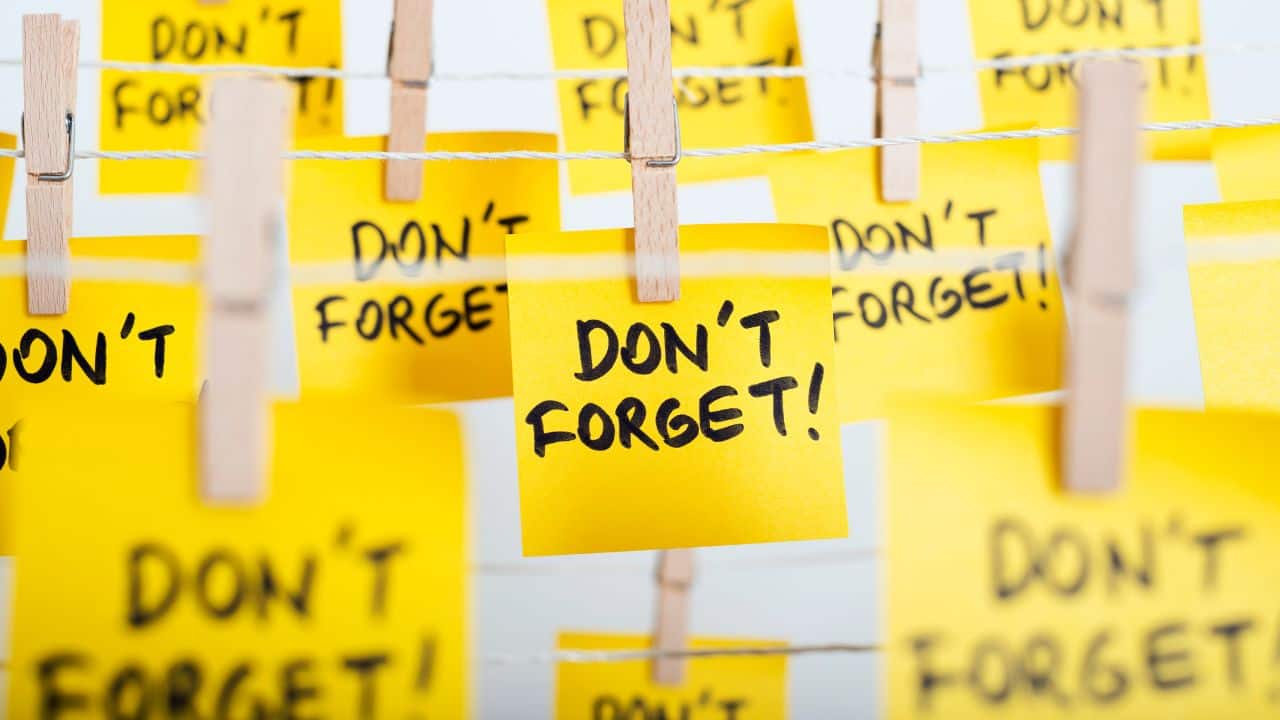
The Zeigarnik effect is a fascinating psychological phenomenon. It not only describes why people can remember interrupted or unfinished tasks better than completed ones, but also why Changes so often fail in business or in everyday personal life. Let's dive into the exciting world of the human brain.
Why do we remember unfinished tasks better?
Dear readers, what is the best way to relax? For me, it's jogging through the forest. Because when my body is moving, my mind is moving too. This was the case recently. While I enjoy the feeling of peace and clarity, my mind wanders and I reflect on the stressful last few weeks, which have been characterized by Keynotes, lectures and trips across Europe. One encounter in particular has remained in my memory.
At an international leadership meeting in the Austrian Alps, I got talking to a manager of a large corporation who told me that he had been working with a personal coach for some time because the overwhelming number of tasks had led to increased stress, brooding and excessive demands. His coach then gave him the tip to consciously recall the most important tasks for the next day before going to bed so that his subconscious could search for possible solutions during the night.
The Zeigarnik effect: the background
Although this approach sounds good in theory, in practice it led to the exact opposite of the hoped-for results. Not only did the manager not find any solutions to his various problems, but he slept even more restlessly and worse than before, which led to him experiencing a whole new level of stress in the morning.
When he asked if I could give him a tip, I told him about a phenomenon called the Zeigarnik effect, named after the Russian psychologist Blyuma Vulfovna Zeigarnik is named.
She traveled to Berlin in 1927 for research purposes. The background to her studies was a situation she observed in a coffee house. She was astonished to discover that a waiter in the completely overcrowded establishment was taking one order after another despite the hectic rush, and was able to remember and execute them without error despite the large number of orders. But just a few minutes later, he could no longer remember exactly which guests had ordered what. He only remembered the orders that he had not yet completed.
Definition Zeigarnik effect
Based on this observation, Zeigarnik then invited 164 test subjects to an experiment at Humboldt University and gave them the task of making or drawing something. Some of these activities were allowed to be completed, while others were interrupted by the psychologist.
And in this context, the result was the same again. Unfinished tasks were remembered up to 90 % better than those that were completed. And this was completely independent of age, level of education, gender or origin. Zeigarnik concluded from this that our brain provides a certain amount of cognitive tension for upcoming and unfinished tasks, which is maintained until the task has been completed. If this does not happen, however, the mental tension is not relieved by solving the problem, so that it remains in the memory in the long term.
The chest of drawers as a metaphor for our brain
If this sounds too complicated, imagine for a moment that you have a large chest of drawers in your head. Whenever you add a new task during the day, it is placed in a drawer that remains open until the task is completed. And because many people's to-do lists get fuller and fuller, there are usually dozens of drawers still open at the end of the day. This is where the Zeigarnik effect comes into play, because as we remember unfinished tasks better, our brain runs at full speed due to the increased cognitive tension. Unfortunately, this makes it difficult to rest. The result? We sleep poorly, feel stressed and struggle with constant overload.
Tips for dealing with the Zeigarnik effect
And this is precisely why the manager I spoke to after my presentation was unable to solve his problem. Because consciously dealing with his open drawers only made things worse. Fortunately, it's not that difficult to beat the Zeigarnik effect and ensure that you end your days with a mental chest of drawers in which all drawers are closed, or at least minimized. So here are my best tips for achieving just that:
- Set priorities: The more open projects, tasks and to-dos we have, the more overwhelmed we feel. By consistently setting priorities, you can reliably work through the really big chunks first. Ask yourself regularly: What are the really important things? Which tasks will have the greatest effect if I take care of them?
- Focus: When you tackle a task, focus 100 % of your attention on this task alone.
- The 2-minute rule: We all know those small, supposedly insignificant tasks that we like to put off until later, don't we? But even lots of small open drawers lead to brooding and stress in the long run. So how about the following: Never put off a task that can be completed in two minutes or less, but tackle it straight away.
- Let go: Let go of as many to-dos as possible. One option is to delegate tasks to other people so that the task is psychologically considered completed in your mind. Alternatively, you can also put tasks on hold (in the mental resubmission) so that they can be temporarily considered completed.
Make positive use of the Zeigarnik effect in your everyday life
The better you are able to close your open drawers, the more your mental hygiene will thank you. And of course you can also use the Zeigarnik effect in a targeted and intentional way. For example, series always end with a cliffhanger at the most exciting point, retailers like to work with time-limited offers and the writer Ernest Hemingway is said to have always deliberately interrupted his work at a point where he could theoretically have continued. This enabled him to get back into the flow as quickly as possible the next day. I would therefore like to end with a question: how can you make positive use of the Zeigarnik effect in your everyday life?
P.S.: For the sake of completeness, it should be mentioned that the results of the experiment could not be repeated afterwards, and the effect is therefore quite controversial. However, the basic effect of the Zeigarnik effect can be found everywhere in everyday life
 German
 English