
What is motivation? Definition, meaning and methods

What is motivation? We want to address this important question in detail in this article. To do so, we will look at the background, misconceptions and all other decisive factors. However, I would like to start with a thesis: motivation is a matter for the boss! And always.

Yes, you read that right, motivation should always be our top priority and we need to remind ourselves every single day why we do what we do. Well, and that's not always easy. Because we regularly have doubts, struggle with problems and think about throwing in the towel. That's why it's so incredibly important to give ourselves a loving but firm kick in the butt again and again.

Because if you don't do it, nobody will. Nobody knocks on your door in the morning and presents you with the opportunity of a lifetime on a silver platter. No fairy will appear out of nowhere and cast a spell to make your innermost wishes come true. And even modern motivators such as Jürgen Klopp, Thomas Tuchel or Julian Nagelsmann won't appear in your office when you could do with a little motivation on a difficult day.

What is motivation?

As sorry as I am, life is like that, and at the end of the day you are fully responsible for your motivation and your decisions, and therefore also for your results. Unfortunately, this realization is still very much at odds with the common approach of motivational theory. But there is also good news: you already have everything you need to change this sustainably and with a high level of inner drive. You just need to discover it, bring it to the surface and apply it every day.

I would therefore like to use this article to herald a paradigm shift with regard to the topic of motivation. Even if the future will be characterized by technical developments such as artificial intelligence, robots and automation, it will always be intrinsically motivated people who use technology and actively shape the future with the many new possibilities. Why can I say this with such vehemence?

Because we are in the middle of the transition from an information society to a meaningful society. Just a few years ago, data, information and knowledge were the most important commodities of all. Today, it is a deep sense of meaning, the expression of individual personality and the compatibility of work and life. Of course, this also means that our very personal approach to motivation is changing. changed framework conditions must adapt. A new, modern approach is needed that meets the needs, values and requirements of the 21st century. The motto is: Kick your own ass!

The time of Tschakka Tschakka motivation is over

When we ourselves pursue our goals with passion, enthusiasm and dedication, we also infect other people with these strong emotions. In order to flip the rusty switch, the first step is for the term motivation to finally shed the dubious image of the past. I don't know about you, but I think this is long overdue. The world is undergoing one of the biggest transformation processes of the last 250 years. And for the challenges of the future that go hand in hand with this, the old tricks of the past are completely the wrong methods.

The days of motivational trainers shouting "Tschakka", esoteric gurus preaching light and love and the blunt use of carrots and sticks are simply over. People are realizing more and more every day that hollow phrases and false promises are no longer going to win them a flower pot. Instead, they are longing for meaning, values and sustainability. And yet personal development, growth and Shift still sold and taught in the same way today as it was in Helmut Kohl's time shortly after reunification.

What does motivation mean

Go to any motivational seminar of your choice and you will always find the same patterns. A bold Becker fist here, a fervent wish to the universe there and a cornucopia of metaphors that are so hackneyed you'll want to sink into the floor in shame as you listen. The results are accordingly. In the short term, the recipients of these insubstantial motivational speeches are full of energy and feel like they can uproot all the trees in the world at once. However, as sure as the Amen in the church, the steep rise is followed by a crash into the familiar listlessness. People take refuge in cynicism, indifference and sarcasm.

It is precisely this superficial approach that has ensured that the answer to the question „What is motivation?“ and the term motivation have extremely negative connotations these days, and the profession of motivational trainer has a correspondingly bad reputation. If it were a real profession: many self-proclaimed motivational trainers have just attended a weekend seminar and then feel called to carry their messages out into the world. Because I know the wonderful power that motivation shaped by purpose and motives can unfold, this development makes me angry.

And at the same time, I ask myself why so many people still fall for the false promises of the supposed prophets. After many years of observation, research and reflection, I am now certain that the answer lies in a simple yet fatal fact:

People only ever hear what they want to hear.

Motivation sayings: The gurus are wrong!

And most motivational phrases are so wonderfully wrapped up in absorbent cotton that you simply want to believe them. Deep down, we sense that something can't be right. But the alternative would be that we would have to make difficult decisions, work hard and really change. And since most people aren't prepared to do this, in good old Matrix fashion we prefer to swallow the blue pill and believe the false promises of the motivational gurus.

Fancy a few examples? Here we go:

  • You can do anything.
  • You just have to want it, the rest will take care of itself.
  • The universe will take care of your success.
  • Everything is fine the way it is.
  • Delete the word „impossible“ from your vocabulary.
  • What happens should happen.
  • If you don't achieve a goal, then it wasn't meant to be.
  • From now on, we no longer say problem, but great opportunity. (This sentence is my absolute favorite. Anyone who says that has never had any real problems).
  • You have to order your wishes from the universe, then they will manifest themselves in your life.
  • You just have to see positively.

You can do anything! Sorry, unfortunately not.

Do you understand what I mean? Although there is a little spark of truth in every sentence, these slogans tempt you to take the easy way out instead of putting in the necessary work. You scratch the surface a little instead of getting to the core of what drives you. Instead of using your heart and mind equally, suddenly everything is just a mental block, plays out in your head or doesn't work because Mercury is currently retrograde. (I admit it, I've always wanted to write this sentence in a blog article.lol)

These motivational phrases are then usually rounded off with a firm thump on the chest, a hopeful look towards the universe and finally a convinced „Tchakka, you can do anything!“. And then you're surprised when you crash and burn. Incidentally, I won't go into the currently very popular glorification of the topic of „failure“ in more detail here, otherwise I'll open the next Pandora's box.

[cp_popup display=“inline“ style_id=“27000″ step_id = „1“][/cp_popup]

What motivates me?

It always breaks my heart when I meet people who want nothing more than to bring about change and then fail miserably due to the wrong motivational methods. With this article (and of course my books), I have therefore set myself the major goal of changing this. I cannot repeat it often enough:

In times of increasing uncertainty, people and their individual personalities will be the most important success factor of the future.

And that also means that we have to change the prevailing approach to motivation. radically change must. If we really understand what motivates, moves and drives people, then we hold the key to a life full of satisfaction, success and meaning in our hands.

„Oh come on, Ilya, that almost sounds like a revolution.“ Yes, you're right. That's exactly what I intend to do: To let the wind of change blow through encrusted companies, stuffy offices and externally determined lives. To instigate a motivational revolution that shows the red card to the hot-air steam chatterers and ensures that we are finally driven by meaningful motives again. Does that sound ambitious? Right, because I'm simply not in the mood for mediocre goals anymore.

At the end of the day, we all have a great desire to dare to make changes, experience courageous breakthroughs and enjoy personal freedom. So let's cut out the old habits and start swinging new brooms. Let's create one of Sense and values beyond carrots and sticks. It would make me infinitely grateful if you would support me in taking this philosophy out into the world with me and infecting people with the positive change virus.

It all starts with a spirited kick in the butt. And in your own. In order to do this in the best possible way, we first want to address the simple but crucial question of what exactly motivation is. Because even though this term is constantly on everyone's lips, there is still a great deal of semantic vagueness. So let's make an attempt at a definition.

Motivation Definition

Okay, so what exactly is behind the term motivation? In purely linguistic terms, it can be traced back to the Latin word movere (to move, to drive). The online library Wikipedia defines it as „The totality of motives that lead to a willingness to act. Motivation refers to a person's striving for goals or desirable target objects based on emotional and neuronal activity (activation).“ I don't know about you, but I find this sentence a little too complicated. I would therefore like to present you with my own, much simpler definition:

Motivation is the inner drive to get from point A to point B physically or mentally.

I would like to emphasize one fact in particular with this sentence, namely that motivation always comes from within. Even though the concept of extrinsic motivation is mentioned again and again in almost every article, book or seminar, this carrot-and-stick drive unfortunately only exists in theory. In practice, extrinsic motivation, where people only act at the prospect of money, praise or the avoidance of punishment, is nothing more than a myth.

„But wait a minute, Ilja. What about Jürgen Klopp's whipping-up speeches, salary increases or bonus payments for achieving goals?“ Of course, this objection is justified - after all, rewards in the form of money, recognition or material assets, as well as the threat of sanctions, definitely have a corresponding effect. But unfortunately this is always short-lived. If you've ever tried unsuccessfully to get your children to tidy up their room with the prospect of an ice cream or the threat of an iPad ban, then you'll know what I mean.

Motivation always comes from within

The same principle also applies to our professional lives, of course. No amount of money and no bonus payment in the world will make you do a job that frustrates you, makes you ill or that you don't want to do in the long term. In the same way, any threat of dismissal, sanctions or loss of hierarchical status will fizzle out in the long term. In the short term, you are motivated, full of energy and drive, but as soon as the effect has worn off, you fall back to your original level, often even significantly lower. As a result, the dose and intensity of the external stimulus must be continuously increased. It's a bit like a drug addict who is never satisfied and always needs more substance to reach their feel-good level.

Because the more often carrots and sticks are used as supposedly extrinsic motivation the faster the corresponding effect wears off. This is also referred to as diminishing marginal utility. What is this, you ask? Imagine entering your favorite pub after a hot day. The first beer is heaven on earth for you, you would pay anything for it. You'd probably pay for the second one too. By the third, your enthusiasm is already waning. And after the eighth glass at the latest, you can't see any more beer and prefer to reach for water. This is precisely the principle of diminishing marginal utility.

Motivation - An inconvenient truth

And because this is the case, long-term, meaningful and sustainable motivation always comes from within. A deep need, a value to be fulfilled or a specific motive ensure that we take action and then lead to the corresponding results on the outside. So let me tell you a possibly painful truth:

You can't motivate other people!

So, now it's out. And I can literally feel the storm of protest and outrage. Believe me, no other statement I make triggers more controversial discussions in companies than this one. No wonder, after all, we have all learned over the years that with the right combination of carrot and stick, we can drive our employees, colleagues and business partners to unimagined heights of performance.

But as with everything else in life, there are always two people involved: one who motivates and one who wants to be motivated. And the last word is the decisive one. Because if someone doesn't want to do something under any circumstances, no matter how modern, attractive or ingenious your methods are, you won't stand a chance. I would therefore like to expand the above sentence a little to make the statement even clearer:

You can't motivate other people if they don't want to be motivated!

What is motivation?

Of course, the reverse is also true: other people can't motivate us if we don't want them to. Have I shaken your world view too much now? Do you completely disagree? I would like to remind you that I would be delighted if you would consider my ideas, opinions and approaches as critically as possible. Check my statement in your everyday life. My prediction, however, is that you will find that many people will quickly bite the bullet with your external motivation skills. Because as much as I would like it to be different:

People only ever change for reasons that are important to them and never for reasons that we would like them to.

Does this mean that all motivation is always a form of self-motivation? In principle - Radio Yerevan sends its regards - yes: we can't motivate others if they don't want it. But if we understand that this is exactly the case, then it works at the end of the day.

In a nutshell, the solution is: if we want to motivate other people to move mentally or physically from point A to point B, then we need to know their inner motives and create the framework conditions in which these are triggered or initiated as often as possible. At first glance, this sounds easier than it actually is, because it requires maximum flexibility from us as motivators and the presence of the following three characteristics:

  • Genuine interest in the other person.
  • The ability to be a good listener.
  • The willingness to put one's own motives aside in favor of the desired result.


The better you understand the values, needs and Motifs of your employees, colleagues and customers, the more flexibly you can adapt your communication style and motivate them to change accordingly. But there is one important fact to bear in mind.

What really motivates you?

Intrinsic motivation is the inner drive to get physically or mentally from point A to point B. Basically, this can happen in two ways: either because point A has become unbearable for us or because alternative B sounds much more tempting. We always change when the pain has become too great or when we are driven by an irrepressible desire for growth, happiness and joy. And that is precisely why we either move away from the problem or towards the opportunity.

That is the essence of any change. We are either attracted by opportunities or pushed by problems. And even if the way-from motivation always has a stronger force, in the long term we always need goals, dreams and visions to move towards. But whether we want to avoid pain or experience joy: Without the right drive, it is simply not possible to think differently, decide differently or act differently. And in this day and age, that is synonymous with stagnation, stagnation and regression.

Motivation as the key to success in tomorrow's markets

Only those who grow as personalities, continue to develop and constantly learn will be able to succeed in the markets of tomorrow. The key to this is the right motivation. However, this is never just an end in itself, but always the necessary basis for the desired changes. Without the right drive, there is no personal development, we do not grow and we do not improve as a company. And even if we manage to tackle our goals, it is far from certain that we will persevere to the end.

Because nothing else is as difficult for us as making lasting changes. The last diet, the gym membership and the repeated attempt to stop smoking all send their regards. Short-term success is no problem at all. Guided by the right initial euphoria, we manage to set off effortlessly. But we soon get caught up in the daily grind again and make the first exceptions - and before we know it, our old habits have regained the upper hand. But why is that?

Knowledge is only worth something if it is applied consistently

In my presentations, I am often asked the question „What is motivation?“. I then like to answer with a counter question to my audience: „Which of you would like to do more sport?“ All hands almost always go up at this point. Then I follow up: „Who would also like to lose a kilo or two of weight?“ Here, too, I regularly see an almost 100% response rate.

But the next question is crucial: „Which of you knows exactly what you would have to do to achieve this?“ At this point, a murmur usually goes through the room, the first people feel caught out and look down. Because they probably already suspect what comes next: „And which one of you does exactly that every day?“

When I look into the audience at this point, I see a maximum of two or three hands in the air. Unfortunately, the rest have to admit that, although they have all the necessary information, they are not implementing the change consistently. And that is precisely the big dilemma. It is never due to a lack of knowledge. It is always because we do not consistently apply the knowledge we have. I'm sorry if I'm deceiving you, but this is actually the case.

If information, knowledge and skills were decisive for our motivation to change, then we would all have washboard abs, play golf all day and dive through our countless money bins every morning like Scrooge McDuck.

Motivation and change go hand in hand

I have been researching the field of personal development for over 15 years and am increasingly fascinated by what makes people tick, what drives and motivates them. My main finding can be summarized in one sentence:

Everyone wants change. But nobody wants to change.

Have you had similar experiences? Don't you know people who are dissatisfied with everything and everyone? For whom nothing really fits and who would love to change the company, society and the whole world overnight? You have no idea how many of these contemporaries I know who know exactly what and who needs to change around them just so they can stay the way they are.

One of the best examples of this attitude was one of my colleagues at Karstadt, let's call her Erika Riebesehl. When I asked her in the aisle in the morning: „So, Mrs. Riebesehl, how are you doing today?“, the answer usually came in a whiny and frustrated tone: „Oh, eight more hours and then we'll finally have done it again.“ And Erika Riebesehl had two standard sayings that she was known for. If there was a problem somewhere, she would always say:

„Someone urgently needs to do something.“ And if you then followed up with: „Yes, but why aren't you doing anything?“, then standard line number two would be used: „Who, me? Please, Mr. Grzeskowitz, I can't do more than work. Let the others do it for you.“ We all know the Erika Riebesehls of this world, don't we? But if everyone waits for others to do something, then nothing ever happens.

A single person can make a huge difference

But fortunately, the opposite is also true. A single person can make a huge difference if we are prepared to take responsibility. For our thoughts. For our actions. For our lives. All it takes is a consistent decision. We can either be a changemaker who actively shapes the ever-increasing intensity of change, or we can be a pawn of external circumstances. And I am very aware that there is nothing else I refer to as often in my books as the importance of taking responsibility. But it still doesn't seem to be enough.

Just today I read a review of my book Mach es einfach! Why we don't need permission to change our lives, in which the reviewer wrote the following: „In general, the book was good. Unfortunately, the motivation only lasted a week. Probably need to read it one more time.“ At that moment, I had to think of another great sentence by the great Zig Ziglar, who once said: „We often hear that motivation is not permanent. But the same goes for showering.

And that's exactly why we recommend it every day.“ Whether we like it or not, we ourselves are always responsible for implementing our plans. Not our boss, not our family and not the author of a blog article. The all-important question is therefore: Are you prepared to declare your motivation a matter for the boss? If so, then you have also found your answer to the question „What is motivation“.

Yours sincerely, Ilja Grzeskowitz

CHANGE MANAGEMENT - HOW CHANGE WORKS IN THE FUTURE

Change management. Change management in German. Probably no other word is currently used more frequently in companies and organizations. No wonder. After all, change is omnipresent. As Keynote Speaker When it comes to change management, I have the great privilege of working with companies of all sizes from a wide range of industries. And I don't know of a single one that has not been affected by change in some way, sometimes even on a massive scale.

Change management: Why are changes no longer „nice to have“?

But when we talk about change management, we have to realize one thing right at the beginning: Change itself has changed massively. Long gone are the days when there was a change process every few years (which was implemented more or less successfully) before people settled back into the new status quo.

Today, we live in a time characterized by complexity, uncertainty and ever-increasing intensity, which is determined by the following factors, among others:

  • Globalization
  • Digitization
  • Generational change (different values, expectations, life plans)
  • Radically changed consumer behavior
  • Change in markets
  • Crises of all kinds (wars, social unrest, pandemics such as COVID-19, etc.)
  • Political decisions (regulations, minimum wage, laws, bans, etc.)
  • Technological progress (artificial intelligence, robotics, machine learning, virtual reality, etc.)

Only those who respond to this development with courageous decisions will remain relevant in the future. And from this follows: Active change management is no longer a „nice to have“, but a measurable competitive advantage. Or to put it even more succinctly: it's change or be changed. Change or die.

Definition of change management

Before we delve deeper into the topic, let's take a look at what change management actually is. The online lexicon Wikipedia defines the term as follows:

Change management encompasses [...] all tasks, measures and activities that are intended to bring about a comprehensive, cross-divisional and far-reaching change - to implement new strategies, structures, systems, processes or behaviors - in an organization.

Of course, this sounds rather bumpy, so I would like to share my own personal definition with you:

Change management is the sustainable anticipation, planning and control of meaningful change processes in an organization. Modern change management focuses equally on the planning, control and monitoring of processes, methods and instruments, as well as on involving, empowering and leading the people involved, who are the decisive - because most important - success factor for sustainable change.

This definition makes it clear why I have emphasized that the Shift has changed itself. Because even if processes and methods are of course still important, at the end of the day it always comes down to the most important success factor of all: The people.

Change management methods at a glance

What distinguishes successful change management from projects that end up failing? I have developed a model that combines my research of the last twenty years with my practical work in a wide variety of companies around the world. But before I present my model of change competence to you, I would like to introduce you to the best-known concepts of the most important change researchers: Kurt Lewin's 3-stage model, John P. Kotter's 8-stage model, Elisabeth Kübler-Ross' Change Curve and Jeff Hiatt's ADKAR model.

Even if the models come from different times and all have different approaches, you will quickly realize that certain „ingredients“ appear again and again. No wonder, because the bottom line is that successful change is not rocket science. It's about letting go of old patterns, strategies and behaviors and replacing them with new, innovative alternatives.

But what sounds so simple is actually not in practice, because in addition to all rational and intellectual factors, people's psychology plays a decisive role. And this is sometimes unpredictable, which makes the need for clear framework conditions and models all the more important.

[cp_popup display=“inline“ style_id=“27000″ step_id = „1“][/cp_popup]

Change management according to Lewin: The 3 phase model 

Back in 1947, social researcher Kurt Lewin published his three-phase model, which he used to explain change processes in groups and organizations. Change management according to Lewin proceeds in three phases, namely:

Phase 1: Unfreeze (defrost)

This phase is about preparing for change. This is done through a detailed analysis, communication of the plans, involvement of those affected and discussion of the measures. The sum of these factors results in an increased awareness of change and generally more desire and motivation for implementation.

Phase 2: Change

In phase two, the status quo is actively abandoned, solutions are identified, various alternatives are tried out and concrete changes are implemented. To ensure sustainable results, new standards are established by those responsible and processes are monitored through regular training and controlling.

Phase 3: Refreeze (repeated freezing)

Kurt Lewin defines phase three as the process of adapting to the new status quo and the new behaviors. In order to avoid falling back into old patterns, a lot of emphasis is placed on feedback, communication, training and support. In addition, the processes are monitored and adapted until a permanent change has been achieved.

Change management according to John P. Kotter: The 8-stage model

In 1996, the American professor John Paul Kotter published his world-famous book Leading Change, which contained his 8-stage model of a change process. It is based on his 1995 Harvard Business Review article „Leading Change - Why Transformation Efforts Fail“ and attempts to provide organizations with a model that increases the likelihood of successful change management. John Kotter formulates the change process in 8 stages, which - depending on the depth and scope of the change - can take several months to years.

Level 1: Create a Sense of Urgency

Every change requires an appropriate level of awareness among managers and employees. This stage involves demonstrating the need for change, a realistic analysis of the market and competition, and identifying opportunities and risks.

Stage 2: Build a guiding coalition

In stage two, a team is formed that is responsible for implementing the change. According to Kotter, this team should be representative of the organization and have sufficient competence, trust and expertise to be prepared for possible challenges in the best possible way.

Stage 3: Develop a Vision and Strategy

Stage three determines what the vision and long-term goal of the change should look like so that it is clear from the outset in which direction it is heading. The vision should be imaginable, realistic, sufficiently specific but also flexible and reflect the interests of as many stakeholders as possible. The strategy is then developed from the vision.

Stage 4: Communicate the Change Vision

Communication is crucial for the acceptance of the vision, which should therefore be disseminated as simply, visually and clearly as possible to all employees via a wide variety of channels so that they can identify with the long-term goal of the change.

Level 5: Empower employees and enable broad-based action (Empower broad-based action)

What is preventing employees from implementing the planned changes? This question is addressed in stage five, where the aim is to remove obstacles in order to enable active action. These may be existing structures, a lack of skills or managers who are resistant to change.

Level 6: Generate short-term and visible successes (Generate short-term wins)

As change processes can take a very long time, it is crucial to achieve quick and visible successes in order to increase the credibility of the change process. At the same time, the short-term wins serve as feedback and a reward for the commitment shown and can therefore increase employee support.

Stage 7: Consolidate gains and produce more Change

In stage seven, the successes achieved are consolidated and established within the organization. However, Kotter warns against resting on one's laurels and announcing the end of a change management process too quickly. It is therefore necessary to build on the successes and to introduce and implement further changes.

Stage 8: Anchor new approaches and changes in the corporate culture

The final stage of change Management process is achieved when the change is firmly anchored in the corporate culture. To achieve this, it is necessary to let go of old parts of the culture that are not compatible with the vision and replace them with new values and convictions.

Overall, John P. Kotter's 8-stage model can be divided into three broad phases: Phase 1: Establishing a climate for change (stages 1-3), phase 2: Involving and empowering the entire organization (stages 4-6) and phase 3: The sustainable implementation of change (stages 7 and 8).

The change curve by Elisabeth Kübler-Ross

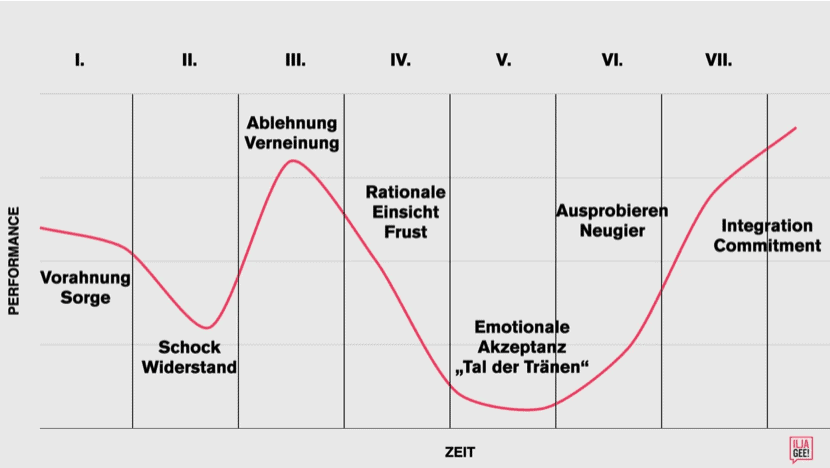
The well-known change curve is a model published in 1969 that goes back to the psychiatrist Elisabeth Kübler-Ross, who used it to explain the various psychological phases that dying people go through. In the context of change management, the 7 (emotional) phases of the model are helpful, Change processes better and thus be able to deal with them better.

Elisabeth Kübler-Ross change curve

Phase 1: Premonition and worry

A change is announced or is on the horizon, and you immediately ask yourself questions such as: „What might this mean for me?“, „Will I be worse off afterwards?“ or „Is my job in danger?“. The result: a gnawing worry about your own future that puts an emotional strain on you.

Phase 2: Shock and resistance

As soon as the worry becomes real, there is a shock reaction, the intensity of which depends on the extent of the change. This is followed by a violent aversion, and those affected go into resistance.

Phase 3: Denial and rejection

It is deeply human to argue why everything should stay the way it is. And so it happens that changes are denied, suppressed and rejected: „It may affect others, but not me“, „let them do it, but without me“ or „they'll calm down, then everything will go back to the way it was“.

Phase 4: Rational acceptance

At some point, there comes a point when you rationally understand that change is not only inevitable, but also necessary. However, this does not mean that those affected have the necessary willingness for personal change. Many take refuge in working to rule, pushing frustration, which leads to a bad mood in teams and organizations.

Phase 5: Valley of tears 

Only when the „valley of tears“ has been crossed has the change been accepted emotionally. In this phase, there is an intense rollercoaster ride of emotions, which can lead from elation to grief. But as soon as you have let go of the emotions associated with the old ways, you can fully embrace the changes to come in the future.

Phase 6: Curiosity and trial and error

In phase six, which is characterized by curiosity, new ideas, strategies and behaviours are carefully tried out, analysed and further developed. Of course, there are always setbacks, but in combination with a constructive error culture, the foundation for sustainable change management is laid here.

Phase 7: Integration and commitment

The final phase marks the conclusion of the change process by committing to the new paths and permanently integrating the changes into everyday life. The new status quo has become a matter of course and in turn serves as a starting point for further transformation projects.

According to Elisabeth Kübler-Ross, all people go through the same seven emotional phases, regardless of how open they are to change. This helps people to better understand their own feelings and to be able to understand other people.

Change management with the ADKAR model by Jeff Hiatt

Last but not least, I would like to introduce you to the ADKAR model, which I greatly appreciate and which was developed in 1999 by Jeff Hiatt, founder of the management consultancy Prosci. ADKAR is an acronym for the five stages that, according to Hiatt, individuals and organizations need to go through for successful change management:

AWARENESS of the need for Change

Only if you are really aware of the need for change will people be prepared to implement it. What will be new, what will remain the same, who will be affected and what concrete effects will the change management process have? The greater the awareness, the greater the likelihood of successful implementation

DESIRE to participate in the Change (wish)

This stage is about providing individuals with the intrinsic motivation to implement the upcoming changes. In addition to the impact on the organization, the main question is what improvements there are for the individual. The key question is: What's in it for me?

KNOWLEDGE about how to change (Knowledge)

Awareness and desire form the foundation for the upcoming change management. However, it is crucial to know exactly how the upcoming changes can be implemented. This can be done through active communication, training and regular meetings.

ABILITY to implement the Change

Of course, the best knowledge is useless if the crucial skills for implementation are missing. The implementation of systems, training, standards and processes is therefore essential.

REINFORCEMENT to sustain the Change (reinforcement)

This phase ensures that general satisfaction is not achieved too quickly, but that initial successes are made visible and celebrated, while at the same time making it clear that the path will only go forwards, never backwards. In this way, you create a dynamic that ensures lasting and sustainable results.

The ADKAR model is ideally suited for an initial analysis of a change program. Management project, as well as for concrete implementation with the help of the five phases of the change process.

Management of change is dead - long live modern change management

Of course, there are many other change management models in addition to those presented here. What they all have in common is that they focus on certain success factors for sustainable change:

  • Awareness of the need
  • A clear vision and strategy
  • A pronounced intrinsic motivation of those involved
  • Transparent and regular communication
  • Empowering people
  • Change as co-creation (We are change! It only works together)
  • A concrete plan for dealing with setbacks
  • Staying power and stamina (change is a marathon, not a sprint).

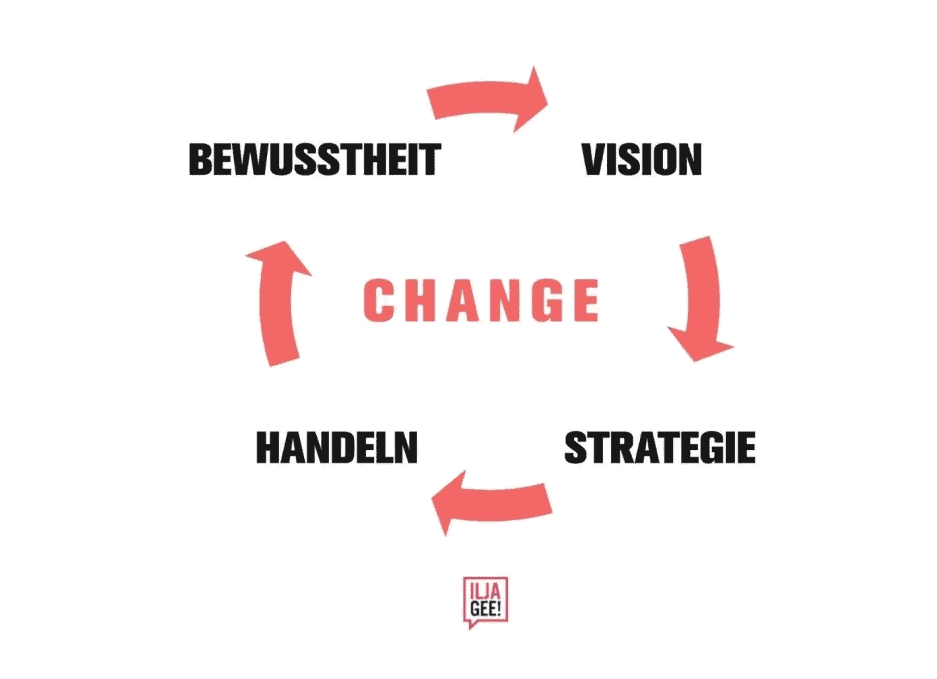
However, all models neglect one point: change has long since ceased to be a process with a beginning and an end. Change management has long since become a permanent state of a change loop, which I have illustrated in the following graphic.

Change management Change Loop

Change management of the future: change competence

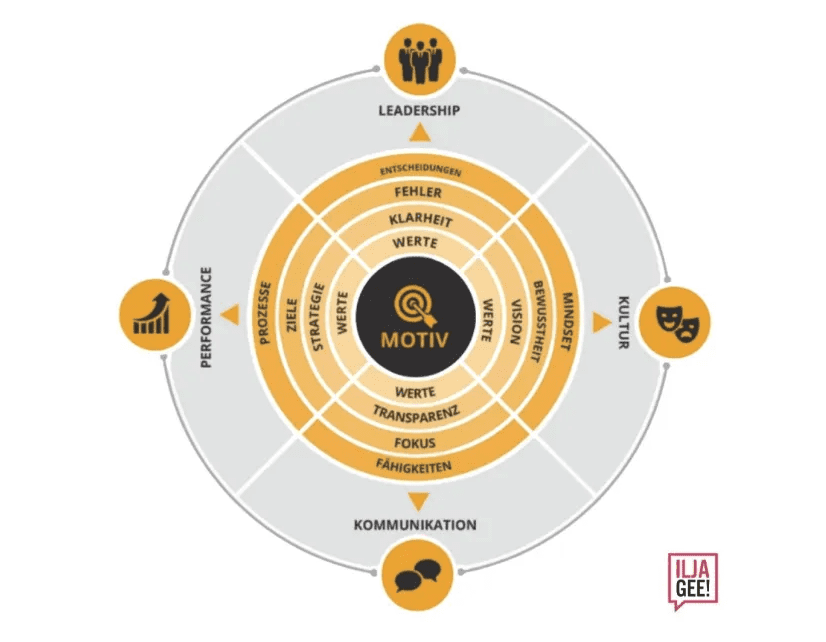
My Change management model focuses on people and no longer sees change management as a process, but as a skill that can be learned, trained and developed (and must be for sustainable results). An overview of the model is as follows:

Change Competence model

As you can see, the Change Competence model is based on four important pillars (if you want to go even deeper, then click here to read a comprehensive article on change competence):

1) Leadership: Guidance and successful change management go hand in hand

2) Culture: The Mindset and the way we interact with each other are crucial

3) Communication: This is the key to sustainable results

4) Performance: The more concrete the strategy and the subsequent processes, the better

The future of change management is radically human

For me, people are the most important success factor for sustainable change management (after all, I worked with Radically human - personality as a success factor in times of change a whole Book written on the subject). This is also reflected in my model of change competence, which focuses on two factors that all other models either only mention in passing or not at all: purpose and values.

The purpose, the motive or the why is the central focal point to which everything else is aligned. If there is no clarity here, then even the best plan and the most modern process are doomed to failure.

If you combine purpose with strong values that are shared (and lived) by everyone, you have created a foundation that dramatically increases the likelihood of successful change management.

Because suddenly change is no longer a compulsion, but has a purpose.

Because suddenly change is no longer a threat, but a wonderful opportunity to become better, to develop further and to take the future by the horns and actively shape it.

And that is precisely what should always be the primary goal of change management: The joy of change instead of the frustration of change.

Would you agree with me? I look forward to your comment...

Mindset German - definition, tips and meaning

„Clearly, it's about a Changing the mindset.“ I probably hear this answer more often than any other when I ask my clients what the main objective of my presentation should be in the briefing discussion before a keynote speech. No other factor is as central when it comes to sustainable change in individuals or entire organizations as mindset. But mindset German? The term is on everyone's lips. I hear it every day from executives of successful companies, from lifestyle coaches on Instagram and even from my nine-year-old daughter, who told me before her last math test: „Learning the formulas isn't that important, dad. The mindset is much more important.“

Mindset German - What is the mindset actually?

And in fact, the term „mindset“ is currently used so frequently that it can actually be described as one of those popular buzzwords that you can't really hear anymore. But what exactly is mindset? Is it really just a meaningless term or a relevant success factor? As is so often the case, it all depends on what you make of it. Because of course there is a certain group of people who stick the label „mindset“ on pretty much everything that is possible, but don't really understand what the word actually means. The many self-proclaimed mindset coaches on social media send their regards.

But there is also the other, practical and future-oriented use. Pretty much all successful organizations, companies and brands that I have the privilege of working with have the topic of mindset at the top of their agenda. Because they have understood how important soft skills will be in the future and that the inner attitude is much more important than specialist knowledge or technical skills (which can be acquired at any time). But before we get too deep, let's first take a look at what exactly is behind the term mindset.

Mindset definition - what it is and why it is so important

The English term mindset is actually difficult to translate into German. In common parlance, it is often used synonymously with attitude, mindset or way of thinking. The online lexicon Wikipedia defines mindset as

„the English term for the German word Mentalität, which in turn [...] denotes a predominant psychological personality trait (predisposition) in the sense of a pattern of thought and behavior of a person or social group.“

For me, this definition does not go far enough. Based on my research for my books „Attitude - Success through the right inner attitude“ and „The Changemaker Mindset - How Innovation and Change starts with Inner Transformation“, the term mindset stands for the following:

„The mindset is based on our identity and is the sum of our values, beliefs, experiences, skills, personality traits, habits, decision-making strategies and our general attitude towards life. It is not so much what we do on a daily basis, but above all the way we do it and the purpose (emotional reason), i.e. the why and for what.“

Mindset Growth - The two types of inner attitude

Probably the best-known research work on the subject of mindset goes back to the American mentality and behavioral researcher Carol Dweck who in her book „Mindset - Changing the way you think to fulfill your potential“ speaks of a fixed mindset and a growth mindset.

Fixed Mindset

According to Dweck, people with a fixed mindset assume that their talents, skills and ways of thinking are fixed characteristics that either exist or do not exist, but cannot be changed under any circumstances. People with a fixed mindset are generally characterized by the following characteristics:

  • You are not good at dealing with defeat
  • They avoid challenging situations for fear of failure
  • They often see themselves as untalented
  • They accept the status quo as unchangeable
  • They give up quickly when faced with difficulties

Growth mindset according to Carol Dweck

With a growth mindset, on the other hand, people assume that the factors described can be changed and improved if they train, learn and work on themselves sufficiently. People with a growth mindset are generally characterized by the following characteristics:

  • You are always willing to learn
  • They see mistakes as an opportunity to improve
  • They believe that will, dedication and hard work are more important than talent
  • You are curious, thirsty for knowledge and open to new things
  • They know their weaknesses, but are prepared to work on them
  • They accept that you have to make an effort if you want to develop personally

Change your mindset. Is that even possible?

So let's move on to the crucial question: is the mindset a given characteristic or can it actually be changed? The good news first: Yes, of course you can change your own mindset. But it is by no means as simple as you often read in self-help books, YouTube videos and Instagram posts. It is not just a short-term change from the old mindset to the new mindset, but rather a lifelong personal development that never really stops. I would therefore like to mention a few fundamental factors that are essential for a sustainable mindset shift:

  • Awareness: You can only change what you are aware of. The more aware you are of your own communication, your general focus, your impact, your openness and your attitude towards life, the easier the mindset shift will be.
  • OpennessThe phrase „We've always done it this way!“ should be a thing of the past from now on. Instead, a general openness to new ideas and new approaches is crucial. Because it is only in situations that we have never been in before that we grow and develop ourselves (and therefore our mindset).
  • FocusYes, life is full of problems. And these should never be ignored or hidden. Nevertheless, it is important to always focus on solutions and opportunities.
  • StaminaRome was not built in a day. The same applies to your mindset. There will be setbacks and you will doubt yourself. This is not only completely normal, but a necessity for personal development. In these moments, always remember: working on your mindset is a marathon, not a sprint.
  • Environment: No one wins alone. This also applies to changing our mindset. Because in the long term, the people in our immediate environment have an enormous effect on us. So look for people with a growth mindset who can influence you positively and serve as role models.
  • Positivity: And last but not least, the three most important rules of the mindset shift:
    1. Always be positive.
    2. Always be positive.
    3. Always be positive.

Mindset German - A positive attitude is NOT positive thinking!

The last point brings me to the relentless truth about one of the most important, but at the same time most controversial topics in connection with the mindset. I am talking about the positive thinking. Some have submitted to this philosophy unconditionally, while others condemn it completely and dismiss it as esoteric humbug. Of course, this has corresponding consequences.

While the supporters of the first variant simply ignore and smile away every problem with a permanent grin on their face, rose-colored glasses on their eyes and a naive trust in light and love, the opponents of positive thinking often become cynics whose glasses are half-empty, the skies full of dark clouds and everyday life is usually quite dreary. It is obvious that neither strategy is suitable for leading a happy life. Nevertheless, I hear one question again and again: „Is positive thinking good or bad?“

Forgive me if I don't give a direct answer to this, but I would like to point out a very common pitfall that can be seen here in its purest form:

If the question is wrong, then the answer doesn't matter.

This is precisely the case here. The question has a misleading focus and only focuses on one aspect of the big picture, namely thinking. At the same time, however, it ignores the other important factors: actions, habits and the general mindset with which we approach life and all its tasks. That's what it's all about, the fundamental orientation. And I have a very clear opinion about that:

Don't waste your life on negativity, be positive. Always.

The latest knowledge, the best skills and the most modern techniques are of absolutely no use to you if you go about your everyday life with a negative mindset. Conversely, this does not mean that you will automatically be successful with a positive mindset. No, a mindset focused on opportunities and possibilities inner attitude alone won't get you anywhere.

But with such a Attitude you can achieve anything better than with a negative attitude. I have been studying human behavior in all its facets for over twenty years. And not once have I come across someone who would have achieved positive results with a negative mindset. Put them to the test. Take a look around you. I bet you won't find a successful person whose DNA is polarized towards negativity. To the point:

A negative mindset and positive results are mutually exclusive.

Mindset meaning: The questions make the difference

So don't waste your time with negativity, but focus on the numerous opportunities and possibilities. Incidentally, this does not mean ignoring problems, not recognizing risks or ignoring other challenges. Quite the opposite. The trick is to recognize these situations and at the same time think in terms of possible solutions. The focus of your internal thought patterns is crucial. The quality of your questions determines the quality of your results. But what do they look like for you?

Over the last few years, I have compiled a list of questions that I hear again and again in my seminars and coaching sessions. Would you like a small sample? Here are my top 10:

The TOP 10 problem-oriented questions

  1. Why does this always happen to me?
  2. Why can't I manage to be successful?
  3. Why doesn't anyone in the company like me?
  4. Why can't I find my vision?
  5. Why does it work for everyone else, but not for me?
  6. Why am I not able to achieve my goals?
  7. Why do I fail every time when it comes to something?
  8. Why do I magically attract problems?
  9. Why me of all people?
  10. Why is change so difficult?

Does this sound familiar? These questions have one thing in common. They are pointless. Because they are backward-looking and problem-oriented. But as Albert Einstein aptly said: „Problems cannot be solved with the same way of thinking that created them.“ How right he was. If you ask yourself solution-oriented questions instead, you will immediately experience a massive shift in your focus. I have also prepared a top 10 for you here:

TOP 10 solution-oriented questions

  1. How can I resolve this situation?
  2. What can I learn from this?
  3. Who could support me?
  4. When have I ever solved a similar task before?
  5. What can I learn from this?
  6. What other resources do I need to achieve XYZ?
  7. What could a solution to the problem look like?
  8. How do I have to change in order to achieve my goal?
  9. What opportunities lurk in this challenge?
  10. How do I have to think differently to achieve the goal?

Mindset training - a small hack with a big impact

This is the small but subtle difference that makes a difference. These positive questions will inevitably be followed by positive actions, which will lead to positive results. A self-reinforcing spiral of success is created, which becomes deeply anchored in your subconscious over time and reliably does its job there. Of course, even with the most positive mindset, there will still be situations that annoy you, frustrate you or drive you crazy. Wonderful. Then here is the best mindset tip I know. Are you ready? Here we go:

5 minutes of whining is okay!

Yes, really. Let it all out for 5 minutes. Get angry, be angry and shout your frustration out loud to the world. But after that, the motto is: focus positively on solutions and opportunities. Because life is simply too beautiful to waste it on negativity. Enjoy every single moment and transform even the supposedly big problems into at least as big opportunities.

Besides your mindset, your most important ally is an often forgotten factor called humor. Yes, you heard right. Because humor opens the door to every individual change. To the small challenges of everyday life, but also to the really big ones. Every successful person I know likes to laugh a lot, especially at themselves. Because only those who don't take themselves too seriously can be taken seriously by those around them. Nobody likes bitter, always serious and rigid contemporaries.

Mindset Shift - The 3 golden rules of a positive attitude

The great art is to approach the supposedly small tasks with great seriousness and to be able to laugh about the difficult, seemingly insurmountable and often frustrating challenges. I would like to conclude this article with the three golden rules of a positive mindset:

  1. Be positive. Always. (I already mentioned that, didn't I?)
  2. Be aware of problems, but at the same time think in terms of opportunities and possibilities.
  3. Humor opens the door to change. Laugh a lot and often, and don't take yourself too seriously.


Wonderful things will happen if you make these three rules your daily companions from now on.

And now I'm interested in your opinion: how important is the mindset for you and what experiences have you had?

WHAT IS A KEYNOTE SPEAKER?

Keynote Speaker German: What does the term mean?

„Where do you want to go?“ These were the words with which the friendly cab driver greeted me at Frankfurt Airport. When I told him the location where I was to give the keynote speech at a major congress that afternoon, he asked with interest: „What do you do for a living?“ My answer, that I am a keynote speaker, As is often the case, this led to a look of disbelief and the question: „What is a keynote speaker?“.

Of course, I explained my job to him in detail during the journey. And yet the next question inevitably came: „And you can actually earn money with this?“ We will go into the question of possible fees in more detail later in this article, but for now let's deal with the question of why the term Keynote speaker in Germany is still so unknown.

When I have the same conversation in the USA, England or Asia, the reactions tend to be: „Ah, cool. I'm a big fan of Tony Robbins. I wish you every success with your speech.“


Key Speaker: What is that?

Dieser Artikel soll daher etwas Licht ins Dunkel der Frage „Was ist ein Keynote Speaker“ bringen. Bevor wir den Key Speaker (und selbstverständlich auch die Keynote Speakerin) definieren, wollen wir zuerst das große Knäuel der unterschiedlichen Begrifflichkeiten etwas entwirren. Denn neben dem Keynote Speaker gibt es ja auch noch Redner, Referenten, Dozenten oder Sprecher. Natürlich sind die Übergänge zwischen den einzelnen Kategorien fließend, gleichsam unterscheiden sie sich aber auch elementar, haben sie doch alle unterschiedliche Aufgaben und Zielsetzungen, wenn man sie für eine Veranstaltung bucht.


Public speaking versus professional speaking

Speaking of booking, this thought reminds me to make another important distinction at this point. Because when it comes to giving speeches, there are two similar but ultimately completely different areas:

1. public speaking

This refers to giving speeches in public, i.e. in front of other people. The motivation behind this is the joy of rhetoric, the art of speaking or the need to inspire other people. In seminars, workshops or associations such as Toastmasters you learn the craft of how to put together a good speech and which techniques work best. You can then try all this out at weddings, speaker slams, trade fairs or seminars, for example. Toastmasters even goes one step further and regularly organizes speech competitions in various categories, including the World Championship in Public Speaking. However, as all this takes place without payment, it is a hobby.

2. professional speaking

As the name suggests, this category includes professional speakers who earn money and make a living by giving keynote speeches or presentations. Professional speakers are also really good speakers (the best of them even outstanding), but that's not what they get paid for. Instead, it's about the impact their speeches have. And the greater the expertise and experience of the speaker, the greater the impact. All successful professional speakers are therefore usually experts in a particular field (I will reveal which topics are booked most frequently below).

Ich hoffe, dass die Unterscheidung deutlich geworden ist, denn in diesem Artikel beschäftigen wir uns ausschließlich mit Rednern und Keynote Speakern aus der zweiten Kategorie. „Aber Moment Ilja, jetzt hast Du ja schon wieder beide Begriffe in einem Satz verwendet. Was ist denn jetzt der Unterschied?“. Okay, da haben Sie natürlich recht. Es ist also Zeit, die Frage „Was ist ein Keynote Speaker?“ mit einer entsprechenden Definition zu beantworten.


Keynote Speaker Definition

Ignorance of the true meaning of the term keynote speaker is probably largely due to the inflationary use of the term in the wrong context. Why not put it to the test and scroll through the feed of LinkedIn, Instagram or another social media platform of your choice? Chances are good that you will quickly stumble across a variation of the following statements:

  • „Looking forward to my keynote at Event XYZ“ (even though it's a free online congress with over 35 speakers).
  • My keynote speech at the staff meeting of company XYZ was a complete success“ (although it was a technical presentation after the lunch break).
  • „Let's do this. Keynote Speech at the University XYZ“ (although it was a keynote speech as a lecturer)

You know what I'm talking about, don't you? Often these statements are then embellished with the fact that you „rocked the stage“, which is a classic indicator that you are neither a keynote speaker nor a professional speaker. A keynote speech delivered by a keynote speaker is something completely different.

Wikipedia defines the keynote speech as „an outstandingly presented lecture by a mostly prominent speaker or professional keynote speaker“.

My definition of a keynote speaker is as follows:

A keynote speaker is the main speaker at an event, whose keynote speech either opens or closes the event. The keynote speaker follows the central theme of the event, provides impetus for the main topic and activates the audience, particularly emotionally.

The term is made up of the syllables „key“ and „note“ and originally comes from the world of choral singing, where the choir sings a single note before performing together so that the individual singers can tune in to the piece to be sung and to each other. The keynote speaker has a similar task, namely to get the participants of an event in the mood for a topic, a core message or a central theme.


What is a keynote: Categories of speakers (m/f/d)

Based on this definition, we will now delineate the different types of speakers and their presentations:


Specialist speaker / specialist lecture

These are presentations by technical experts that focus on providing information on a specific area. This may be the introduction of a new product, new software or a new system. The speakers are usually internal speakers from their own company or industry.


Speaker / keynote speech

This is where external experts come into play, providing external input on a specific topic based on their expertise. The speakers have made a name for themselves in their field and are regarded as authorities. They are therefore well paid because they manage to combine a balanced mix of information, inspiration and entertainment in such a way that their audience thinks differently after the presentation and has received ideas for possible changes in behavior.


Keynote Speaker / Keynote Speech

Last but not least, the keynote speech is either the first or the last presentation of an event. Entertainment and the kindling of intense emotions are even more in the foreground than is the case with keynote speeches. And even if keynote speakers have a high level of expertise, a great deal of know-how and the necessary specialist knowledge, they manage to convey these things in a simple and entertaining way that is both memorable and highly effective.

keynote speaker german


Keynote Speaker Meaning

The keynote speaker therefore has a special role at events. As an opening or closing speaker, their task is to inspire, to present complex content in a concise and easy-to-understand way and to emotionally activate the audience with a balanced mix of information and entertainment, so that people are optimally prepared for the day or return to their everyday lives in the desired mood and remember many messages, examples and stories.


The roles of a keynote speaker

What makes the role of keynote speaker so challenging is the diversity of the task. In practice, this means that they have to fulfill several roles at the same time.


Expert

Every successful keynote speaker is clearly positioned on the market and is perceived by third parties as an expert on a very specific topic. This is crucial, as it is the only way for them to have the necessary credibility. The audience must always have the feeling that the content conveyed is ideally based on a scientific background, ideally combined with years of experience in the relevant field.


Translator

Even if the keynote speaker as an expert could also give a technical lecture at any time, his greatest skill lies in breaking down complex contexts into simple language, emotional stories and memorable examples.


Motivator

Personally, I hate the term motivational speaker, because in my opinion, motivation can never be imposed from the outside. At the same time, good keynotes naturally always generate a large portion of the all-important intrinsic drive. But only if the audience feels emotionally activated and develops new ideas and a desire for change on its own.


Inspirator

Good keynote speakers are masters at inspiring the audience. They do this not by telling the audience what they want to hear, but by holding up a mirror in a way that causes reflection and a change of perspective in people's minds through tailor-made stories and emotional examples.


Encourager

But of course, holding up a mirror is not enough. The keynote speaker also encourages new approaches, encourages implementation and provides concrete ideas so that the audience is able to roll up their sleeves and get to work.


Entertainer

Last but not least, humor plays a crucial role. Good keynote speeches are entertaining, amusing and make people laugh. This is not to say that a keynote speaker should be like a comedian. But on the one hand, people simply learn better when they laugh a lot and on the other hand, the examples and messages have a much more lasting effect when they are conveyed with a large pinch of humor and entertainment.


Book a keynote speaker 

The most important events for which keynote speakers are booked are as follows:

  • Employee events
  • Congresses
  • Customer events
  • Leadership meetings
  • Sales conferences
  • Annual kick-off event
  • Kick-Off Events
  • Symposia
  • Fairs


Keynote speaker topics: It's the expertise that counts

As already mentioned, the successful keynote speakers all have a very clear positioning and are considered specialists in their field. What is much more important, however, is that this expertise also solves a problem for customers. The following topics are currently particularly relevant:

  • Motivation
  • Futurology
  • Change management
  • Cultural change
  • Leadership
  • Communication
  • Innovation
  • Transformation
  • Team building
  • Celebrity stories: Presentations by well-known athletes, politicians, actors or public figures who share their experiences and link them to the needs of their customers.


Keynote speaker fees: The whole truth

Okay, now let's cut to the chase. Let's move on to a topic that is the subject of much discussion, but where there are also many myths and misconceptions. I would therefore like to give you an overview based on my experience of over 10 years in the market, as well as my exchanges with speakers' agencies and many colleagues:

  • Occasional speakers (trainers, coaches, consultants who occasionally give a presentation): 500 € - 2.500 €
  • Keynote speakers at the beginning of their career: € 2,500 - € 3,500
  • Professional keynote speakers: € 3,500 - € 5,000
  • Top keynote speaker: € 5,000 - € 9,500
  • Celebrity Speaker: From 9.500 €

Please note that these are fees for the D/A/CH region, in the international market they may well be even higher. Incidentally, these are not hourly rates, but the fee is based on the value and impact of a keynote and the impulses it contains.

What sounds like a lot at first glance is quickly put into perspective when you consider that you are not booking a 60-minute lecture, but rather gaining access to many years of expertise and, in particular, a change in the way hundreds or thousands of people think and act, which is then reflected in sales growth, increased productivity or commitment to planned changes.

And if you're interested in finding out who the world's most expensive keynote speaker is, you might want to check out watch this video here.

keynote speaker change


Becoming a top speaker: What makes a good keynote speaker?

Now that it feels like everyone calls themselves a keynote speaker (or top speaker), the question arises as to how you can recognize a good keynote speaker. There are a few criteria that you should check when looking for the right guest speaker for you. Firstly, there is the expertise. Does the speaker of your choice have demonstrable experience? This could be a degree, but much more important is practical work in the relevant field. Because hand on heart, if you want to book a keynote speaker on the subject of leadership, but they only know the subject of leadership from books without ever having led people themselves, then the first alarm bells should start ringing.

Speaking of experience, a good keynote speaker should of course also be an absolute professional who knows how to deal professionally with any group size, location or special feature. Of course, these experienced speakers are more expensive than a newcomer, but you also have the security of knowing that there will be no unpleasant surprises.

Incidentally, you can do this easily using the appropriate References and customer testimonials match. Because if a keynote speaker has already worked for many renowned companies, then the chances are good that he (and of course, as always, she) must be good. And be sure to read through the testimonials of former clients, as this will give you a good idea of the speaker's approach and focus. But make sure that they are real people with real names. References from „Ute S., entrepreneur“ or „Tom F., participant“ indicate that there are no real customers yet. The same applies to recommendations from colleagues or seminar organizers, who generally only give recommendations as a courtesy.

Of course, a good keynote speaker is always up to date with the latest content and conducts a detailed preliminary discussion regarding your wishes, goals and expectations so that he can customize his keynote speech accordingly. This is also reflected in the fact that the best speakers are always successful authors who have published one or more books with renowned publishing houses.

And last but not least, you should of course always check whether the personality in question fits in with your event or corporate culture. Social media profiles, videos on the homepage or personal conversations can shed a lot of light on this.

key speaker german


How do I find the right keynote speaker?

Now that we have looked at some of the criteria for good keynote speakers, the question is how to find the right speaker for you. As is so often the case in life, your personal network should be the first port of call. Ask your acquaintances, colleagues or business partners which keynote speakers they have already booked or experienced and can recommend on this basis.

Of course, you can also use Google to make a suitable pre-selection. Then take a look at the relevant websites and compare them with the quality criteria just mentioned. It is important that you watch video footage of the keynote speaker so that you can get an impression of how they perform on stage. All successful speakers have a large selection of material integrated on their websites. And by the way: YouTube is also a good alternative to Google, as you will also find some complete speeches by speakers there.

Last but not least, you have the option of hiring an agency to do the search for you. In addition to traditional event agencies, there are also a handful of good speaker agencies in Germany that can find the right keynote speaker for you. I have been working successfully for many years with the agency 5 Sterne Redner, which has taken over my entire speaker management.


How do I become a keynote speaker?

After all this information, you may be toying with the idea of becoming a keynote speaker yourself. But how do you actually become one? The profession of speaker cannot be learned through training or studies. Even the very present Speaker training can teach you the craft and techniques of communication or rhetoric, but by now it should have become clear that at the end of the day it's something completely different that matters.

Every successful keynote speaker I know (both nationally and internationally) has followed a very individual path. Most of them come from a career in business, where they have worked as managers, entrepreneurs or executives. From this experience, they have then ventured into the keynote speaking profession and over time have made a name for themselves in their field.

So it is definitely possible to become a successful keynote speaker. However, it is by no means as easy as the many providers of such seminars would have you believe. Instead, if you want to know how you can best gain a foothold in the market, then please feel free to contact meI am happy to support you.

Public speaking versus professional speaking

The roles of a keynote speaker

How do I become a keynote speaker?

What are values - definition, meaning and importance

Values are my absolute favorite topic. That's why we want to address an important question in this article: What are values? Why, you ask? Because powerful values and sustainable changes are mutually dependent. Because a conscious approach to values determines whether we are happy or unhappy. Because the focus on values determines our professional success.

I would therefore like to take a closer look at the topic of values in this article. Let's take a look at what exactly values are, why they are so extremely important and how exactly they can be defined and, if necessary, changed. Are you interested?

Why are values important?

Great, then let's get straight to it. With a few harmless-sounding questions that I would like to ask you right at the beginning.

  • Why do you lead the life you lead?
  • Why did you choose your profession?
  • What is Your drive, when things are not going so well

The answer to all three questions is: They are your Values. Nothing has as great an influence on our decisions, behavior and results as our inner value system. They are the compass by which we align everything. The things we do, but also the things we don't do. But first an important note: in this article, I'm not talking about those fluffy, nice-sounding and trendy values that you write on a piece of paper (or print on posters and plaster on the walls of companies).

No, I'm talking about the values that are deeply rooted in our subconscious, our Personality and which we live every single day. To understand this better, let's first take a look at the definition of values.

Values Definition German

What exactly are values? The more you look into the subject, the more you will realize one thing: Pretty much everyone has a rough idea and thinks they already know everything about it. But this knowledge is merely superficial (I know what I'm talking about, I was once at this point too), because dealing with and defining your own values is a bit like Alice in Wonderland. Once they start, the depth of the rabbit hole knows no bounds. So what are values?

As always in such cases, we look at Wikipedia, which provides the following definition of values for us:

„Values are desirable or morally good characteristics or qualities that are attributed to objects, ideas, practical or moral ideals, facts, patterns of action and character traits.“

If you have already read a few of my articles or even Books then you know that I don't like complicated definitions at all, but that I prefer short, concise and, in particular, understandable formulations. My personal definition of values is therefore as follows:

„Values are desirable or unworthy characteristics that serve as a yardstick in decision-making situations.“

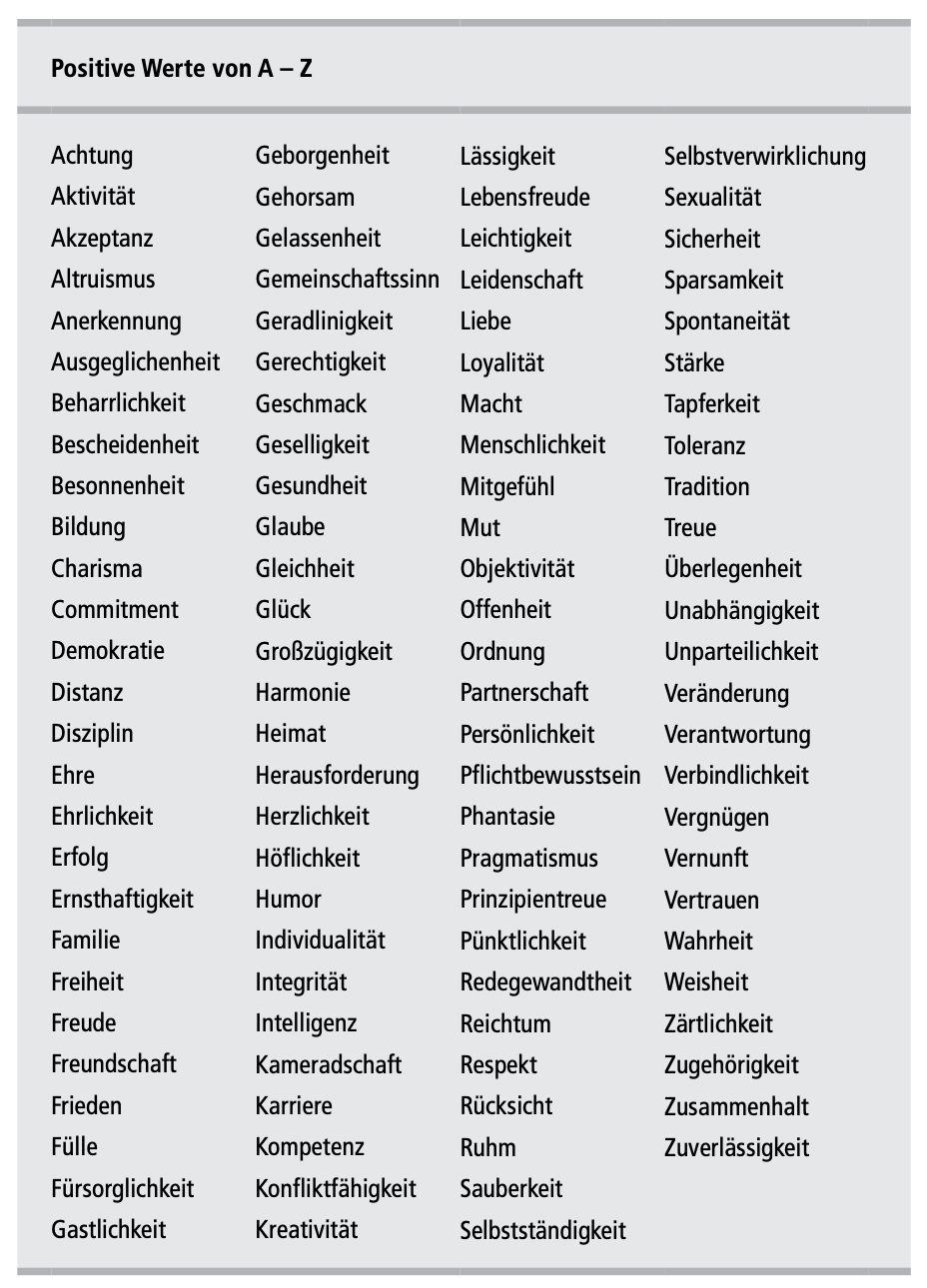
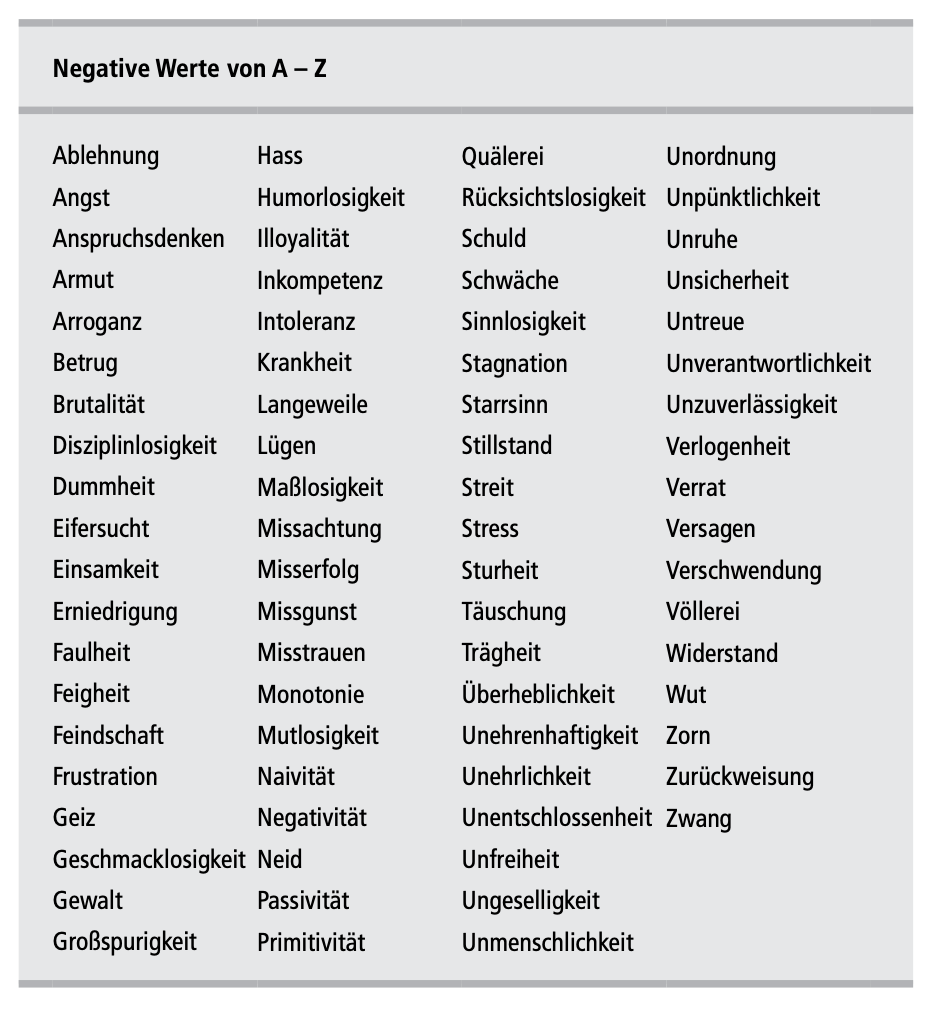
„Erm, Ilya, is that all?“ Yes. A single sentence that describes the entire core of values. To give you an even better understanding of this statement, I would like to present a short (and incomplete) selection of values. First, I will present a list of values that we strive for and that have positive connotations for us. This is immediately followed by an overview of values that we would like to avoid and that we regard as negative.

What are values Examples: Positive focus

Positive values

What are values Examples: Negative focus

Negative values

What are my values?

Have you let the two lists sink in for a while? Then I would now like to ask you two questions:

  1. What are your ten most important positive values?
  2. What are the ten values that you absolutely want to avoid in your life?

I highly recommend that you take enough time for this consideration. And please be more than careful about one thing. There is a huge difference between the values that we intellectually consider desirable and those that we actually live and act by.

You are welcome to put this to the test. If you ask 100 people about their most important values, you will find that in at least 90 % of all cases Honesty received in response. But already in the next best Conflict situation This is then no longer the case and people resort to white lies, conceal important information or do not dare to express their honest opinion for reasons of political correctness.

Personal values as a reflection of our behavior

Our actions are always a direct reflection of our values. If punctuality is important to us, we would never be late. If honesty is an important value, then we would rather accept negative consequences than lie. Or if we consider thriftiness to be desirable, then we would never throw money around indiscriminately. Generally speaking, you can use your values to identify exactly what is important to you and what you would rather avoid.

But back to the mirror. I've made the connection between our values and the appropriate behavior I learned this the hard way many years ago. You need to know that family has always been at the top of my list. It always seemed quite logical to me intellectually, because nothing was as important to me as my partner and my then still young daughter (who is now a wonderful teenager).

It was so important that I regularly told all my colleagues, employees and friends. And I still remember today how I was struck by the realization one evening when a colleague friend confronted me with the following statement: „Tell me, Ilya, if family is so important to you, why are you still sitting in the office at 9 p.m. for the fourth time this week?“

Rumms. That hit home. My first impulse was to explain my reasons, to argue why it was just an exception. But I quickly realized that anything I would say would only be an excuse in the end. Although a very logical and plausible-sounding one Excuse, but as much as I would have liked it to be different, it was and remained an excuse. And it took a lot of courage for me to admit to myself the real reason why that was the case: at the time, my career was simply more important to me than my family.

Values are more than just a few euphonious words on paper

I admit that I really struggled with this realization. Because in my mind, my family was actually the most important thing for me. But my behavior said something completely different. Or as the old saying goes: „Ich can't hear your words, your actions scream so loud!

But I didn't want to resign myself to this situation and knew that I had to change something. Basically, I had two options. Either I changed my hierarchy of values and accepted that my career was my top priority for the moment. Or I adapted my behavior to my values. And that's exactly what I chose to do by shifting my focus from being in the office to efficiency and results. The result was that I was not only generally happier again, but also had more drive and fun at work.

Importance of values for human behavior

I hope that one thing has become very clear from this example. In theory, dealing with your own values sounds pretty easy and simple. You write down a few desirable concepts that you think are good and would like to have in your life. The problem is that it makes no difference what we write on a piece of paper. The decisive factor is always what values we act on. And these are not always identical to the ones we would like to have. This is due to a simple but often overlooked causality.

We always evaluate our own behavior, our ideas and values according to our intentions, but those of our fellow human beings exclusively according to their results.

If we were to apply the same standards to ourselves, many of us would see our entire world view collapse like a house of cards.

How do you decide when the going gets tough?

I would like to give you another example. Imagine that you had placed the two values of peace and integrity at the top of your list. You are firmly convinced of this and would of course never act against your pacifist convictions.

But one day you find yourself in an emergency situation. You have lost your job, have to pay off several loans and have four hungry children at home who look at you hopefully every evening with hungry stomachs. Unfortunately, it's not so easy to find a new job and your debts are slowly threatening to grow over your head.

Until one day you receive a phenomenal job offer. A managing director position with a company car, a generous pension plan and a salary that far exceeds your wildest expectations. You know that all you have to do is say yes and all your problems will be solved. You would have a great, challenging job.

Your debts would disappear in one fell swoop and your family would have enough to eat again. But unfortunately there is a catch. The job offer comes from an arms company that supplies weapons to various crisis areas around the world. How do you decide under these circumstances? Are your values so important to you that you would forego your family's financial security without batting an eyelid, or were peace and integrity more of a theoretical wishful thinking?

We ALWAYS make decisions based on our value system

Even if this was only a hypothetical consideration, such a Decision Not so simple, is it? And yet we act according to precisely this principle every day. We make decisions based on our individual value system. On a small and large scale. At work, in our relationships and in our everyday lives.

The more solid your values are, the easier it will be for you to make a clear and irrevocable decision.

And as we will see later, every sustainable change starts with this. I would therefore like to inspire you to take an intensive and detailed look at your personal and deepest values. Because whenever values and behavior are in conflict with each other, we feel a certain dissatisfaction, have the feeling that we are treading water or are not getting the desired results. So here is my checklist for optimal alignment of your individual value system.

Ten steps to the optimal alignment of your individual value system

  1. Write down all the values that are important to you. Be creative. Brainstorm. And as always: it works best if you do the whole thing with a pen and your change journal.
  2. Select the ten most important values from your list.
  3. Place these values in a hierarchical order in which your most important value is in first place, the second most important in second place and so on.
  4. Repeat the whole process for the negative values that you want to avoid at all costs.
  5. Check both lists for values that conflict with each other (e.g. freedom and security or recognition and rejection). If you come across a conflict of values, replace the less important one with a motivating alternative.
  6. Check whether your daily behavior is in line with your most important values. If you come across a conflict, you have two options. Firstly, you can swap the value for a new one that matches your behavior. Second: You consciously adapt your behavior to the value.
  7. Adapt your lists until you have a total of 20 values that reflect your deepest desires, views and characteristics and fit in with your future (dream) life.
  8. Integrate your (new) values into your everyday life and make a conscious effort to act in accordance with your most important values when making as many decisions as possible.
  9. Do this until your consciously chosen value system has become an automatic and habitual basis for your decisions and behavior.
  10. Repeat this process every four months at the beginning, later once a year.

The most important values of all changemakers

The more you look at your own individual values, the more you will realize how important this piece of the puzzle is for the expression of your unique personality. The more you can draw on powerful and deeply rooted values, the more you will be perceived as a changemaker who is a role model for other people. And even if every single person in this world has a very individual value system, there are still some universal values that unite all changemakers. The most important of these are

Changemaker value #1: Personal responsibility

This word is probably the one I use most often in my books. And there's a good reason for that. Nothing is as important as the Responsibility for their own ideas, decisions and actions. Without exception. Without compromise. Without excuses.

Changemaker Value #2: Courage

Anyone who dares to leave the beaten track and implement changes without a title, money or permission inevitably needs a lot of Courage. Why? Quite simply, new ideas are often ridiculed at first and often even fought against.

Changemaker Value #3: Responsibility for others

True changemakers are always individual personalities, but they also take responsibility for their employees, colleagues, friends and family members without any discussion. Why? Because they know that success only works as a team!

Changemaker Value #4: Decision-making ability

Always make your decision promptly, clearly and unambiguously. Nothing gives your environment (and yourself) such clear orientation as the certainty that you are in a position to make a Decision to meet. And we'll take a closer look at exactly how this works best later on.

Changemaker value #5: Clarity

Don't pussyfoot around, but stand by your word, your decisions and your opinion. The more clearly you communicate, the more reliable you will be as a Boss, employee, friend or partner.

Changemaker Value #6: Discipline

Never be afraid to work hard and do everything you can to achieve your goals. Above all, this requires a lot Discipline. The Romanian sculptor Constantin Brancusi summed it up wonderfully: „Create like a god. Command like a king. Work like a slave.“ And this is once again one of those quotes that is worth thinking about a little longer.

What values drive you?

Have I been able to inspire you a little with this article on the subject of values? I am always amazed at how few people really take a close look at their innermost drive. I hope that I have succeeded in making it clear to you how much our daily actions are controlled by our value system.

Especially in a world that threatens to drift more and more into arbitrariness, powerful and unambiguous values are a rare exception that clearly differentiate companies, organizations and individuals from their environment. I therefore never tire of calling for a renaissance of values at every possible opportunity. It would be a great honor if you would heed my call.

Yours sincerely, Ilja Grzeskowitz