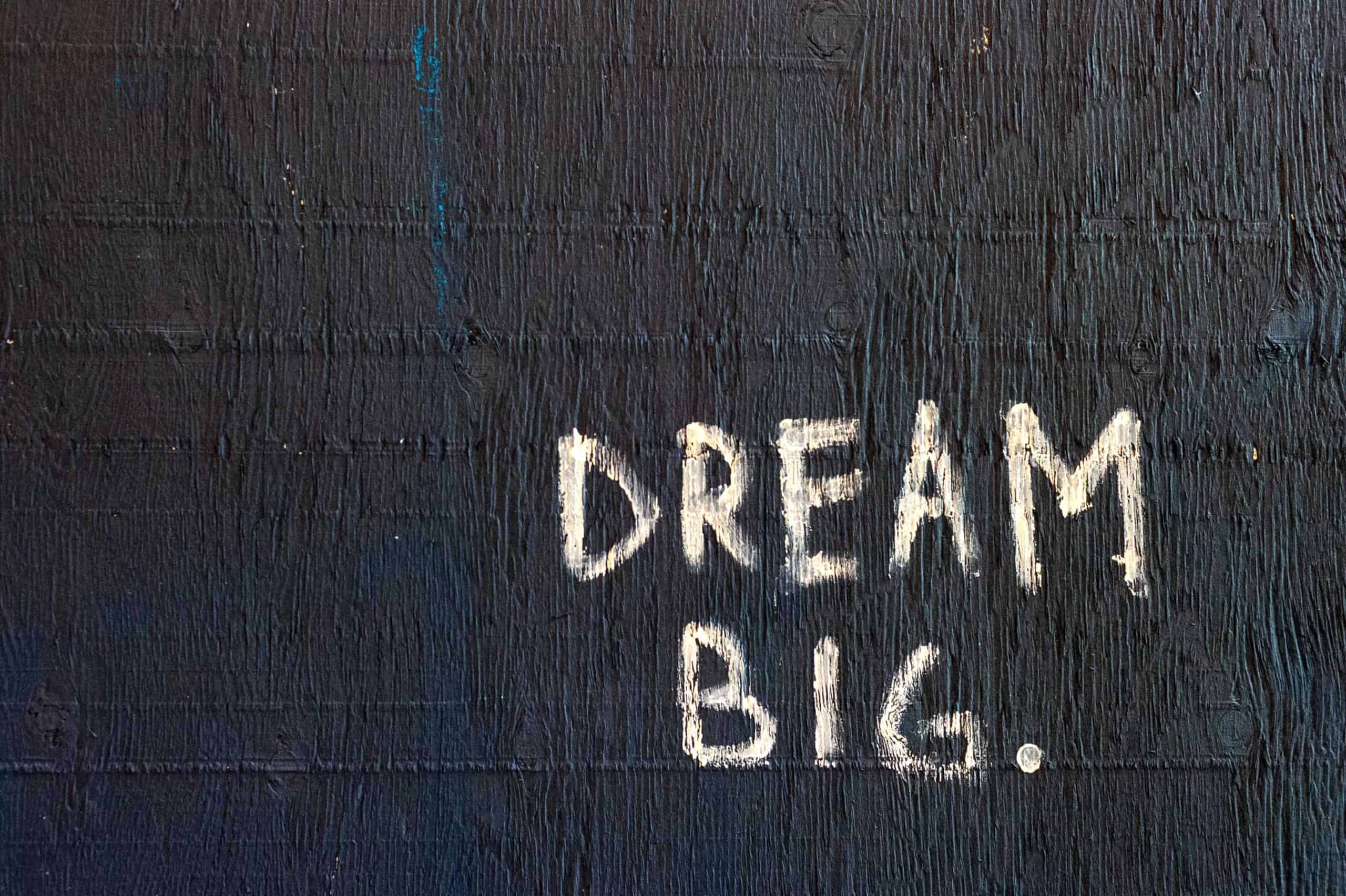

Selbstmotivation lernen: 7 geniale Tipps

Selbstmotivation lernen ist essenziell für Erfolg in sämtlichen Lebensbereichen. Wann immer ich eine Keynote Speech oder einen Vortrag halte, kommt früher oder später das Gespräch auf die Selbstmotivation. Und auch in meiner Coachingausbildung nimmt das Thema einen hohen Stellenwert ein, Kein Wunder, denn wann immer wir mehr Sport treiben, gesünder essen, ein neues berufliches Projekt starten oder den lange gehegten Traum in die Tat umsetzen wollen, brauchen wir den notwendigen Antrieb, um nachhaltig erfolgreich sein zu können. 

Selbstmotivation Definition

Doch bevor wir etwas tiefer in das Thema einsteigen, wollen wir uns zuerst mit der Frage beschäftigen, was Selbstmotivation überhaupt ist. Wikipedia defines the term as follows: „Als Selbstmotivation (Selbstmotivierung) wird […] die Fähigkeit einer Person bezeichnet, aus eigenem Antrieb und ohne unmittelbare Ermutigung oder Zwang durch andere Personen eine Aufgabe zu beginnen und sorgfältig und konsequent durchzuführen, bis das gesetzte Ziel erreicht ist.“

Etwas einfacher formuliert ist Selbstmotivation die Fähigkeit, Ziele zu erreichen, Aufgaben zu erledigen und Dinge zu tun, ohne dass dies durch Zwang oder Druck von anderen Menschen geschieht. 

Die Ursache hierfür ist ein starker innerer Antrieb, der vom Fokus auf Chancen, dem Streben nach Besseren und dem Anspruch auf persönliches Wachstum geprägt wird.

Man spricht in diesem Fall auch von intrinsischer Motivation, also einem Antrieb, der von Werten, Überzeugungen und den eigenen Motiven geprägt ist. Das Gegenteil hierzu ist die extrinsische Motivation, die auf externen Faktoren wie Boni, Druck, Zwang oder Belohnungen basiert.

Selbstmotivation lernen: Dieser Denkfehler hindert uns daran

Kommen wir nun zum großen Dilemma der Motivation, bzw. der Selbstmotivation. Wir alle wissen, dass der innere Antrieb sich oftmals von ganz alleine entwickelt, wenn wir ein Projekt beginnen. Doch genau da liegt das Problem. Wir starten oftmals gar nicht erst. Weil wir uns nicht motiviert, inspiriert oder schlicht und einfach „danach“ fühlen. Und ehe wir uns versehen, sind wir dem größten Motivations-Denkfehler überhaupt auf den Leim gegangen.

Dabei handelt es sich um die Erwartung, dass wir in einem bestimmten Zustand sein müssten (motiviert, inspiriert, kreativ), um ein neues Projekt voller Selbstmotivation beginnen zu können. Und so reden wir uns folgende Dinge in den unterschiedlichsten Varianten ein:

  • Wenn ich erstmal eine gute Idee habe, dann fange ich an, mein Buch zu schreiben
  • Wenn ich mich voller Energie fühle, dann starte ich damit, wieder Sport zu treiben
  • Wenn ich von der Muse geküsst werde, entwickele ich das Konzept für den neuen Onlinekurs
  • Wenn ich endlich professionelles Equipment habe, starte ich meinen YouTube Channel
  • Wenn ich motiviert bin, dann fange ich an, in die Umsetzung zu komme

Die Logik dahinter ist so simpel wie tragisch. Wenn man sich erst einmal auf eine bestimmte Art und Weise fühlt, dann beginnt man mit der Umsetzung. Das große Problem hierbei: Wir fühlen uns eigentlich nie „danach“. Oder kannst Du Dich daran erinnern, wann Du das letzte Mal gedacht hast: „Wow, ich fühle mich so unglaublich motiviert, dass ich gar nicht anders kann, als anzufangen.“ Siehst Du, ich auch nicht.

Selbstmotivation Übungen 

Um dem Trugschluss des „wenn ich mich X fühle, dann setze ich Y um“ zu entkommen, bedarf es nur eine kleinen Mindset-Shifts, der allerdings eine riesige Auswirkung hat. Das Ziel ist es, die Kausalität zwischen X (Motivation) und Y (dem eigenen Verhalten) umzukehren. Dazu ist es entscheidend, anzufangen und ersten Schritt zu machen. Und zwar unabhängig des eigenen emotionalen Zustands. Sobald man nämlich begonnen hat, ins Tun zu kommen, entstehen die ersten kleinen Erfolgserlebnisse. Die versorgen einen mit einer gehörigen Portion Motivation, so dass man Lust bekommt, direkt weiterzumachen. Es folgen weitere Erfolgserlebnisse, welche die Motivation wachsen lassen. Und ehe man sich versieht, ist aus den hunderten von Meilensteinen plötzlich das große Ziel geworden, dass man so gerne erreichen wollte.

Selbstmotivation ist das Ergebnis, nicht die Voraussetzung

Die Reihenfolge in unseren Beispielen würde nach dem Mindset-Shift wie folgt aussehen:

  • Wenn ich beginne, mein Buch zu schreiben, dann folgen die guten Ideen von ganz alleine
  • Wenn ich Sport treibe, dann bin ich voller Energie
  • Wenn ich anfange, den neuen Onlinekurs zu entwickeln, werde ich regelmäßig von der Muse geküsst
  • Wenn ich meinen YouTube Channel starte, werde ich irgendwann so erfolgreich, dass ich mir das professionelle Equipment leisten kann
  • Wenn ich anfange, ins Machen zu kommen, folgt die Motivation von selbst

Siehst Du den Unterschied? Es ist ein kleiner Shift im Mindset, aber die Auswirkungen sind einfach riesig. Ich schlage also vor, dass Du Deine Selbstmotivation nicht mehr von Gefühlen abhängig machst, die sowieso nie da sind, sondern dass Du sie aktiv selber entwickelst. Dabei wünsche ich Dir ganz viel Spaß und Erfolg!

Ins Handeln kommen – So motivierst Du Dich selber

Ins Handeln kommen. Wer möchte das nicht gerne, oder? Aber fällt es Dir auch manchmal auch schwer, Dich zu motivieren? Hast Du immer eine Menge guter Ideen, aber Du kommst einfach nicht in die Umsetzung? Bist Du Weltmeister darin, Dich mit unwichtigen Dingen abzulenken, nur um nicht mit der Umsetzung Deiner Ziele und Träume anfangen zu müssen? Dann habe ich hier zwei gute Nachrichten für Dich:

1) Du bist nicht alleine, denn es geht ganz vielen so. Und

2) Es ist recht einfach zu ändern (einfach, nicht leicht).

Und wie genau das geht, das erfährst Du im heutigen Blogartikel. Viel Spaß dabei.

Ins Handeln kommen: Die Sache mit der  Motivation

Wenn Du ins Handeln kommen willst, ist das gar nicht so einfach, wie es klingt. Denn mit der Motivation, genauer gesagt der Selbstmotivation ist das so eine Sache. Sie ist von Haus aus ein scheues Reh. Sie ist selten da. Und wenn sie einmal kurz auftaucht, dann ist sie auch gleich schon wieder verschwunden.

Übrigens, wenn Du meine S.E.K.S.I. Formel für mehr Selbstmotivation kennenlernen möchtest, dazu habe ich ein ausführliches Video aufgenommen, das Du Dir auf meinem YouTube Kanal anschauen kannst (Dort findest Du auch weitere Impulse zum Thema „Ins Handeln kommen“).

Zur fehlenden Selbstmotivation kommt noch hinzu, dass unser Alltag meistens so voller Termine, Aufgaben und Stress ist, dass wir selten einen starken inneren Antrieb haben, neue Ideen in die Tat umzusetzen. Wir fühlen uns eigentlich niemals „danach“. Und weil das so ist, geben wir uns viel zu oft der berühmten Aufschieberitis hin und reden uns ein, dass es nicht der richtige Zeitpunkt ist, dass Morgen auch noch ein Tag sei und dass wir irgendwann ganz bestimmt unsere Träume leben werden. Aber aus einem hoffnungsvollen Irgendwann wird leider so gut wie immer ein Niemals…

Ins Handeln kommen: Drei praktische Hacks

Doch zum Glück muss das nicht so sein. Wenn Du folgende drei Dinge beachtest, die Dir hoffentlich dabei helfen werden, Dich mit einer großen Portion Selbstmotivation zu versorgen, Deine Umsetzungskompetenz zu erhöhen und Dir dabei helfen, Dich dauerhaft ins Handeln kommen zu lassen

Umsetzungs-Hack 1: Prioritäten setzen

Egal, wie groß Deine Ziel oder Deine Träume sein mögen, entscheidend ist, dass Du sie als allerhöchste Priorität behandelst. Damit meine ich vor allem, dass Du Deine Vorhaben nicht nebenbei und auf keinen Fall zufällig angehen solltest, denn auf diese Weise ist die Gefahr einfach zu groß, dass sie im stressigen Alltag untergehen werden, weil es einfach niemals der richtige Zeitpunkt ist.

Umsetzungs-Hack 2: Strategische Planung

Nachdem Du einer Aufgabe höchste Priorität eingeräumt hast, ist es von essenzieller Notwendigkeit, konkrete Zeiten im Kalender für die Umsetzung im Kalender festzulegen.

As Faustformel gilt: Was nicht geplant wird, findet nicht statt

Es wird nämlich immer etwas geben, das wichtiger scheint, attraktiver klingt oder einfach mehr Spaß macht. Daher: Block Dir feste und regelmäßige Termine in Deinem Kalender. Für Dich selber, um an Deinen Zielen zu arbeiten, die wichtige Aufgabe der Reflexion durchzuführen, den Fortschritt zu analysieren, die To-do-Liste für das Projekt abzuarbeiten und ggf. alternative Maßnahmen zu entwickeln.

Und falls Du mit einem Team arbeitest, dann solltest Du ebenfalls regelmäßige Termine festlegen. Diese können von unterschiedlicher Wichtigkeit und Länge sein, beispielsweise eine WhatsApp-Gruppe für tägliche Nachrichten untergeordneter Wichtigkeit, ein wöchentlicher Zoom-Call jeden Montag morgen für die Besprechung der Wochenziele oder ein längeres Meeting alle vier Wochen, wo es insbesondere um strategische Themen geht.

Das strategische Planen von festen Terminen ist ein entscheidender Faktor, wenn Du Deine Selbstmotivation erhöhen und besser ins Handeln kommen möchtest. Weil es die Verbindlichkeit massiv erhöht und Dir in den häufig vorkommenden Momenten hilft, in denen Du Dich nicht „danach“ fühlst. Denn wenn Du einen fixen Termin hast, tust Du es auf jeden Fall. Hab ich recht?

Umsetzungs-Hack 3: Regelmäßiges Messen

Der wichtigste Hack, wenn Du häufiger und zielgerichteter ins Handeln kommen möchtest, wartet natürlich zum Schluss. Ich spreche vom konsistenten, regelmäßigen und sorgfältigen Tracken Deiner Ergebnisse und Fortschritte. Was auf den ersten Blick wahrscheinlich recht harmlos und unbedeutend klingt, entscheidet aber darüber, ob Du nachhaltige Resultate erzielst oder eben nicht.

Aus diesem Grund kann ich die Bedeutung des Trackens gar nicht genug hervorheben, so wichtig ist das konsistente und regelmäßige Messen Deiner Fortschritte. Warum? Ganz einfach. Das, was gemessen wird,  kann analysiert, angepasst und verbessert werden.

Wie geht man nun am besten vor? Im ersten Schritt solltest Du die KPI (Key Performance Indicators = Wichtigste Kennzahlen) Deines Ziels definieren: Welche Daten, Werte und Meilensteine genau willst Du messen? Und dann fang an zu messen und schreib den Fortschritt regelmäßig auf. In einem Journal, einem Notizbuch oder digital in einer Excel Tabelle, in Notion oder jeder anderen App Deiner Wahl

Je genauer und regelmäßiger Du trackst, desto besser kannst Du bei Bedarf nachjustieren und Anpassungen vornehmen

Lieber unperfekt starten als perfekt zögern

Es würde mein Herz mit großer Freude erfüllen, wenn Du diese drei Hacks nutzt, um Deine Selbstmotivation zu erhöhen, Deine Umsetzungskompetenz zu steigern und es einfach zu machen. Und wenn Du jemanden kennst, der ein Weltmeister im Planen und Ankündigen ist, aber Schwierigkeiten mit der Umsetzung hat, dann teil den Artikel doch mit diesem Menschen.

Zum Abschluss möchte ich Dir noch meine Lieblings-Faustformel für mehr Selbstmotivation verraten. Sie lautet:

Lieber unperfekt begonnen, als perfekt gezögert.

Entscheidend ist, dass Du Dich auf den Weg machst. Natürlich wirst Du auf diesem Fehler machen, unvorhergesehene Hindernisse aus dem Weg räumen und diverse Probleme lösen müssen. So ist das Leben nun mal und es ist die einzige Möglichkeit, um zu wachsen, zu lernen und Dich als Persönlichkeit weiterzuentwickeln. 

Meine Empfehlung: Bereite Dich so viel vor wie nötig, aber so wenig wie möglich. Gib Dich mit achtzig Prozent zufrieden (hundert wirst Du sowieso nie erreichen) und dann leg los. Mach es einfach. Mach den ersten Schritt und lerne auf dem Weg. Je mehr Du Dich traust, unperfekt ins Handeln zu kommen, desto erfolgreicher wirst Du sein.

What is motivation? Definition, meaning and methods

What is motivation? We want to address this important question in detail in this article. To do so, we will look at the background, misconceptions and all other decisive factors. However, I would like to start with a thesis: motivation is a matter for the boss! And always.

Yes, you read that right, motivation should always be our top priority and we need to remind ourselves every single day why we do what we do. Well, and that's not always easy. Because we regularly have doubts, struggle with problems and think about throwing in the towel. That's why it's so incredibly important to give ourselves a loving but firm kick in the butt again and again.

Because if you don't do it, nobody will. Nobody knocks on your door in the morning and presents you with the opportunity of a lifetime on a silver platter. No fairy will appear out of nowhere and cast a spell to make your innermost wishes come true. And even modern motivators such as Jürgen Klopp, Thomas Tuchel or Julian Nagelsmann won't appear in your office when you could do with a little motivation on a difficult day.

What is motivation?

As sorry as I am, life is like that, and at the end of the day you are fully responsible for your motivation and your decisions, and therefore also for your results. Unfortunately, this realization is still very much at odds with the common approach of motivational theory. But there is also good news: you already have everything you need to change this sustainably and with a high level of inner drive. You just need to discover it, bring it to the surface and apply it every day.

I would therefore like to use this article to herald a paradigm shift with regard to the topic of motivation. Even if the future will be characterized by technical developments such as artificial intelligence, robots and automation, it will always be intrinsically motivated people who use technology and actively shape the future with the many new possibilities. Why can I say this with such vehemence?

Because we are in the middle of the transition from an information society to a meaningful society. Just a few years ago, data, information and knowledge were the most important commodities of all. Today, it is a deep sense of meaning, the expression of individual personality and the compatibility of work and life. Of course, this also means that our very personal approach to motivation is changing. changed framework conditions must adapt. A new, modern approach is needed that meets the needs, values and requirements of the 21st century. The motto is: Kick your own ass!

The time of Tschakka Tschakka motivation is over

When we ourselves pursue our goals with passion, enthusiasm and dedication, we also infect other people with these strong emotions. In order to flip the rusty switch, the first step is for the term motivation to finally shed the dubious image of the past. I don't know about you, but I think this is long overdue. The world is undergoing one of the biggest transformation processes of the last 250 years. And for the challenges of the future that go hand in hand with this, the old tricks of the past are completely the wrong methods.

The days of motivational trainers shouting "Tschakka", esoteric gurus preaching light and love and the blunt use of carrots and sticks are simply over. People are realizing more and more every day that hollow phrases and false promises are no longer going to win them a flower pot. Instead, they are longing for meaning, values and sustainability. And yet personal development, growth and Shift still sold and taught in the same way today as it was in Helmut Kohl's time shortly after reunification.

What does motivation mean

Go to any motivational seminar of your choice and you will always find the same patterns. A bold Becker fist here, a fervent wish to the universe there and a cornucopia of metaphors that are so hackneyed you'll want to sink into the floor in shame as you listen. The results are accordingly. In the short term, the recipients of these insubstantial motivational speeches are full of energy and feel like they can uproot all the trees in the world at once. However, as sure as the Amen in the church, the steep rise is followed by a crash into the familiar listlessness. People take refuge in cynicism, indifference and sarcasm.

It is precisely this superficial approach that has ensured that the answer to the question „What is motivation?“ and the term motivation have extremely negative connotations these days, and the profession of motivational trainer has a correspondingly bad reputation. If it were a real profession: many self-proclaimed motivational trainers have just attended a weekend seminar and then feel called to carry their messages out into the world. Because I know the wonderful power that motivation shaped by purpose and motives can unfold, this development makes me angry.

And at the same time, I ask myself why so many people still fall for the false promises of the supposed prophets. After many years of observation, research and reflection, I am now certain that the answer lies in a simple yet fatal fact:

People only ever hear what they want to hear.

Motivation sayings: The gurus are wrong!

And most motivational phrases are so wonderfully wrapped up in absorbent cotton that you simply want to believe them. Deep down, we sense that something can't be right. But the alternative would be that we would have to make difficult decisions, work hard and really change. And since most people aren't prepared to do this, in good old Matrix fashion we prefer to swallow the blue pill and believe the false promises of the motivational gurus.

Fancy a few examples? Here we go:

  • You can do anything.
  • You just have to want it, the rest will take care of itself.
  • The universe will take care of your success.
  • Everything is fine the way it is.
  • Delete the word „impossible“ from your vocabulary.
  • What happens should happen.
  • If you don't achieve a goal, then it wasn't meant to be.
  • From now on, we no longer say problem, but great opportunity. (This sentence is my absolute favorite. Anyone who says that has never had any real problems).
  • You have to order your wishes from the universe, then they will manifest themselves in your life.
  • You just have to see positively.

You can do anything! Sorry, unfortunately not.

Do you understand what I mean? Although there is a little spark of truth in every sentence, these slogans tempt you to take the easy way out instead of putting in the necessary work. You scratch the surface a little instead of getting to the core of what drives you. Instead of using your heart and mind equally, suddenly everything is just a mental block, plays out in your head or doesn't work because Mercury is currently retrograde. (I admit it, I've always wanted to write this sentence in a blog article.lol)

These motivational phrases are then usually rounded off with a firm thump on the chest, a hopeful look towards the universe and finally a convinced „Tchakka, you can do anything!“. And then you're surprised when you crash and burn. Incidentally, I won't go into the currently very popular glorification of the topic of „failure“ in more detail here, otherwise I'll open the next Pandora's box.

[cp_popup display=“inline“ style_id=“27000″ step_id = „1“][/cp_popup]

What motivates me?

It always breaks my heart when I meet people who want nothing more than to bring about change and then fail miserably due to the wrong motivational methods. With this article (and of course my books), I have therefore set myself the major goal of changing this. I cannot repeat it often enough:

In times of increasing uncertainty, people and their individual personalities will be the most important success factor of the future.

And that also means that we have to change the prevailing approach to motivation. radically change must. If we really understand what motivates, moves and drives people, then we hold the key to a life full of satisfaction, success and meaning in our hands.

„Oh come on, Ilya, that almost sounds like a revolution.“ Yes, you're right. That's exactly what I intend to do: To let the wind of change blow through encrusted companies, stuffy offices and externally determined lives. To instigate a motivational revolution that shows the red card to the hot-air steam chatterers and ensures that we are finally driven by meaningful motives again. Does that sound ambitious? Right, because I'm simply not in the mood for mediocre goals anymore.

At the end of the day, we all have a great desire to dare to make changes, experience courageous breakthroughs and enjoy personal freedom. So let's cut out the old habits and start swinging new brooms. Let's create one of Sense and values beyond carrots and sticks. It would make me infinitely grateful if you would support me in taking this philosophy out into the world with me and infecting people with the positive change virus.

It all starts with a spirited kick in the butt. And in your own. In order to do this in the best possible way, we first want to address the simple but crucial question of what exactly motivation is. Because even though this term is constantly on everyone's lips, there is still a great deal of semantic vagueness. So let's make an attempt at a definition.

Motivation Definition

Okay, so what exactly is behind the term motivation? In purely linguistic terms, it can be traced back to the Latin word movere (to move, to drive). The online library Wikipedia defines it as „The totality of motives that lead to a willingness to act. Motivation refers to a person's striving for goals or desirable target objects based on emotional and neuronal activity (activation).“ I don't know about you, but I find this sentence a little too complicated. I would therefore like to present you with my own, much simpler definition:

Motivation is the inner drive to get from point A to point B physically or mentally.

I would like to emphasize one fact in particular with this sentence, namely that motivation always comes from within. Even though the concept of extrinsic motivation is mentioned again and again in almost every article, book or seminar, this carrot-and-stick drive unfortunately only exists in theory. In practice, extrinsic motivation, where people only act at the prospect of money, praise or the avoidance of punishment, is nothing more than a myth.

„But wait a minute, Ilja. What about Jürgen Klopp's whipping-up speeches, salary increases or bonus payments for achieving goals?“ Of course, this objection is justified - after all, rewards in the form of money, recognition or material assets, as well as the threat of sanctions, definitely have a corresponding effect. But unfortunately this is always short-lived. If you've ever tried unsuccessfully to get your children to tidy up their room with the prospect of an ice cream or the threat of an iPad ban, then you'll know what I mean.

Motivation always comes from within

The same principle also applies to our professional lives, of course. No amount of money and no bonus payment in the world will make you do a job that frustrates you, makes you ill or that you don't want to do in the long term. In the same way, any threat of dismissal, sanctions or loss of hierarchical status will fizzle out in the long term. In the short term, you are motivated, full of energy and drive, but as soon as the effect has worn off, you fall back to your original level, often even significantly lower. As a result, the dose and intensity of the external stimulus must be continuously increased. It's a bit like a drug addict who is never satisfied and always needs more substance to reach their feel-good level.

Because the more often carrots and sticks are used as supposedly extrinsic motivation the faster the corresponding effect wears off. This is also referred to as diminishing marginal utility. What is this, you ask? Imagine entering your favorite pub after a hot day. The first beer is heaven on earth for you, you would pay anything for it. You'd probably pay for the second one too. By the third, your enthusiasm is already waning. And after the eighth glass at the latest, you can't see any more beer and prefer to reach for water. This is precisely the principle of diminishing marginal utility.

Motivation - An inconvenient truth

And because this is the case, long-term, meaningful and sustainable motivation always comes from within. A deep need, a value to be fulfilled or a specific motive ensure that we take action and then lead to the corresponding results on the outside. So let me tell you a possibly painful truth:

You can't motivate other people!

So, now it's out. And I can literally feel the storm of protest and outrage. Believe me, no other statement I make triggers more controversial discussions in companies than this one. No wonder, after all, we have all learned over the years that with the right combination of carrot and stick, we can drive our employees, colleagues and business partners to unimagined heights of performance.

But as with everything else in life, there are always two people involved: one who motivates and one who wants to be motivated. And the last word is the decisive one. Because if someone doesn't want to do something under any circumstances, no matter how modern, attractive or ingenious your methods are, you won't stand a chance. I would therefore like to expand the above sentence a little to make the statement even clearer:

You can't motivate other people if they don't want to be motivated!

What is motivation?

Of course, the reverse is also true: other people can't motivate us if we don't want them to. Have I shaken your world view too much now? Do you completely disagree? I would like to remind you that I would be delighted if you would consider my ideas, opinions and approaches as critically as possible. Check my statement in your everyday life. My prediction, however, is that you will find that many people will quickly bite the bullet with your external motivation skills. Because as much as I would like it to be different:

People only ever change for reasons that are important to them and never for reasons that we would like them to.

Does this mean that all motivation is always a form of self-motivation? In principle - Radio Yerevan sends its regards - yes: we can't motivate others if they don't want it. But if we understand that this is exactly the case, then it works at the end of the day.

In a nutshell, the solution is: if we want to motivate other people to move mentally or physically from point A to point B, then we need to know their inner motives and create the framework conditions in which these are triggered or initiated as often as possible. At first glance, this sounds easier than it actually is, because it requires maximum flexibility from us as motivators and the presence of the following three characteristics:

  • Genuine interest in the other person.
  • The ability to be a good listener.
  • The willingness to put one's own motives aside in favor of the desired result.


The better you understand the values, needs and Motifs of your employees, colleagues and customers, the more flexibly you can adapt your communication style and motivate them to change accordingly. But there is one important fact to bear in mind.

What really motivates you?

Intrinsic motivation is the inner drive to get physically or mentally from point A to point B. Basically, this can happen in two ways: either because point A has become unbearable for us or because alternative B sounds much more tempting. We always change when the pain has become too great or when we are driven by an irrepressible desire for growth, happiness and joy. And that is precisely why we either move away from the problem or towards the opportunity.

That is the essence of any change. We are either attracted by opportunities or pushed by problems. And even if the way-from motivation always has a stronger force, in the long term we always need goals, dreams and visions to move towards. But whether we want to avoid pain or experience joy: Without the right drive, it is simply not possible to think differently, decide differently or act differently. And in this day and age, that is synonymous with stagnation, stagnation and regression.

Motivation as the key to success in tomorrow's markets

Only those who grow as personalities, continue to develop and constantly learn will be able to succeed in the markets of tomorrow. The key to this is the right motivation. However, this is never just an end in itself, but always the necessary basis for the desired changes. Without the right drive, there is no personal development, we do not grow and we do not improve as a company. And even if we manage to tackle our goals, it is far from certain that we will persevere to the end.

Because nothing else is as difficult for us as making lasting changes. The last diet, the gym membership and the repeated attempt to stop smoking all send their regards. Short-term success is no problem at all. Guided by the right initial euphoria, we manage to set off effortlessly. But we soon get caught up in the daily grind again and make the first exceptions - and before we know it, our old habits have regained the upper hand. But why is that?

Knowledge is only worth something if it is applied consistently

In my presentations, I am often asked the question „What is motivation?“. I then like to answer with a counter question to my audience: „Which of you would like to do more sport?“ All hands almost always go up at this point. Then I follow up: „Who would also like to lose a kilo or two of weight?“ Here, too, I regularly see an almost 100% response rate.

But the next question is crucial: „Which of you knows exactly what you would have to do to achieve this?“ At this point, a murmur usually goes through the room, the first people feel caught out and look down. Because they probably already suspect what comes next: „And which one of you does exactly that every day?“

When I look into the audience at this point, I see a maximum of two or three hands in the air. Unfortunately, the rest have to admit that, although they have all the necessary information, they are not implementing the change consistently. And that is precisely the big dilemma. It is never due to a lack of knowledge. It is always because we do not consistently apply the knowledge we have. I'm sorry if I'm deceiving you, but this is actually the case.

If information, knowledge and skills were decisive for our motivation to change, then we would all have washboard abs, play golf all day and dive through our countless money bins every morning like Scrooge McDuck.

Motivation and change go hand in hand

I have been researching the field of personal development for over 15 years and am increasingly fascinated by what makes people tick, what drives and motivates them. My main finding can be summarized in one sentence:

Everyone wants change. But nobody wants to change.

Have you had similar experiences? Don't you know people who are dissatisfied with everything and everyone? For whom nothing really fits and who would love to change the company, society and the whole world overnight? You have no idea how many of these contemporaries I know who know exactly what and who needs to change around them just so they can stay the way they are.

One of the best examples of this attitude was one of my colleagues at Karstadt, let's call her Erika Riebesehl. When I asked her in the aisle in the morning: „So, Mrs. Riebesehl, how are you doing today?“, the answer usually came in a whiny and frustrated tone: „Oh, eight more hours and then we'll finally have done it again.“ And Erika Riebesehl had two standard sayings that she was known for. If there was a problem somewhere, she would always say:

„Someone urgently needs to do something.“ And if you then followed up with: „Yes, but why aren't you doing anything?“, then standard line number two would be used: „Who, me? Please, Mr. Grzeskowitz, I can't do more than work. Let the others do it for you.“ We all know the Erika Riebesehls of this world, don't we? But if everyone waits for others to do something, then nothing ever happens.

A single person can make a huge difference

But fortunately, the opposite is also true. A single person can make a huge difference if we are prepared to take responsibility. For our thoughts. For our actions. For our lives. All it takes is a consistent decision. We can either be a changemaker who actively shapes the ever-increasing intensity of change, or we can be a pawn of external circumstances. And I am very aware that there is nothing else I refer to as often in my books as the importance of taking responsibility. But it still doesn't seem to be enough.

Just today I read a review of my book Mach es einfach! Why we don't need permission to change our lives, in which the reviewer wrote the following: „In general, the book was good. Unfortunately, the motivation only lasted a week. Probably need to read it one more time.“ At that moment, I had to think of another great sentence by the great Zig Ziglar, who once said: „We often hear that motivation is not permanent. But the same goes for showering.

And that's exactly why we recommend it every day.“ Whether we like it or not, we ourselves are always responsible for implementing our plans. Not our boss, not our family and not the author of a blog article. The all-important question is therefore: Are you prepared to declare your motivation a matter for the boss? If so, then you have also found your answer to the question „What is motivation“.

Yours sincerely, Ilja Grzeskowitz

Attitude German - definition, tips and meaning

Attitude in German - what exactly is it? Ever since the TV show „Germany's next Topmodel“, the term used by Heidi Klum has been on everyone's lips. But what is the best way to translate it? First of all, terms like Mindset, Setting or inner attitude comes to mind. But the somewhat outdated word attitude is much better. Not only did I use „Attitude - success through the right inner attitude“ wrote a whole book on this topic, but I would like to give you as comprehensive an understanding of the subject as possible in this article. Are you interested?

What is Attitüde in German?

But before we get started, I would like to begin with an important question: “Dear readers, what do you think of spontaneously when you hear the word “success”? Is it your professional career? Is it building your own business? A well-filled bank account? A happy relationship? A large and intact family? Or is it something completely different?

Success has many faces and there are countless ways in which you can achieve it. That is why there is no secret formula for success, that you can use to achieve the desired results virtually overnight. But there are certain characteristics and principles that have united all successful people for centuries: I'm talking about seven keys to success, the unique combination of which leads to attitude.

Why not put yourself to the test and think about what exactly makes you achieve personal or entrepreneurial success - is it your professional skills in a particular area, i.e. your craft? Is it the talent they were born with? Is it the experience and wisdom of many years of practice and application? There is no question that the combination of these qualities is an absolute prerequisite for success. But many people have mastered the technical skills. Talent only plays a role to a certain extent, and experience can sometimes lead to blindness.

What does attitude mean?

But what then ultimately makes the difference that makes a difference? Why are some people so extremely successful, while others can't get beyond the gray mediocrity? If you look at successful salespeople, sportswomen, doctors, managers or entrepreneurs, it always looks so uniquely easy how they - seemingly effortlessly - rush from success to success and elegantly carry out their work.

And at the same time, the majority of their competitors work hard and hard, struggle and toil, only to end up completely exhausted and resigned to not getting what they wanted.


The difference between successful and unsuccessful people can be clearly formulated: It is the attitude. The inner attitude of how you approach a task or a goal. A successful person who goes through life with the right attitude assumes in every second of their actions that everything will happen exactly as they want it to.

At the same time, he is free from doubts that something could go wrong, but focuses exclusively on his goal and the desired result. And, of course, he masters the required skills inside out and trains a lot and regularly. This is also an important part of attitude: the urge to never be satisfied and to always want to improve. Never to be satisfied, but to keep the hunger for success at a high level.

What is your current attitude?

As you are reading this, you already have an attitude that will help you achieve the results you are currently achieving. Your job. Your family and partnership. The money in your bank account. Your health. Your athletic fitness. Her general satisfaction in life. All of these things are the result of your current attitude. But are you satisfied with these results or are there areas in which you would like to be more successful?

The state of your current inner attitude can be determined very well by your inner dialog, i.e. the way you talk to yourself and, above all, what you say to yourself. How exactly do you do this? Do you regularly praise and motivate yourself or are you your own biggest critic, who paints the devil on the wall with a wry voice? Is your inner voice more positive or negative? Listen carefully to this voice, because it reflects your thoughts. And over time, you will realize what you have been thinking all day.

Whatever your current attitude may be, the good news is that you can choose and adopt a success mindset at any time. Not overnight and not at the push of a button. But with a lot of Passion, With hard work, constant hard work and a large portion of will to succeed, it is also possible for them to rush from success to success with apparent ease. Because attitude is everything. Aligning your attitude with the needs of the future means changing your life and your results. But before we look at the necessary steps together, owe I still have to give you the definition of what exactly attitude actually is.

What I learned about attitude from a Texan

It happened exactly 24 years ago and the tone of the sentence reminded me of excessive gum chewing. And yet the words I heard for the first time at that moment were something very special for me:

“Man, you really got attitude!”

The man who said this sentence to me back then was called Ernie and was my boss for a summer. As he said the words, he put a hand on my shoulder like a buddy and laughed heartily. Then he followed up with a little joke in his thick Texan accent, turned around and left. And inside me, I had the deep certainty that I had won him over at that moment and gained a place in his heart. But let's start at the beginning of this story.

I was just 23 years old and occasionally worked as an interpreter for foreign companies during my studies. One of these jobs brought me together with Ernie, who was building a conveyor belt system for one of the world's largest parcel service providers in Hamburg with his American company. From day one, he eyed me very critically and tested me and my skills wherever he could.

But no matter how hard I tried and tried to score points with my academic knowledge, I didn't really manage to be taken seriously by him. I became more insecure from day to day. Ernie was an imposing figure. A Texan straight out of a picture book, with a cowboy hat, washed-out jeans and snakeskin boots. A man who maltreated his chewing gum as if he were fighting a personal war with the little strip.

I definitely had a lot of respect for this successful entrepreneur and leader. And as I was not only his translator for the duration of the project, but also a kind of personal assistant, I had set myself the goal of proving to him what I was made of.

Attitude Meaning

One day, the perfect opportunity presented itself. Almost 10 tradesmen were standing next to a high shelf in front of which lay a heavy pipe with a diameter of almost 1 meter. They were discussing loudly and intensively how best to transport it to the upper platform. Forklift truck, cable winch, ramp or welding equipment. Each of the „experts“ had their own opinion. None of the suggestions worked, however, and the discussions became increasingly heated. But in the heat of the debate, they had apparently simply overlooked the simplest option.

So I took both my heart in my hand and one of those fancy construction helmets under my arm, walked past the ten broad-shouldered men, heaved the pipe onto my shoulders with all my strength and dragged it up the stairs, which led five meters further on exactly to the corresponding platform. Of course, I didn't let on that I was on the verge of collapsing under the weight several times. Instead, I put on my best smile and casually waved down from the platform once I had finished the task.

And while ten jaws dropped in sync one floor down, all I heard from the nearby office door was a satisfied clap. Ernie had heard everything and was now walking towards me. He chewed his gum for a while and then uttered what I thought was a magical sentence:

“Man, you really got attitude!“

Our entire relationship and collaboration changed from one moment to the next. Because I won Ernie over with my inner attitude, my conviction and my courageous actions. It was then that I realized for the first time what Attitude and what you can achieve in life with it.

Since that day, the term attitude has accompanied me throughout my career and in my many years as a managing director, keynote speaker and solopreneur coach, I have achieved my success primarily through my special inner attitude. Others were certainly more talented or smarter than me, but my Mindset has always meant the difference. And if I can do it, then you can too.

Attitude Definition German

Attitude is simply equated with attitude by most people. But it is so much more. My definition is as follows:

„Attitude is more than just an inner attitude or the mindset with which you perform a task. It is much more a philosophy and the way in which you deal with life and its many challenges. The personal Mindset. And not just once, but every day anew and in every conceivable situation. From buying a roll at the bakery to a million-dollar deal at work. It's the way you think, talk, get up in the morning and go to bed at night. How you play with your children and deal with your customers. How you react when everything is going smoothly and how you do it when the wind of life blows directly and sharply in your face. It's not so much the „what“ you do, but above all the „how“ and especially the „why“.

From this definition, it is clear that your attitude is a combination of your values, beliefs, experiences, skills, knowledge and the seven keys to success. And as is so often the case, the result of attitude is more than the sum of its parts, because it is a self-reinforcing spiral. Your attitude shapes your actions and habits.

And the results of these behaviors in turn influence and reinforce the attitude and its individual components. The right attitude enables you to communicate both congruently (verbally and non-verbally in harmony) and authentically (in accordance with your beliefs and values). This leads to a dramatically higher quality of decisions and therefore to better results. These in turn are then expressed in their personal quality of life out. Or summarized in a simple formula:

The combination of the seven keys to success = success attitude

Success attitude + action = success and high quality of life

attitude german

Changing attitudes: Success or mediocrity 

Attitude is a very specific form of inner attitude with which you can achieve your goals and visions. And better, faster and more elegantly. The basis on which everything else is built later is your basic attitude with which you go out into the world every day. What do you focus on? What is the guiding principle of your life? Is your metaphorical glass half full or half empty? Years ago, one of my mentors once gave me a phrase that has stayed with me to this day:

If you want something, you find solutions. If you don't want something, you look for reasons why it won't work.

Those who think and act positively simply have a different energy and attitude than someone whose thoughts mainly revolve around problems, horror scenarios or negative things. This is because your brain carefully and reliably stores every piece of information you feed it with. It forms new synapses and the famous neuronal data highways. The wider these are, the stronger your beliefs and inner attitude will be. So feed your brain (and of course your soul) regularly with positive things, creative skills and new knowledge.

So what does the ideal attitude for success look like? As a first step, let's take a look at the perfect inner posture with which you are guaranteed to be unsuccessful.

[cp_popup display=“inline“ style_id=“27000″ step_id = „1“][/cp_popup]

Attitude example: Negative characteristics

  • You think you already know and can do everything
  • They blame external circumstances for their own situation
  • They blame other people for their own results
  • They regularly use the following phrases: „I already know“, „I know everything“ and „That never works“
  • When you see an opportunity, you automatically think „I can't do that“, „I'm not allowed to do that“ or „where would we get there“
  • You are afraid of change
  • You have the feeling of being trapped in constraints and necessities
  • You are full and satisfied
  • They focus on excuses and reasons
  • They quickly evaluate and assess
  • You worry a lot and tend to brood and doubt
  • Your great fulfillment is when you can moan together with your colleagues
  • They are dismissive of new ideas, concepts and suggestions
  • You give up quickly when you are confronted with difficulties

If you have found yourself in any of these points, then it is high time to change something. Fortunately, it is not particularly difficult to acquire an attitude of success. So that you know exactly what this looks like, let's take a look at the positive inner attitude that will attract success and fulfillment into your life.

Attitude example: Positive characteristics

  • You are open to new ideas, concepts and suggestions
  • They think positively and firmly believe that there is enough for everyone
  • You take responsibility for your own situation and the results achieved
  • You have the willingness to learn and grow throughout your life
  • You are constantly creating new choices
  • They embrace change and see it as a gift of life
  • You always look for solutions, even in difficult situations
  • They regularly use the following phrases regularly: „That sounds exciting“, „How could I achieve this goal?“ and „What can I learn from this?“
  • You believe in yourself and that you deserve every success in the world
  • They build on their own strengths and turn their weaknesses into strengths
  • They see mistakes as an opportunity for personal growth
  • You have the willingness to work hard and with discipline
  • They focus on opportunities and possibilities
  • They are curious and open (What would happen if I...)
  • You are willing to take risks and are passionate about life
  • They feel personally responsible for their lives, their success, their employees and their mission
  • They are always prepared to go the „extra mile“ (after all, there is never a traffic jam)
  • They have integrated the 7 keys to success into their lives and understand them as the foundation of their inner attitude
  • They don't have an attitude, they live an attitude and radiate it

What is attitude?

Do you see the difference between the two attitudes? The way successful people deal with life and its challenges, and the way the rest do? One thing becomes clear very quickly: attitude has nothing to do with what happens to them throughout the day. Rather, it is the way, how you deal with these things.

We've probably all had days when everything goes wrong from the very first moment. You get up on the wrong side of the bed. It's raining cats and dogs outside, you forget the important contract documents on the kitchen table and, to make matters worse, you miss the bus. After arriving at work a little late, your bad-tempered boss starts shouting at you and then you have to deal with grumbling customers and unhappy colleagues all morning.

By lunchtime, you are already wishing that the day will hopefully end soon. Even if I have exaggerated a little, does this description sound familiar? And now comes the prize question: Which of these things can you influence? Definitely not the weather. Nor the bus timetable. And the moods and behavior of your boss, colleagues and customers are also beyond your control. Always remember one incontrovertible fact:

The only person you can change is yourself.

The circumstances are what they are. You cannot change them. But what you can change is the way you react to these circumstances. Do you allow yourself to be dragged down and negatively influenced by these external circumstances? Do you blame other people for your bad mood and negative state of mind?

Then please stop immediately! Because the responsibility for your feelings, actions and reactions lies solely with you. In every situation in your life, you have the choice of which direction you think and act in. Whether you are negatively or positively focused. The choice is yours. With which inner attitude do you want to approach your goals and dreams in life? Do you choose maximum success or are you with mediocrity satisfied?

Attitude Coaching

Of course, you won't acquire such an attitude overnight. But today is the best day to make a conscious decision to adopt an inner attitude that will bring you the success in life that you dream of. Don't you agree? But please remember that a one-off decision is not enough. Your new attitude needs to be carefully built up and nurtured. You have to choose anew every day.

Depending on where you are today, it can be a long and sometimes rocky road. But I can promise you one thing: It's worth it. Because once you are equipped with a positive attitude, you will not only feel a special personal fulfillment, but also climb a new rung on the ladder of success professionally. So be happy that you can work on your inner attitude every day anew. Make these decisions with joy and passion.

Being able to choose your attitude is an expression of your personal freedom and a gift that you can give yourself every day. But remember, the conscious decision for a positive attitude is not simply a program that you can work through or an initiative that you can start. It is an attitude to life that will accompany you from the moment you make the decision and lead to a high quality of life and lasting fulfillment.

Attitude Check: Are you ready to make a decision?

Your inner attitude is the foundation and prerequisite for everything in your life. Yes, really everything.

  • Attitude is the basis for their mood
  • Attitude is the basis for their self-confidence
  • Attitude is the basis of their communication
  • Attitude is the basis of their relationships
  • Attitude is the basis of their thought processes
  • Attitude is the basis of their motivation
  • Attitude is the basis of how you perceive yourself and the world
  • Attitude is the basis of their internal and external impact
  • Attitude is the basis of their reactions and actions
  • Attitude is the basis of their success


Your inner attitude determines your results in life

  • Attitude determines her career
  • Attitude determines their entrepreneurial success
  • Attitude determines your brand and personality
  • Attitude determines their service and customer focus 
  • Attitude determines their turnover and profit
  • Attitude determines their marriage and partnership
  • Attitude defines her family
  • Attitude determines their lifestyle
  • Attitude determines their health
  • Attitude determines their happiness
  • Attitude determines their satisfaction
  • Attitude determines her life

Have you made your decision? If so, please tell me about your experiences and write a comment to let me know what you think about the German attitude and inner attitude.

CHANGING YOUR MINDSET - HOW TO SHIFT YOUR INNER ATTITUDE

Change your mindset. If you believe the clever books and the often even cleverer-sounding posts on the Internet, then that's exactly what the vast majority want. The mindset shift. To realign their inner attitude. Transforming your attitude in such a way that it helps you to successfully achieve your goals and dreams. Even if the topic is probably not very relevant for the general public, its importance in the business context is increasing year on year. As Keynote speaker on the topic of change I have the privilege of working with a wide variety of Change management processes.

And really all successful brands have made „changing mindset“ a top priority. No wonder, because more and more board members, management and Leader (m/f/d) have realized that skills, abilities and knowledge can be learned or trained at any time. But mindset is something that is very much linked to personality. But before we look at whether it is even possible to change your own mindset (or even that of other people), let's take a step back and clarify what exactly is behind the term mindset.

What does mindset mean - attitude, mindset or attitude?

Defining the mindset is not that easy. The most obvious option would be to simply translate the term from English into German. However, this is virtually impossible because there is simply no clear translation. The Anglo-Saxon „mind“ is more than just the intellectual part of the brain that is responsible for thinking, which is clear from the fact that it is referred to as a "mindset". conscious mind and a unconscious mindspeaks. The following is probably the most accurate: The term Mind describes the sum of our experiences and beliefs, Values and skills.

And this whole sum ensures that we think in certain patterns and derive our strategies from these patterns, according to which we decide and act. Our mindset ensures why we do certain things, how we do things and, conversely, why we don't do certain things. If there were a vague translation, it would be the attitude that inner attitude, the mentality or the Attitude. But all of this is only partly true. In my detailed article on the definition and meaning of the topic Mindset I have therefore defined the term as follows:

„The mindset is based on our identity and is the sum of our values, Convictions, experiences, abilities, personality traits, habits, decision-making strategies and our general Attitude towards life. It's not so much WHAT we do every day, but above all HOW we do it and the purpose (emotional reason), i.e. the WHY and WHY FOR.“

Changing your mindset - that's not what it's really about

Now that we've laid the conceptual foundations, it's time to talk plainly. When people talk about wanting to change their mindset or companies make it clear that the Changes in the future can only be successfully countered with a corresponding mindset shift, then it is really about something completely different, namely a change in specific behavior. Why? Because you are not satisfied with the current results. Because new goals have been set, strategies developed and action plans formulated in order to adapt to the massively changed framework conditions.

But these rarely have anything in common with the current status quo. Quite the opposite. Not infrequently the path to the future radically different from the things you were used to. And of course a mindset shift is necessary for this, but much more important is the change in behavior.

Change mindset exercises

And then it's time to get down to business, because when a (usually necessary) mindset shift is announced in companies and the topic of „changing mindset“ is suddenly at the top of the priority list, the underlying statement is usually the following: Our employees (I hate this term, by the way, but more on that in another blog article soon) are just the way they are, for the The future not optimally prepared.

Either they change their general attitude or we have to think about alternatives. I am aware of the danger of my argument, because of course a different mentality is needed to actively shape the future than to passively manage the status quo. But people are the way they are, and it is incredibly difficult to make a 180-degree turnaround overnight.

It is therefore essential to keep reminding yourself what the goal really is when you want to change your mindset: better results, new behaviors and a new way of thinking. High motivation, to take the future by the horns and Actively shaping change. If you want to change your mindset, it is therefore highly recommended that you put the cart before the horse and focus on the following three factors:

Change mindset- Success factor #1 - Conscious reflection

We can only change what we are aware of. However, for well over 90 % of the day, we are on autopilot mode and leave our Decisions, actions and ways of thinking to our subconscious. This can be very powerful if these unconscious patterns are positive and beneficial for us. There is only one problem. All these automatisms work just as reliably with negative, counterproductive and even destructive factors. In practice, this means that there are people who constantly sabotage themselves without realizing it. People who want nothing more than to be successful, but whose unconscious patterns are programmed for the exact opposite.

All this sounds tragic at first. And it is. But it is also relatively simple (not easy!) to change. And the key is reflection. Because the more aware you are of your current mindset, the easier it will be for you to initiate the necessary changes. The following challenging questions can help you analyze the status quo. And just to be sure, the questions themselves are of course simple. What is challenging is to answer them openly and ruthlessly honestly:

  • What is my general focus in life?
  • How do I deal with change?
  • How open am I to new ideas?
  • How enthusiastic am I?
  • How do I communicate?
  • How do I come across to others?
  • What specific behaviors do I want/need to change in order to achieve my goals?


The answers - especially the last one - will be a great help for the next success factor.

Change mindset - Success factor #2 - Courageous decisions and commitment

The biggest shift you can make in your mindset is to realize that change is not something to be afraid of. On the contrary, it is the only way to improve, develop and grow personally. It is the only way to huge opportunities, that are all around us, just waiting to be recognized and used. That's why I'm not tired of emphasizing again and again that the most important key competence of the future will be the personal handling of change. And no matter what form change takes, sustainable results always start with an irrevocable decision for the change.

For the new ways. For the future. But one decision swan (I admit, I just made up this word for the metaphor) does not make a summer. It can only work if it is backed up with the right commitment. The commitment to take responsibility for the results. For both the good and the bad. And regardless of your own motivation (because this is never permanently high), to see the project through in any case. Simply because you have given yourself your word. And your word is sacred. For you too, isn't it?

And speaking of decisions, the more you dare to make courageous decisions, the more you will find yourself in situations that are outside your usual comfort zone. But this is the only place where you can grow and develop. And thus change your mindset in the long term.

Change mindset - Success factor #3 - Sustainable habits

Last but not least, it is important to establish powerful and, in particular, sustainable habits. Just as it is never enough to eat salad once for lunch if you have resolved to lose weight permanently, all other goals also require regular repetition of new decision-making strategies, thought patterns and behaviors. One of my favorite quotes (whose author is unfortunately not clearly attributable) is: „Habits are like rails. It's hard work and takes a long time to lay them. But once they are in place, they lead you safely and reliably to your destination.“ 

And that's exactly what they can do for you. If you consciously incorporate the new strategies, patterns or behaviors into your everyday life every single day (yes, really every day). Until they have become second nature to you. Until they have become a new, unconscious automatism that will serve you faithfully from now on.

Develop mindset instead of changing mindset

Now that we have looked at the three important success factors for a mindset shift, I would like to briefly point out the causality. On the one hand, our mindset naturally determines our thoughts and actions. But, as is so often the case, there are two sides to the coin, and in the long term, our thinking and our behavior also shape our mindset. We become what we do regularly and every day.

And we can use this knowledge if we want to change our mindset. After all, this project is almost inevitably doomed to failure if we use the "hair-pulling" method. Our mindset and our identity are so closely linked that it is incredibly difficult to bring about a change here. And if it is, then certainly not in the short term (if you're interested in the background, be sure to read my Articles on the change diamonds through).

The only way to achieve a truly lasting mindset shift is to grow into the new mindset. By evolving as a personality through new experiences. By using the success factors of awareness, courageous decisions & commitment and powerful habits to really change our mindset permanently.

How can you change your mindset? The quick and dirty framework

Since I know how important frameworks and models are in the development and change of soft skills, I would like to give you a quick and dirty version of the mindset shift, which is based on the structure of ANY successful change:

  1. Identify an unconscious pattern or behavior.
  2. Bring this pattern or behavior to the conscious surface and formulate a desired alternative.
  3. Use this alternative consciously as often as necessary until it can work automatically in the subconscious again.

Applied to the topic of „changing mindset“, this framework can be formulated as follows:

  1. Analyze your current mindset
  2. Develop and define possible fields of action
  3. Work on this in a focused way and accompany this transformation over a longer period of time (preferably with the help of a good coach), You can find my own offer here)

If you would like to delve deeper into this topic, I would also like to refer you to my book „The Change Maker Mindset: How Innovation and Change Start with Inner Transformation“.

Growing as a personality - The best way to change your inner attitude

I very much hope that I have succeeded in shedding some light on the subject of mindset change with this article. I hope even more that it has become clear that your own mindset is not just like that from right now (and not at all by other people). At the end of the day, as is so often the case, the solution is very simple, but unfortunately not easy at all. It's about growing as a person. And the more you grow, the more your own mindset develops. So if you embark on the path of the changemaker, the much-cited and hoped-for mindset shift will happen all by itself in the course of the process.

Finally, however, a word of warning. Of course, this causality also applies in the opposite direction. Because if you no longer develop, only manage the status quo and cling to the good old days, then your mindset will also change in this case. But in a negative direction, which leads to frustration, cynicism and resistance to change.

So the good news at the very end: it is definitely possible, your own mindset to change. If you are prepared to run a marathon and are not hoping for a sprint. And what it looks like in the end is definitely not a whim of fate, but a very conscious decision that each and every one of us has to make for ourselves.

I made my choice a long time ago. What is yours?

Sincerely, Your

Signature

Mindset German - definition, tips and meaning

„Clearly, it's about a Changing the mindset.“ I probably hear this answer more often than any other when I ask my clients what the main objective of my presentation should be in the briefing discussion before a keynote speech. No other factor is as central when it comes to sustainable change in individuals or entire organizations as mindset. But mindset German? The term is on everyone's lips. I hear it every day from executives of successful companies, from lifestyle coaches on Instagram and even from my nine-year-old daughter, who told me before her last math test: „Learning the formulas isn't that important, dad. The mindset is much more important.“

Mindset German - What is the mindset actually?

And in fact, the term „mindset“ is currently used so frequently that it can actually be described as one of those popular buzzwords that you can't really hear anymore. But what exactly is mindset? Is it really just a meaningless term or a relevant success factor? As is so often the case, it all depends on what you make of it. Because of course there is a certain group of people who stick the label „mindset“ on pretty much everything that is possible, but don't really understand what the word actually means. The many self-proclaimed mindset coaches on social media send their regards.

But there is also the other, practical and future-oriented use. Pretty much all successful organizations, companies and brands that I have the privilege of working with have the topic of mindset at the top of their agenda. Because they have understood how important soft skills will be in the future and that the inner attitude is much more important than specialist knowledge or technical skills (which can be acquired at any time). But before we get too deep, let's first take a look at what exactly is behind the term mindset.

Mindset definition - what it is and why it is so important

The English term mindset is actually difficult to translate into German. In common parlance, it is often used synonymously with attitude, mindset or way of thinking. The online lexicon Wikipedia defines mindset as

„the English term for the German word Mentalität, which in turn [...] denotes a predominant psychological personality trait (predisposition) in the sense of a pattern of thought and behavior of a person or social group.“

For me, this definition does not go far enough. Based on my research for my books „Attitude - Success through the right inner attitude“ and „The Changemaker Mindset - How Innovation and Change starts with Inner Transformation“, the term mindset stands for the following:

„The mindset is based on our identity and is the sum of our values, beliefs, experiences, skills, personality traits, habits, decision-making strategies and our general attitude towards life. It is not so much what we do on a daily basis, but above all the way we do it and the purpose (emotional reason), i.e. the why and for what.“

Mindset Growth - The two types of inner attitude

Probably the best-known research work on the subject of mindset goes back to the American mentality and behavioral researcher Carol Dweck who in her book „Mindset - Changing the way you think to fulfill your potential“ speaks of a fixed mindset and a growth mindset.

Fixed Mindset

According to Dweck, people with a fixed mindset assume that their talents, skills and ways of thinking are fixed characteristics that either exist or do not exist, but cannot be changed under any circumstances. People with a fixed mindset are generally characterized by the following characteristics:

  • You are not good at dealing with defeat
  • They avoid challenging situations for fear of failure
  • They often see themselves as untalented
  • They accept the status quo as unchangeable
  • They give up quickly when faced with difficulties

Growth mindset according to Carol Dweck

With a growth mindset, on the other hand, people assume that the factors described can be changed and improved if they train, learn and work on themselves sufficiently. People with a growth mindset are generally characterized by the following characteristics:

  • You are always willing to learn
  • They see mistakes as an opportunity to improve
  • They believe that will, dedication and hard work are more important than talent
  • You are curious, thirsty for knowledge and open to new things
  • They know their weaknesses, but are prepared to work on them
  • They accept that you have to make an effort if you want to develop personally

Change your mindset. Is that even possible?

So let's move on to the crucial question: is the mindset a given characteristic or can it actually be changed? The good news first: Yes, of course you can change your own mindset. But it is by no means as simple as you often read in self-help books, YouTube videos and Instagram posts. It is not just a short-term change from the old mindset to the new mindset, but rather a lifelong personal development that never really stops. I would therefore like to mention a few fundamental factors that are essential for a sustainable mindset shift:

  • Awareness: You can only change what you are aware of. The more aware you are of your own communication, your general focus, your impact, your openness and your attitude towards life, the easier the mindset shift will be.
  • OpennessThe phrase „We've always done it this way!“ should be a thing of the past from now on. Instead, a general openness to new ideas and new approaches is crucial. Because it is only in situations that we have never been in before that we grow and develop ourselves (and therefore our mindset).
  • FocusYes, life is full of problems. And these should never be ignored or hidden. Nevertheless, it is important to always focus on solutions and opportunities.
  • StaminaRome was not built in a day. The same applies to your mindset. There will be setbacks and you will doubt yourself. This is not only completely normal, but a necessity for personal development. In these moments, always remember: working on your mindset is a marathon, not a sprint.
  • Environment: No one wins alone. This also applies to changing our mindset. Because in the long term, the people in our immediate environment have an enormous effect on us. So look for people with a growth mindset who can influence you positively and serve as role models.
  • Positivity: And last but not least, the three most important rules of the mindset shift:
    1. Always be positive.
    2. Always be positive.
    3. Always be positive.

Mindset German - A positive attitude is NOT positive thinking!

The last point brings me to the relentless truth about one of the most important, but at the same time most controversial topics in connection with the mindset. I am talking about the positive thinking. Some have submitted to this philosophy unconditionally, while others condemn it completely and dismiss it as esoteric humbug. Of course, this has corresponding consequences.

While the supporters of the first variant simply ignore and smile away every problem with a permanent grin on their face, rose-colored glasses on their eyes and a naive trust in light and love, the opponents of positive thinking often become cynics whose glasses are half-empty, the skies full of dark clouds and everyday life is usually quite dreary. It is obvious that neither strategy is suitable for leading a happy life. Nevertheless, I hear one question again and again: „Is positive thinking good or bad?“

Forgive me if I don't give a direct answer to this, but I would like to point out a very common pitfall that can be seen here in its purest form:

If the question is wrong, then the answer doesn't matter.

This is precisely the case here. The question has a misleading focus and only focuses on one aspect of the big picture, namely thinking. At the same time, however, it ignores the other important factors: actions, habits and the general mindset with which we approach life and all its tasks. That's what it's all about, the fundamental orientation. And I have a very clear opinion about that:

Don't waste your life on negativity, be positive. Always.

The latest knowledge, the best skills and the most modern techniques are of absolutely no use to you if you go about your everyday life with a negative mindset. Conversely, this does not mean that you will automatically be successful with a positive mindset. No, a mindset focused on opportunities and possibilities inner attitude alone won't get you anywhere.

But with such a Attitude you can achieve anything better than with a negative attitude. I have been studying human behavior in all its facets for over twenty years. And not once have I come across someone who would have achieved positive results with a negative mindset. Put them to the test. Take a look around you. I bet you won't find a successful person whose DNA is polarized towards negativity. To the point:

A negative mindset and positive results are mutually exclusive.

Mindset meaning: The questions make the difference

So don't waste your time with negativity, but focus on the numerous opportunities and possibilities. Incidentally, this does not mean ignoring problems, not recognizing risks or ignoring other challenges. Quite the opposite. The trick is to recognize these situations and at the same time think in terms of possible solutions. The focus of your internal thought patterns is crucial. The quality of your questions determines the quality of your results. But what do they look like for you?

Over the last few years, I have compiled a list of questions that I hear again and again in my seminars and coaching sessions. Would you like a small sample? Here are my top 10:

The TOP 10 problem-oriented questions

  1. Why does this always happen to me?
  2. Why can't I manage to be successful?
  3. Why doesn't anyone in the company like me?
  4. Why can't I find my vision?
  5. Why does it work for everyone else, but not for me?
  6. Why am I not able to achieve my goals?
  7. Why do I fail every time when it comes to something?
  8. Why do I magically attract problems?
  9. Why me of all people?
  10. Why is change so difficult?

Does this sound familiar? These questions have one thing in common. They are pointless. Because they are backward-looking and problem-oriented. But as Albert Einstein aptly said: „Problems cannot be solved with the same way of thinking that created them.“ How right he was. If you ask yourself solution-oriented questions instead, you will immediately experience a massive shift in your focus. I have also prepared a top 10 for you here:

TOP 10 solution-oriented questions

  1. How can I resolve this situation?
  2. What can I learn from this?
  3. Who could support me?
  4. When have I ever solved a similar task before?
  5. What can I learn from this?
  6. What other resources do I need to achieve XYZ?
  7. What could a solution to the problem look like?
  8. How do I have to change in order to achieve my goal?
  9. What opportunities lurk in this challenge?
  10. How do I have to think differently to achieve the goal?

Mindset training - a small hack with a big impact

This is the small but subtle difference that makes a difference. These positive questions will inevitably be followed by positive actions, which will lead to positive results. A self-reinforcing spiral of success is created, which becomes deeply anchored in your subconscious over time and reliably does its job there. Of course, even with the most positive mindset, there will still be situations that annoy you, frustrate you or drive you crazy. Wonderful. Then here is the best mindset tip I know. Are you ready? Here we go:

5 minutes of whining is okay!

Yes, really. Let it all out for 5 minutes. Get angry, be angry and shout your frustration out loud to the world. But after that, the motto is: focus positively on solutions and opportunities. Because life is simply too beautiful to waste it on negativity. Enjoy every single moment and transform even the supposedly big problems into at least as big opportunities.

Besides your mindset, your most important ally is an often forgotten factor called humor. Yes, you heard right. Because humor opens the door to every individual change. To the small challenges of everyday life, but also to the really big ones. Every successful person I know likes to laugh a lot, especially at themselves. Because only those who don't take themselves too seriously can be taken seriously by those around them. Nobody likes bitter, always serious and rigid contemporaries.

Mindset Shift - The 3 golden rules of a positive attitude

The great art is to approach the supposedly small tasks with great seriousness and to be able to laugh about the difficult, seemingly insurmountable and often frustrating challenges. I would like to conclude this article with the three golden rules of a positive mindset:

  1. Be positive. Always. (I already mentioned that, didn't I?)
  2. Be aware of problems, but at the same time think in terms of opportunities and possibilities.
  3. Humor opens the door to change. Laugh a lot and often, and don't take yourself too seriously.


Wonderful things will happen if you make these three rules your daily companions from now on.

And now I'm interested in your opinion: how important is the mindset for you and what experiences have you had?

Motivation zur Veränderung im Team – 5 wirkungsvolle Tipps

Motivation zur Veränderung ist immer der Ausgangspunkt für die aktive Gestaltung der Zukunft und dafür notwendiger Change Management Projekte. Doch mit der Motivation ist das so eine Sache. Denn was sich in der Theorie so leicht und einfach anhört, entpuppt sich in der praktischen Umsetzung häufig als extrem herausfordernd, insbesondere wenn es sich um Veränderungen in einem Team handelt.

Um Dir dabei zu helfen, die notwendige Motivation zur Veränderung zu entwickeln, habe ich in diesem Artikel 5 wirkungsvolle Tipps zusammengestellt, mit denen Du hoffentlich bald häufiger wichtige Entscheidungen treffen und neue Wege gehen kannst.

Motivation zur Veränderung: So klappt es!

Beginnen wir mit ein paar entscheidenden Fragen: Wie entsteht überhaupt dieser berühmte Mut zur Veränderung? Wie gelingt echte und vor allem nachhaltige Motivation, die Dich schwierige Entscheidungen treffen lässt, auch wenn Dir der Wind des Lebens mal wieder mit voller Kraft ins Gesicht bläst?

Um diese Fragen zu beantworten, sollten wir uns eine wichtige Tatsache ins Gedächtnis rufen:  Menschen verändern sich immer nur aus Gründen, die ihnen wichtig sind, und (leider) niemals aus denen, die wir Außenstehenden gerne hätten. Dies bedeutet in letzter Konsequent, dass jede Motivation immer eine intrinsische Motivation ist, die sich von Außen schwer beeinflussen lässt.

Was kannst Du nun aber tun, um Dein Team auf dem Weg der Shift mitzunehmen? Das Ziel sollte es natürlich sein, den inneren Antrieb Deiner einzelnen Teammitglieder anzukurbeln und Rahmenbedingungen zu schaffen, in denen persönliches Wachstum stattfinden kann. Denn wer sein eigenes Potenzial entwickelt, der erfährt von ganz alleine einen erhöhten inneren Antrieb.

Veränderungsresistenz

Es gibt immer wieder Mitglieder in den verschiedensten Teams, die Veränderungen nicht so positiv gegenüberstehen. Denn bestimmte Prozesse hat man immer schon so gehandhabt. Das ist auch okay, denn nur ein geregelter Ablauf von sich wiederholenden Prozessen gibt eine Struktur. Aber „Kenn ich schon, kann ich schon, weiß ich schon“ ist am Ende nicht immer die effizienteste Methode. Diese Einstellung im Team verhindert, dass neue Ideen und Abläufe entstehen und eingesetzt werden können. Das führt auch dazu, dass die Stimmung und die Motivation ohne eine mögliche Veränderung immer weiter sinkt. Das ganze zieht dann seine Kreise. Die schlechte Stimmung hat Auswirkungen auf die interne Kommunikation und die Kommunikation mit den Kunden. Das hat letztendlich auch Auswirkungen auf deinen Umsatz.

Um das zu verhindern, ist es wichtig das Team auf dem Weg der Veränderung abzuholen. Nur durch die richtige Motivation hat dies auch Erfolg. Daher folgen jetzt 5 wirkungsvolle Tipps für Motivation zur Veränderung!

Mut zur Veränderung durch klare Kommunikation

Formuliere deine Anforderungen und Erwartungen sehr genau. Es ist wichtig, das Ziel und die Vision zu nennen und zu erklären. Das gibt deinen Teammitgliedern einen Leitfaden, etwas woran sie sich orientieren können. Dies erreichst du vor allem durch schnelle, faire und zeitnahe Entscheidungen. Dies sind die Voraussetzungen für eine klare Führung.
Ilja beschreibt hier noch das Beispiel mit einem Vakuum. Wenn du nicht klar führst, entsteht für dein Team ein Vakuum, da keine Richtung und keine Ansagen gemacht werden. Das Vakuum wird jedoch wieder befüllt werden. Bist du nicht die Person, die es füllt, kann es sein, dass es nicht mehr deinen Vorstellungen entspricht. Klare Communication und Führung sind wichtig für die Motivation zur Veränderung.

Bedeutung schaffen

Um auf die klare Kommunikation aufzubauen, ist es nun wichtig zu zeigen, wieso die Veränderung so wichtig ist. Mithilfe der klaren Kommunikation zeigst du anhand von „Beweisen“ (Zahlen, Daten, Fakten, Ziele) auf, dass die Veränderung unumgänglich ist. Dies beschreibt die rationale Ebene mit transparenter Kommunikation. Dein Team wird wissen wollen, wieso eine Veränderung so nötig sein soll. Jedoch bilden sie sich damit immer noch ihre Meinung über die Notwendigkeit der Veränderung. Daher ist es wichtig die Veränderung auch auf emotionaler Ebene einzubauen. Dein Team soll das Gefühl bekommen, es als Team anzugehen und sich so gegenseitig mit zu nehmen. Mit der geschaffenen Bedeutung hast du dein Team auf den Weg zur Veränderung gebracht.

Motivation durch Aktives Zuhören

Nimm dir Zeit! Ohne deine Teammitglieder kommst du nicht voran, daher ist es wichtig deinem Team zuzuhören. Habe ein offenes Ohr für Probleme, Herausforderungen, Sorgen, aber auch für kritisches Feedback und kreative Ideen. Durch das Zuhören lernst du dein Team besser kennen. Wenn du dir also der individuellen Stärken und Schwächen deines Teams bewusst bist, kannst du diese gezielt einsetzen und die Ideen auch umsetzen.

Entscheidungen treffen

Dein Team möchte gehört werden und auch klare Aussagen bekommen. Wenn du also eine Entscheidung triffst, ist es wichtig, dass sie einerseits klar formuliert ist, aber auch auf bestehenden Regelungen basiert. Wirkt die Entscheidung aus der Luft gegriffen, ist es nicht nachvollziehbar und die Stimmung und Motivation sinken wieder. Mache also von Anfang an klar, welche Dinge nicht verhandelbar sind und welche Dinge viel Raum für offene Diskussion geben. Entscheide dich schnell und fair, damit dein Team nicht im unklaren ist und kein Vakuum entstehen kann.

Always go first

Sei du, die oder der erste, wenn eine Herausforderung auf euch zukommt. Eine(n) erfolgreiche(n) Leader(in)  wirst du immer dort antreffen, wo es gerade brennt. In solchen Situationen zeigst du, dass du ein Team führen kannst, plausible Entscheidungen triffst und ein offenes Ohr hast. Nur, wenn du Mitten im Geschehen bist, kannst du ein Vorbild sein und auch als solches anerkannt werden. Gelingt dir das, ist das Team bereit und motiviert mit dir den Weg der Veränderung zu gehen.

Wille zur Veränderung

Mit diesen fünf Tipps kann es dir gelingen veränderungsresistente Teammitglieder auf dem Weg zur Veränderung einzusammeln und mitzunehmen. Bedenke dabei, dass du eine klare Richtung vorgibst, ein offenes Ohr hast und ein Vorbild für das Team bist.

Wenn du schonmal in einer solchen Situation warst, kannst du uns gerne berichten, wie du diese gemeistert hast und welche Erfahrungen du damit gemacht hast. Hinterlasse dafür einfach hier oder auf YouTube unter der passenden Folge ein Kommentar.


Create a sustainable mindset in 3 simple steps

If you want to create a sustainable mindset, you will find three short, snappy but effective tips in this article to improve your Attitude and focus on opportunities, possibilities and solutions, and thus on actively shaping the future. If you would like to delve deeper into the topic of „Aligning a sustainable mindset“, you can find detailed background information in my article „Mindset - What it is and why it is so important„.

Shaping a sustainable mindset - but how does it work?

If you have ever read a book on the subject of personality optimization, then sooner or later you will come across the advice to shape your mindset. To develop it further and transform it from a static mindset into a Growth Mindset to change. It sounds easy on paper. But how exactly does it work in practice? And above all: are the Changes be permanent?

Even though the process behind it is of course very complex and extensive, it can be broken down into three simple (not easy!!) steps, which I would like to present to you in this article.

An important note here: The whole thing will only work if you approach it as a long-term project and plan a lot of time for training, practicing and developing habits. Unfortunately, creating a sustainable mindset doesn't work at the snap of a finger. But if you are ready to grow into your new self, then these three tips will soon serve you well.

Shaping a sustainable mindset Step 1 - Analyzing the current mindset

Only if you know where you currently stand and how your mindset is aligned can you implement the necessary changes in a targeted manner. This means that you need to take a courageous look in the mirror at this point and be radically open and honest about whether your current Mindset is more negatively or positively oriented. To give you a few ideas for your analysis, here are the most important characteristics of people with a negative mindset.

People with a negative mindset...

  1. See life as one big battle
  2. Focus on problems and always know what is not working
  3. See themselves as victims of external circumstances
  4. Think they are „finished“ and already know and can do everything
  5. Are masters at making excuses
  6. Complain a lot and give up immediately if something doesn't work out
  7. Thinking in terms of scarcity and believing that there is too little of everything
  8. Imagine in the brightest colors what can go wrong
  9. React passively to external events
  10. Make other people small


People with a positive mindset, on the other hand...

  1. See life as a great gift
  2. Focus on solutions and think in terms of possibilities
  3. See themselves as creators of their own reality
  4. Consequences of the philosophy of lifelong learning
  5. Take responsibility. For the good and the bad results
  6. Accept things that are out of your control and make the best of every situation
  7. Thinking in abundance and that there is enough of everything for everyone
  8. Dream big, set challenging goals and do everything to achieve them
  9. Embrace change and actively shape the future
  10. Make other people great


Have you got a rough idea? The next step is to ask yourself where you would like to make changes. Where do you see the greatest leverage? And which areas offer the best quick wins? Once you have made these decisions, you can move on to step 2 to make your mindset sustainable.

Shaping a sustainable mindset Step 2: Defining clear goals

„If you don't know the harbor, no wind is right for you.“ This quote from the philosopher Seneca describes this step perfectly. The more precisely you can formulate your goal, the more likely you are to achieve it. Or to be more specific: the more precise and detailed you work out your new mindset, the more sustainable the results will be later on. The following questions can help you with this:

  • Which strengths would I like to build on?
  • What exactly should my new mindset look like?
  • Which beliefs can support my new mindset?
  • Which area do I want to focus on?
  • How will I recognize that my mindset has changed permanently?


In the final step, we now want to make sure that your new Attitude is deeply anchored in your subconscious. This is achieved through continuous practice and the formation of habits.

Shaping a sustainable mindset Step 3 - Conscious integration into everyday life

Focusing your mindset on positivity, recognizing opportunities and developing solutions for a day is relatively easy. But what about a week? A month or even several years? This is where the wheat quickly separates from the chaff. The third and final step is therefore about maintaining your newly designed mindset in the long term. And the best way to do this is to consciously integrate it into your everyday life.

If this happens long enough, then over time the conscious process will become an unconscious automatism that will do its loyal (and positive!) work for you from then on. How long does this take? This varies greatly from person to person. But on average it takes 66 days to create a new Habit (explained in detail in the book Atomic Habits by James Clear). So give yourself at least that long. However, it's even better if you don't see the sustainable shaping of your mindset as a short-term project, but as a lifelong task that never ends. This is the principle of lifelong learning, the internalization of which leads to real breakthroughs.

And if you would like a more detailed explanation of the ideas in this article, why not watch the accompanying video?.

What are values - definition, meaning and importance

Values are my absolute favorite topic. That's why we want to address an important question in this article: What are values? Why, you ask? Because powerful values and sustainable changes are mutually dependent. Because a conscious approach to values determines whether we are happy or unhappy. Because the focus on values determines our professional success.

I would therefore like to take a closer look at the topic of values in this article. Let's take a look at what exactly values are, why they are so extremely important and how exactly they can be defined and, if necessary, changed. Are you interested?

Why are values important?

Great, then let's get straight to it. With a few harmless-sounding questions that I would like to ask you right at the beginning.

  • Why do you lead the life you lead?
  • Why did you choose your profession?
  • What is Your drive, when things are not going so well

The answer to all three questions is: They are your Values. Nothing has as great an influence on our decisions, behavior and results as our inner value system. They are the compass by which we align everything. The things we do, but also the things we don't do. But first an important note: in this article, I'm not talking about those fluffy, nice-sounding and trendy values that you write on a piece of paper (or print on posters and plaster on the walls of companies).

No, I'm talking about the values that are deeply rooted in our subconscious, our Personality and which we live every single day. To understand this better, let's first take a look at the definition of values.

Values Definition German

What exactly are values? The more you look into the subject, the more you will realize one thing: Pretty much everyone has a rough idea and thinks they already know everything about it. But this knowledge is merely superficial (I know what I'm talking about, I was once at this point too), because dealing with and defining your own values is a bit like Alice in Wonderland. Once they start, the depth of the rabbit hole knows no bounds. So what are values?

As always in such cases, we look at Wikipedia, which provides the following definition of values for us:

„Values are desirable or morally good characteristics or qualities that are attributed to objects, ideas, practical or moral ideals, facts, patterns of action and character traits.“

If you have already read a few of my articles or even Books then you know that I don't like complicated definitions at all, but that I prefer short, concise and, in particular, understandable formulations. My personal definition of values is therefore as follows:

„Values are desirable or unworthy characteristics that serve as a yardstick in decision-making situations.“

„Erm, Ilya, is that all?“ Yes. A single sentence that describes the entire core of values. To give you an even better understanding of this statement, I would like to present a short (and incomplete) selection of values. First, I will present a list of values that we strive for and that have positive connotations for us. This is immediately followed by an overview of values that we would like to avoid and that we regard as negative.

What are values Examples: Positive focus

Positive values

What are values Examples: Negative focus

Negative values

What are my values?

Have you let the two lists sink in for a while? Then I would now like to ask you two questions:

  1. What are your ten most important positive values?
  2. What are the ten values that you absolutely want to avoid in your life?

I highly recommend that you take enough time for this consideration. And please be more than careful about one thing. There is a huge difference between the values that we intellectually consider desirable and those that we actually live and act by.

You are welcome to put this to the test. If you ask 100 people about their most important values, you will find that in at least 90 % of all cases Honesty received in response. But already in the next best Conflict situation This is then no longer the case and people resort to white lies, conceal important information or do not dare to express their honest opinion for reasons of political correctness.

Personal values as a reflection of our behavior

Our actions are always a direct reflection of our values. If punctuality is important to us, we would never be late. If honesty is an important value, then we would rather accept negative consequences than lie. Or if we consider thriftiness to be desirable, then we would never throw money around indiscriminately. Generally speaking, you can use your values to identify exactly what is important to you and what you would rather avoid.

But back to the mirror. I've made the connection between our values and the appropriate behavior I learned this the hard way many years ago. You need to know that family has always been at the top of my list. It always seemed quite logical to me intellectually, because nothing was as important to me as my partner and my then still young daughter (who is now a wonderful teenager).

It was so important that I regularly told all my colleagues, employees and friends. And I still remember today how I was struck by the realization one evening when a colleague friend confronted me with the following statement: „Tell me, Ilya, if family is so important to you, why are you still sitting in the office at 9 p.m. for the fourth time this week?“

Rumms. That hit home. My first impulse was to explain my reasons, to argue why it was just an exception. But I quickly realized that anything I would say would only be an excuse in the end. Although a very logical and plausible-sounding one Excuse, but as much as I would have liked it to be different, it was and remained an excuse. And it took a lot of courage for me to admit to myself the real reason why that was the case: at the time, my career was simply more important to me than my family.

Values are more than just a few euphonious words on paper

I admit that I really struggled with this realization. Because in my mind, my family was actually the most important thing for me. But my behavior said something completely different. Or as the old saying goes: „Ich can't hear your words, your actions scream so loud!

But I didn't want to resign myself to this situation and knew that I had to change something. Basically, I had two options. Either I changed my hierarchy of values and accepted that my career was my top priority for the moment. Or I adapted my behavior to my values. And that's exactly what I chose to do by shifting my focus from being in the office to efficiency and results. The result was that I was not only generally happier again, but also had more drive and fun at work.

Importance of values for human behavior

I hope that one thing has become very clear from this example. In theory, dealing with your own values sounds pretty easy and simple. You write down a few desirable concepts that you think are good and would like to have in your life. The problem is that it makes no difference what we write on a piece of paper. The decisive factor is always what values we act on. And these are not always identical to the ones we would like to have. This is due to a simple but often overlooked causality.

We always evaluate our own behavior, our ideas and values according to our intentions, but those of our fellow human beings exclusively according to their results.

If we were to apply the same standards to ourselves, many of us would see our entire world view collapse like a house of cards.

How do you decide when the going gets tough?

I would like to give you another example. Imagine that you had placed the two values of peace and integrity at the top of your list. You are firmly convinced of this and would of course never act against your pacifist convictions.

But one day you find yourself in an emergency situation. You have lost your job, have to pay off several loans and have four hungry children at home who look at you hopefully every evening with hungry stomachs. Unfortunately, it's not so easy to find a new job and your debts are slowly threatening to grow over your head.

Until one day you receive a phenomenal job offer. A managing director position with a company car, a generous pension plan and a salary that far exceeds your wildest expectations. You know that all you have to do is say yes and all your problems will be solved. You would have a great, challenging job.

Your debts would disappear in one fell swoop and your family would have enough to eat again. But unfortunately there is a catch. The job offer comes from an arms company that supplies weapons to various crisis areas around the world. How do you decide under these circumstances? Are your values so important to you that you would forego your family's financial security without batting an eyelid, or were peace and integrity more of a theoretical wishful thinking?

We ALWAYS make decisions based on our value system

Even if this was only a hypothetical consideration, such a Decision Not so simple, is it? And yet we act according to precisely this principle every day. We make decisions based on our individual value system. On a small and large scale. At work, in our relationships and in our everyday lives.

The more solid your values are, the easier it will be for you to make a clear and irrevocable decision.

And as we will see later, every sustainable change starts with this. I would therefore like to inspire you to take an intensive and detailed look at your personal and deepest values. Because whenever values and behavior are in conflict with each other, we feel a certain dissatisfaction, have the feeling that we are treading water or are not getting the desired results. So here is my checklist for optimal alignment of your individual value system.

Ten steps to the optimal alignment of your individual value system

  1. Write down all the values that are important to you. Be creative. Brainstorm. And as always: it works best if you do the whole thing with a pen and your change journal.
  2. Select the ten most important values from your list.
  3. Place these values in a hierarchical order in which your most important value is in first place, the second most important in second place and so on.
  4. Repeat the whole process for the negative values that you want to avoid at all costs.
  5. Check both lists for values that conflict with each other (e.g. freedom and security or recognition and rejection). If you come across a conflict of values, replace the less important one with a motivating alternative.
  6. Check whether your daily behavior is in line with your most important values. If you come across a conflict, you have two options. Firstly, you can swap the value for a new one that matches your behavior. Second: You consciously adapt your behavior to the value.
  7. Adapt your lists until you have a total of 20 values that reflect your deepest desires, views and characteristics and fit in with your future (dream) life.
  8. Integrate your (new) values into your everyday life and make a conscious effort to act in accordance with your most important values when making as many decisions as possible.
  9. Do this until your consciously chosen value system has become an automatic and habitual basis for your decisions and behavior.
  10. Repeat this process every four months at the beginning, later once a year.

The most important values of all changemakers

The more you look at your own individual values, the more you will realize how important this piece of the puzzle is for the expression of your unique personality. The more you can draw on powerful and deeply rooted values, the more you will be perceived as a changemaker who is a role model for other people. And even if every single person in this world has a very individual value system, there are still some universal values that unite all changemakers. The most important of these are

Changemaker value #1: Personal responsibility

This word is probably the one I use most often in my books. And there's a good reason for that. Nothing is as important as the Responsibility for their own ideas, decisions and actions. Without exception. Without compromise. Without excuses.

Changemaker Value #2: Courage

Anyone who dares to leave the beaten track and implement changes without a title, money or permission inevitably needs a lot of Courage. Why? Quite simply, new ideas are often ridiculed at first and often even fought against.

Changemaker Value #3: Responsibility for others

True changemakers are always individual personalities, but they also take responsibility for their employees, colleagues, friends and family members without any discussion. Why? Because they know that success only works as a team!

Changemaker Value #4: Decision-making ability

Always make your decision promptly, clearly and unambiguously. Nothing gives your environment (and yourself) such clear orientation as the certainty that you are in a position to make a Decision to meet. And we'll take a closer look at exactly how this works best later on.

Changemaker value #5: Clarity

Don't pussyfoot around, but stand by your word, your decisions and your opinion. The more clearly you communicate, the more reliable you will be as a Boss, employee, friend or partner.

Changemaker Value #6: Discipline

Never be afraid to work hard and do everything you can to achieve your goals. Above all, this requires a lot Discipline. The Romanian sculptor Constantin Brancusi summed it up wonderfully: „Create like a god. Command like a king. Work like a slave.“ And this is once again one of those quotes that is worth thinking about a little longer.

What values drive you?

Have I been able to inspire you a little with this article on the subject of values? I am always amazed at how few people really take a close look at their innermost drive. I hope that I have succeeded in making it clear to you how much our daily actions are controlled by our value system.

Especially in a world that threatens to drift more and more into arbitrariness, powerful and unambiguous values are a rare exception that clearly differentiate companies, organizations and individuals from their environment. I therefore never tire of calling for a renaissance of values at every possible opportunity. It would be a great honor if you would heed my call.

Yours sincerely, Ilja Grzeskowitz

Shaping change in life - the psychological background

Changes in life are like Robin to Batman, the Spree to Berlin or Asterix to Obelix. Because they ensure that you grow as a person and develop personally. And this leads to greater satisfaction, happiness and fulfillment in the long term, both at work and in everyday life. But if changes in life are essential, why do so many people find them so incredibly difficult? Because they often start in the wrong place. But that doesn't have to be the case. If you have understood and internalized the background to sustainable change. And this is what we want to focus on now.

How do I change my life?

To understand the answer to precisely this question, I would like to introduce you to a model that, in my view, perfectly explains the psychological background to changes in life. It illustrates why some people seem to always succeed in change without much effort, while others fail at the slightest challenge. It is based on the idea of levels of change, which was developed by the social scientist Gregory Bateson and the therapist Robert Dilts were developed.

Over the years, I have continued to refine, supplement and expand my work with this model. The result is my Change Diamond, which can also make a decisive difference for you if you want to use your personality as the most important success factor of the future.

Changes in life with the change diamond model

The following diagram shows an overview of the change model and thus describes how sustainable change works. Or not.

how do i change my life

The idea behind the model is quickly explained. There are different psychological levels on which Changes can be brought about, and which influence each other. The top three levels are closely interlinked and the central element is identity, which takes the form of a diamond. We will see in a moment why this symbol fits perfectly. But first, let's take a look at the individual levels.

Surroundings: Our spatial environment, the people we interact with and all other external conditions.

Behavior and decisions: Our concrete actions, i.e. everything we do, make and decide.

Abilities, knowledge and skills: The sum of our knowledge, our skills and our experiences, which then lead to inner processes, strategies and programs.

Beliefs: What we are deeply and firmly convinced is true. Beliefs work on an unconscious level, always come from outside and become stronger over time. They can be both beneficial and limiting.

Values: The moral principles of our being and, as it were, the compass of our actions. Values develop more and more firmly over the course of our lives and also have an effect on an unconscious level. There are so-called motivational values (towards) and aversion values (away from).

Identity: Imagine that you would use all your knowledge, skills, talents, experience and dreams, Values, Your personality, beliefs, strengths, weaknesses and all other aspects of your unique personality into a large funnel. This large mass then goes through a special process and only a single drop comes out at the bottom, which contains the concentrate of what makes you an individual: Your self-image.

Vision, mission and purpose: The vision that drives us personally and the mission that goes beyond our own personality and strives for a higher purpose (for other people). In combination with purpose, they ensure a life with meaning.

Life changes and how they work psychologically

So far, so good. There is now the following connection between the individual levels. Whenever there is a change at one level, this automatically results in changes at the levels below. Top-down, this is therefore an actual connection. Bottom-up changes may or may not occur at the levels above.

This is an optional connection. If we change our values, for example, this automatically results in changes at the levels of skills, behavior and environment. If, on the other hand, we change our behavior, this can lead to a change at the higher levels, but everything can also remain the same. The ellipse with any existing vision and mission then hovers above the complete model.

These factors give our lives real meaning and therefore have a direct impact on the underlying levels of change.

Shaping positive changes in life

I very much hope that this model has given you a significant increase in clarity and that you now understand a little better why change sometimes works and so often does not. In the change diamond model, there is always a "should" relationship from top to bottom and a "can" relationship from bottom to top. And the most important fixed point is identity.

This interacts very closely with our values and beliefs, and defines our personality, our behavior and therefore our results in life. „But wait a minute, Ilya, that would mean that changes at the environmental, behavioral and knowledge level often don't help at all?“ That's exactly the case. Of course, regularly repeating a behavior will eventually lead to a change in identity, but this is rarely the case. Normally, the change diamond will always be the dominant factor.

Why changes in life so often fail

A good example of this are the popular TV series on Vox or RTL2. The pattern here is almost always the same. A dissatisfied and unsuccessful person decides to go to Mallorca or Gran Canaria to make a new start. So they change their environment and usually also their behavior. But these people forget one important thing: they take themselves with them to their new adopted home. And as their identity and the values and beliefs associated with it remain the same, the results look the same after just a short time. same again out. They are frustrated, unsuccessful and turn their backs on the island they had just chosen as their paradise.

Another example is the smoker who tries to make changes in his life at the behavioral level. As long as they do not change anything about their identity („I am a smoker“) and the associated beliefs („It is difficult to stop smoking“ or „If I stop smoking, I will inevitably gain weight“), there may be short-term success, but in the long term such plans always end in relapse. Only when the change diamond is transformed („I am a happy and satisfied non-smoker“) will sustainable results be achieved.

So we can twist and turn it however we like. If we want to bring about deep and lasting change, we have to start at the core of our personality. I would therefore like to end this article with an important conclusion: „Every external change always begins with an internal transformation.“

And now I am interested in your opinion, or rather your experience with changes in life, but of course also with the individual components of the Change Diamond Model. Write me a comment and let's get into the discussion 🙂

Yours sincerely, Ilja Grzeskowitz